Caratteristiche principali
- Rendering nativo/di alta qualità del testo all'interno delle immagini — eccelle nel produrre testo leggibile e semanticamente accurato nelle immagini generate (poster, packaging, screenshot) — un ambito in cui molti modelli di generazione d'immagini precedenti faticavano.
- Output multimodale ad alta fedeltà — produce immagini fotorealistiche e stilizzate con buoni dettagli e un layout sensibile alla lingua.
- Trasferimento di stile e miglioramento dei dettagli — può applicare stili artistici coerenti o migliorare i dettagli locali preservando la coerenza della scena.
Dettagli tecnici — come funziona Qwen-Image
Architettura e componenti (keywords: MMDiT, Qwen2.5-VL). Il modello utilizza un trasformatore di diffusione basato su MMDiT per la sintesi di immagini, combinato con un encoder visivo-linguistico (Qwen2.5-VL) per interpretare i prompt e il contesto visivo. Questa separazione consente al modello di trattare in modo distinto la guida semantica e l'aspetto dei pixel, migliorando la fedeltà del testo e la coerenza delle modifiche. Il repository ufficiale e il rapporto tecnico indicano un backbone da 20B di parametri per il modello T2I principale.
Pipeline di training (keywords: curriculum learning, data pipeline). Per risolvere il problema del rendering del testo, Qwen-Image adotta un curriculum progressivo: inizia con immagini più semplici prive di testo e addestra gradualmente su esempi più complessi e ricchi di testo fino a input a livello di paragrafo. Il team ha costruito una pipeline completa che include raccolta su larga scala, filtraggio accurato, augmentazione sintetica e bilanciamento, per garantire che il modello veda molte composizioni realistiche testo/foto durante l'addestramento. Questo curriculum strategico è una ragione chiave per cui il modello eccelle nel rendering multilingue del testo.
Meccanismo di editing (keywords: dual-encoding, VAE + VL encoder). Per l'editing, il sistema inserisce l'immagine originale due volte: una nel Qwen2.5-VL encoder per il controllo semantico e una in un encoder VAE per le informazioni di ricostruzione dell'aspetto. Il design a doppia codifica consente al modulo di modifica di preservare l'identità e la fedeltà visiva permettendo al contempo modifiche semantiche — ad esempio, sostituire un oggetto o cambiare il contenuto testuale senza degradare le regioni non correlate.
Prestazioni nei benchmark
Qwen-Image raggiunge prestazioni SOTA o quasi-SOTA su più benchmark pubblici sia per generazione sia per editing, con risultati particolarmente solidi nei compiti di rendering del testo e nei benchmark di composizione del mondo reale (ad es., T2I-CoreBench e suite curate di editing di immagini).
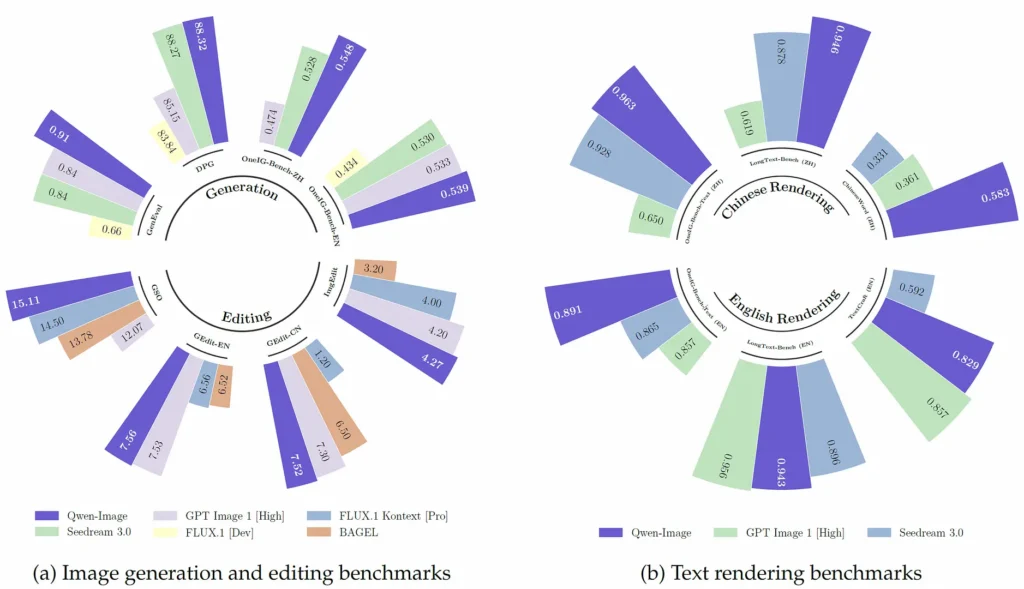
Confronto di Qwen-Image con altri modelli leader
Punti di forza relativi: la resa del testo e la fedeltà del testo bilingue sono i vantaggi distintivi del modello rispetto a molti concorrenti generativi (ad es., DALL·E 3, SDXL, Midjourney), spesso più forti nella composizione puramente artistica o nella diversità stilistica ma più deboli nei layout di testo denso, multi‑riga o in cinese. Varie comparazioni della community e le tabelle di benchmark degli autori del modello supportano questa caratterizzazione.
Compromessi relativi: rispetto a sistemi commerciali chiusi e fortemente ottimizzati, Qwen-Image può richiedere post‑processing o una messa a punto di prompt/adapter per raggiungere un realismo identico in alcuni contesti (deformazioni su superfici curve, compositing fotorealistico), secondo test indipendenti. Per gli utenti che danno priorità a progetti basati su template, mockup di packaging o layout di testo bilingue, Qwen-Image tende a essere preferibile.
Casi d’uso tipici e ad alto valore
- Packaging e mockup di prodotto: testo accurato e layout multi‑riga per etichette e prove di packaging.
- Bozze pubblicitarie e di design: prototipazione rapida in cui la fedeltà del testo è importante (poster, banner).
- Generazione di immagini documentali: generazione di immagini che devono includere contenuti leggibili (menu, insegne, interfacce).
- Pipeline di editing di immagini: modifiche mirate (sostituzione di testo, aggiunta/rimozione di oggetti) preservando stile e prospettiva.
- Come accedere alla Qwen image API
Passaggio 1: registrati per ottenere la chiave API
Accedi a cometapi.com. Se non sei ancora nostro utente, registrati prima. Accedi alla tua console CometAPI. Ottieni la chiave API di accesso all'interfaccia. Clicca su “Add Token” nel token API nel centro personale, ottieni la chiave del token: sk-xxxxx e invia.
Passaggio 2: invia richieste alla Qwen image API
Seleziona l’endpoint “qwen-image” per inviare la richiesta API e imposta il corpo della richiesta. Il metodo e il corpo della richiesta sono reperibili nella documentazione API del nostro sito. Il nostro sito fornisce anche il test Apifox per comodità. Sostituisci <YOUR_API_KEY> con la tua chiave CometAPI effettiva dal tuo account. l'URL di base è Images formato(https://api.cometapi.com/v1/images/generations) tramite CometAPI.
Inserisci la tua domanda o richiesta nel campo content — è ciò a cui il modello risponderà .
Passaggio 3: recupera e verifica i risultati
Elabora la risposta dell'API per ottenere il risultato generato. Dopo l'elaborazione, l'API restituisce lo stato dell'attività e i dati di output.