Temel özellikler
- Görsellerde yerleşik / yüksek kaliteli metin işleme — posterler, ambalajlar, ekran görüntüleri gibi üretilen görsellerde okunaklı ve anlamsal olarak doğru metin üretiminde üstün — önceki pek çok görüntü modelinin zorlandığı bir alan.
- Yüksek sadakatli çok modlu çıktı — ayrıntısı iyi, dile duyarlı yerleşimle fotogerçekçi ve stilize görseller üretir.
- Üslup aktarımı ve ayrıntı iyileştirme — sahne bütünlüğünü korurken tutarlı sanatsal üsluplar uygulayabilir veya yerel ayrıntıları iyileştirebilir.
Teknik ayrıntılar — Qwen-Image nasıl çalışır
Mimari ve bileşenler (anahtar kelimeler: MMDiT, Qwen2.5-VL). Model, görüntü sentezi için MMDiT tabanlı bir difüzyon Transformer’ı kullanır ve istemleri ile görsel bağlamı yorumlamak için bir görsel-dil kodlayıcıyla (Qwen2.5-VL) birleştirir. Bu ayrışma, modelin semantik yönlendirme ile piksel görünümünü farklı biçimde ele almasına olanak tanır, metin sadakatini ve düzenleme tutarlılığını iyileştirir. Resmi depo ve teknik rapor, ana T2I modelinin 20B parametreli bir omurgaya sahip olduğunu belirtir.
Eğitim hattı (anahtar kelimeler: curriculum learning, data pipeline). Zor metin işlemeyi çözmek için Qwen-Image kademeli bir müfredat kullanır: daha basit, metin içermeyen görsellerle başlayıp, paragraf düzeyi girdilere kadar metin açısından zengin, daha karmaşık örneklerle aşamalı olarak eğitilir. Ekip, eğitim sırasında modelin birçok gerçekçi metin/fotoğraf kompozisyonu görmesini sağlamak için geniş ölçekli toplama, dikkatli filtreleme, sentetik artırma ve dengeleme içeren kapsamlı bir hat kurdu. Bu stratejik müfredat, modelin çok dilli metin işleme konusunda üstün olmasının temel nedenlerinden biridir.
Düzenleme mekanizması (anahtar kelimeler: dual-encoding, VAE + VL encoder). Düzenlemede sistem, özgün görseli iki kez besler: bir kez semantik kontrol için Qwen2.5-VL kodlayıcısına ve bir kez yeniden oluşturma amaçlı görünüm bilgisi için bir VAE kodlayıcısına. İkili kodlama tasarımı, kimliği ve görsel sadakati korurken anlamsal değişikliklere izin verir — örneğin, ilgisiz bölgeleri bozmadan bir nesneyi değiştirmek veya metinsel içeriği dönüştürmek.
Kıyaslama performansı
Qwen-Image, hem üretim hem düzenleme için birden çok halka açık kıyaslamada SOTA veya SOTA’ya yakın performans elde eder; özellikle metin işleme görevleri ve gerçek dünya kompozisyon kıyaslamalarında (ör. T2I-CoreBench ve seçilmiş görsel düzenleme paketleri) güçlü sonuçlar verir.
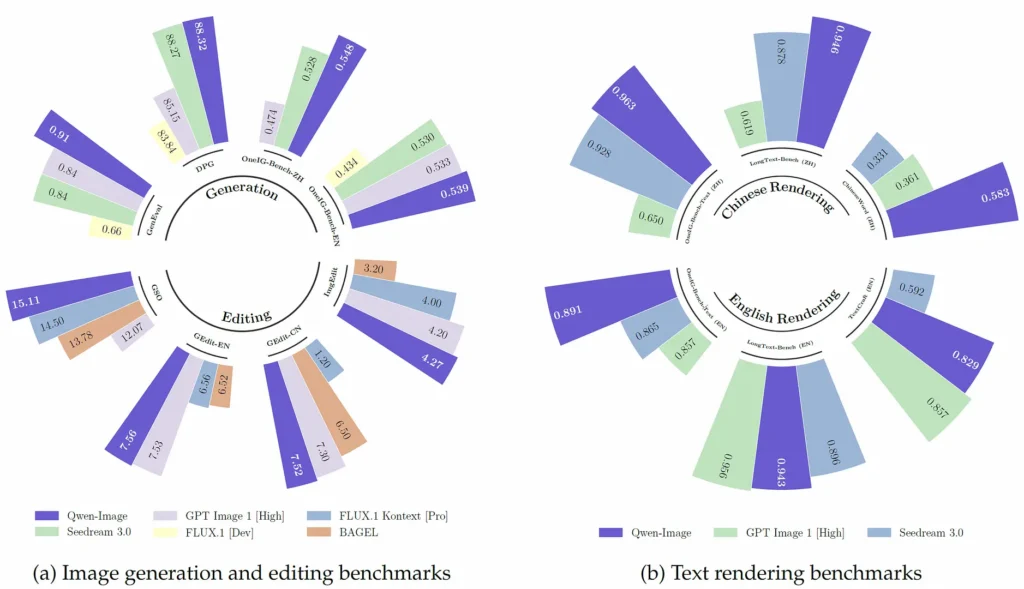
Qwen-Image, diğer önde gelen modellerle nasıl karşılaştırılır
Göreli güçlü yanlar: metin işleme ve iki dilli metin sadakati, modelin birçok üretici rakibe (örn. DALL·E 3, SDXL, Midjourney) kıyasla ayırt edici avantajlarıdır; bu rakipler saf sanatsal kompozisyon veya üslup çeşitliliğinde sıkça daha güçlü olsalar da yoğun çok satırlı ya da Çince metin yerleşiminde daha zayıftırlar. Birden çok topluluk karşılaştırması ve model yazarlarının kıyaslama tabloları bu nitelemeyi destekler.
Göreli ödünler: kapalı, yoğun biçimde ayarlanmış ticari sistemlerle karşılaştırıldığında, bağımsız testlere göre Qwen-Image bazı bağlamlarda (eğri yüzeyde bükülme, fotogerçekçi kompozitleme) aynı gerçekçiliğe ulaşmak için son işlem veya istem/adapter ayarı gerektirebilir. Şablonlu tasarımlar, ambalaj mockup’ları veya iki dilli metin yerleşimleri öncelikliyse, Qwen-Image genellikle daha uygundur.
Tipik ve yüksek değerli kullanım senaryoları
- Ambalaj ve ürün mockup’ları: etiketler ve ambalaj denemeleri için doğru metin ve çok satırlı yerleşimler.
- Reklam ve tasarım taslakları: metin sadakatinin önemli olduğu hızlı prototipleme (afişler, banner’lar).
- Doküman niteliğinde görsel üretimi: okunabilir içerik içermesi gereken görsellerin üretilmesi (menüler, tabelalar, arayüzler).
- Görsel düzenleme iş akışları: stili ve perspektifi koruyarak hedefli düzenlemeler (metin değiştirme, nesne ekleme/çıkarma).
- Qwen image API’ye nasıl erişilir
Adım 1: API Anahtarı için Kaydolun
cometapi.com adresine giriş yapın. Henüz kullanıcımız değilseniz lütfen önce kayıt olun. CometAPI console hesabınıza giriş yapın. Arabirimin erişim kimlik bilgisi olan API anahtarını alın. Kişisel merkezde API token kısmında “Add Token”a tıklayın, token anahtarını alın: sk-xxxxx ve gönderin.
Adım 2: Qwen image API’ye İstek Gönderin
API isteğini göndermek ve istek gövdesini ayarlamak için “qwen-image ” uç noktasını seçin. İstek yöntemi ve istek gövdesi web sitemizdeki API dokümanından alınır. Kullanım kolaylığı için web sitemiz Apifox testi de sağlar. <YOUR_API_KEY> değerini hesabınızdaki gerçek CometAPI anahtarınızla değiştirin. temel url CometAPI aracılığıyla Images formatıdır(https://api.cometapi.com/v1/images/generations).
Sorunuzu veya isteğinizi content alanına ekleyin—modelin yanıt vereceği kısım budur.
Adım 3: Sonuçları Alın ve Doğrulayın
Oluşturulan yanıtı almak için API yanıtını işleyin. İşlemenin ardından API, görev durumu ve çıktı verileriyle yanıt verir.