
TL;DR
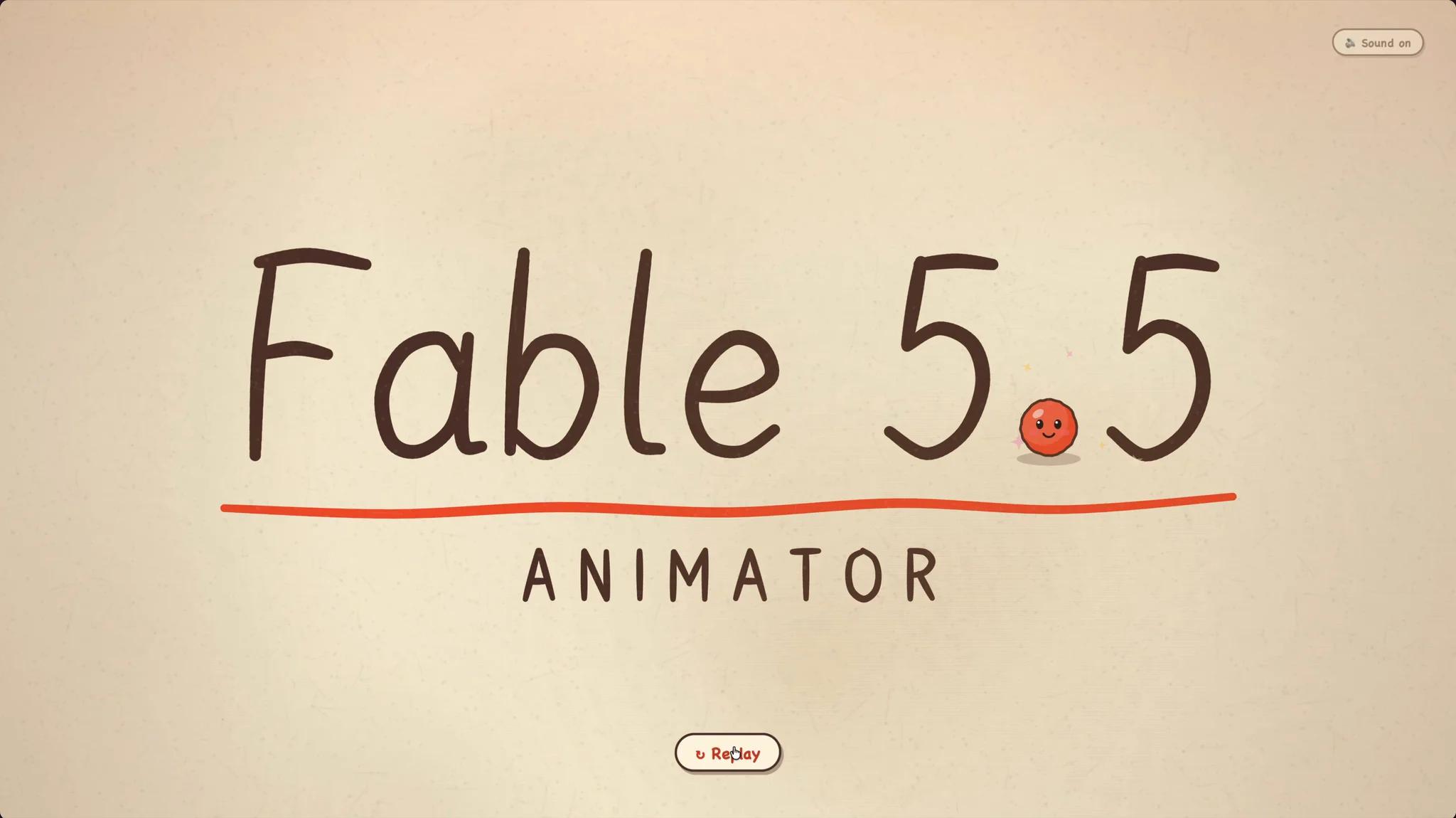
Claude Fable 5.5 remains a rumored successor in the official sources reviewed on October 12, 2026. Community reports offer release clues and demonstration leads, while Fable 5.1 and Opus 5.5 provide the released-model specification and performance baselines. Haiku 5.5 is now released. Developers can use current Claude models through CometAPI's native Messages API, or evaluate GPT-6 Astra while preparing a future migration. See Anthropic's current model lineup and OpenAI's Astra documentation.
Key Takeaways
- No official Claude Fable 5.5 exists. Fable 5.1 is the latest Fable model.
- Rumors stem from X posts about a new pretraining run (initially called 5.2, later 5.5), claims of silent routing under the Fable 5.1 label, impressive creative demos, and speculation tied to Anthropic’s reported mid-November IPO.
- Pricing, if a successor appears, is most likely to stay near the Fable 5 / 5.1 rate of $10/$50 or see modest efficiency gains similar to the cache-read discount introduced with 5.1.
- Fable 5.1 already delivers state-of-the-art long-horizon agentic coding, research, and knowledge work; Opus 5.5 closes much of the gap at roughly 40% of the price for many workloads.
- For developers and teams needing reliable access to Claude models (including Fable-class when available), unified API platforms such as CometAPI offer a practical way to switch models, manage costs, and avoid vendor lock-in while waiting for official updates.
What Is Claude Fable 5.5?
At this point, Claude Fable 5.5 is best described as a rumored successor to Claude Fable 5.1, not as a released model. The timing is what makes the rumor notable: Anthropic released Claude Opus 5.5 on September 22 and Claude Sonnet 5.5 on September 28, establishing 5.5 as the active family numbering. Anthropic has not announced a Fable 5.5, but the name now fits the broader family.
Anthropic’s current Fable information describes Fable 5.1 as its frontier model for long-running agents, ambitious coding, enterprise workflows, and vision-heavy document work. The official Fable page gives Fable 5.1 a 1M-token context window, 128K maximum output, adaptive thinking, and $10/$50 per million input/output tokens, with cache reads at $0.25 per million tokens. Those figures are the Fable 5.1 baseline, not Fable 5.5 specifications.
What the Fable 5.5 Evidence Supports
| Attributed date | Attributed account | Reported claim |
|---|---|---|
| September 5, 2026 | @kimmonismus | Provisional Fable 5.2 naming and an imminent-release rumor. |
| September 8, 2026 | @kimmonismus | A fresh Fable pretraining run and a proposed release window. |
| September 10, 2026 | @Mr_Salio | The rumor used Fable 5.5 naming and repeated the proposed window. |
Early Pretraining-Run Reports (August–September 2026)
Accounts such as @Mr_Salio (mid-August and September 10) and @kimmonismus (September 5 and 8) described a fresh Fable pretraining run expected in late September or early October. The model was initially referred to as “Fable 5.2 or whatever it ends up being called.” After Opus 5.5 and Sonnet 5.5 shipped under the 5.5 numbering, the community largely switched to “Fable 5.5.” No technical details, internal codenames with independent corroboration, or Anthropic confirmation accompanied these posts.
Stealth-Testing and Backend Claims (mid-to-late September)
On September 18, posts (including from accounts tracking Claude Code) claimed a newer backend labeled “Fable 5.2” appeared in output comparisons. TestingCatalog reported stealth tests around the same period; the same tracker had correctly anticipated Opus 5.5. These claims remained unverified and produced no public model ID or documentation change.
Silent-Routing Screenshots and “It Feels Different” Reports (October 1 onward)
Beginning October 1, multiple users posted screenshots from claude.ai and Claude Code showing the Fable 5.1 label while claiming markedly stronger outputs—especially in creative coding, 3D/voxel scenes, animation, SVG generation, and motion design. Some asserted the model returned fresher knowledge without web search. High-visibility posts (e.g., from @chetaslua) accumulated hundreds of thousands of views.
Anthropic’s model-versioning policy states that each model ID maps to a fixed snapshot; infrastructure changes can produce minor behavioral differences, but weight updates receive new IDs. No API response has been shown containing a different model identifier. Independent trackers and API catalogs continue to return only claude-fable-5-1.
Viral Demos Attributed to Fable 5.5
Several impressive demos circulated: multi-minute coded animations combining Blender and audio APIs, detailed voxel worlds, X-ray-style scenes, and complex one-shot creative coding. Attribution to “Fable 5.5” comes solely from the posters. Strong harnesses and careful prompting with Fable 5.1 already produce high-quality agentic creative work, so demos alone cannot isolate a new model.
IPO-Linked Speculation
Bloomberg reported Anthropic targeting a mid-November 2026 IPO (possible marketing start week of November 9, debut before Thanksgiving, valuation discussions in the $1.8–2 trillion range). Reuters sources indicated the company was considering shipping a new model before the IPO. Community discussion quickly linked this to Fable 5.5. No report named the model, tier, or exact timing. Haiku 5.5 (the previously announced 5.5 model) shipped on October 7 instead of any Fable update
Fable 5.5: Inferred Specifications and Performance
Fable 5.1 provides a reference for the Fable product line, while Opus 5.5 shows the direction of Anthropic's released 5.5 generation. Together they suggest what to evaluate in a future Fable release: long-context handling, sustained agent execution, coding and efficiency. These are editorial expectations, not announced Fable 5.5 capabilities.
Known baselines, reasonable expectations and unknowns
The existing specification table below records the confirmed Fable 5.1 baseline and the unknown Fable 5.5 values. A 1M-token context window, 128K maximum output and adaptive thinking are reasonable continuity hypotheses because current Fable 5.1 and Opus 5.5 support them; they remain unconfirmed for Fable 5.5. Its release date, API ID, pricing, exact limits and benchmark scores are unknown in the official sources reviewed on October 12, 2026.
| Specification | Confirmed Fable 5.1 baseline | Fable 5.5 status |
|---|---|---|
| Model ID | claude-fable-5-1 | No verified Fable 5.5 ID |
| Context window | 1M tokens | Unknown |
| Maximum output | 128K tokens | Unknown |
| Input modalities | Text + images | Unknown |
| Thinking | Adaptive, always on | Unknown |
| API list price | $10 input / $50 output per MTok | Unknown |
| Cache reads | $0.25 per MTok | Unknown |
| Knowledge cutoff | June 2026 | Unknown |
| Benchmarks | Published for Fable 5.1 | No official results |
Source: Anthropic's current model specifications. The confirmed numbers belong to released models; the continuity hypotheses above are the author's inference.
Released-model performance signals
In Anthropic's Opus 5.5 launch comparison, Opus 5.5 improves on Fable 5.1 across the benchmarks shown below. This supports expecting a future Fable successor to be evaluated on coding, professional work and tool-driven tasks; it does not supply Fable 5.5 scores or establish how large any gain would be.
| Benchmark | Claude Fable 5.1 | Claude Opus 5.5 |
|---|---|---|
| Terminal-Bench 4.0 | 55.8% | 66.4% |
| FrontierCode v1.1 (Main) | 50.3% | 54.4% |
| CursorBench 4.0 | 51.8% | 57.8% |
| GDPval-AA v2.1 | 1735 Elo | 1846 Elo |
| Terminal-Bench-Science 0.1 | 52.6% | 58.7% |
| OSWorld 2.1 partial | 80.7% | 81.8% |
| Chartography (with tools) | 88.4% | 89.0% |
These are vendor-reported released-model results. Anthropic documents max effort for Opus 5.5 unless noted, xhigh for Terminal-Bench, and enabled production safeguards with specified fallbacks. Preserve those conditions when using the table.
Expected direction: stronger sustained work and better cost per completed task are useful hypotheses to test. Still unknown: the magnitude of improvement and whether a future Fable release leads on any given benchmark. Evaluate it against the same tasks and settings as the released baseline once access is documented.
Long-Horizon Agentic Reliability
Fable’s core advantage has always been sustained autonomy—days-long tasks, recovery from failures, and coherent multi-step planning. Community claims of “much enhanced capabilities” under routing rumors focus exactly here. Confirmed only for 5.1; any further gains remain unconfirmed.
Creative Coding, Vision, and Multimodal Generation
Demos attributed to the rumored model emphasize superior one-shot 3D, animation, and design quality. Fable 5 already set a high bar for vision and generative coding; 5.1 continued the trajectory. Further qualitative leaps are plausible but not verified.
Safeguards and False-Positive Rates
Fable 5.1 already reduced biology false positives substantially versus Fable 5 and expanded allowable software-vulnerability analysis. A successor would be expected to continue refining classifiers while preserving Mythos-level capability for vetted users.
Claude Fable 5.5 Price — What the Rumors Say
No official pricing exists.
Fable 5 and Fable 5.1 both list at $10 input / $50 output per million tokens. The only material change in 5.1 was the 75% reduction in cache-read cost ($0.25). Batch pricing and cache-write rates stayed proportional.
Reasonable extrapolations for a hypothetical Fable 5.5:
- Continuity of the premium tier (still above Opus 5.5’s $4/$20).
- Possible further efficiency gains on cache or agentic token usage.
- Continued availability on Max / Team / Enterprise plans with usage-limit rules similar to Fable 5.1 (not included in base Pro limits; pay-as-you-go credits or higher-tier allocations).
For developers who need Fable-class capability today, CometAPI provides access to Claude Fable 5.1 (and the rest of the Claude family) at approximately 20% below official list rates under a unified pay-as-you-go model and a single API key. This can materially lower the cost of long-context or agentic workloads while preserving the ability to switch models with one line of code.
Latest Claude Models and Native Messages Access on CometAPI
The current Claude lineup includes Fable 5.1, Opus 5.5, Sonnet 5.5 and Haiku 5.5. Anthropic released Haiku 5.5 on October 7, 2026; it is no longer a forthcoming model.
| Field | Fable 5.1 | Opus 5.5 | Sonnet 5.5 | Haiku 5.5 |
|---|---|---|---|---|
| Release | September 1, 2026 | September 22, 2026 | September 28, 2026 | October 7, 2026 |
| Context window | 1M tokens | 1M tokens | 1M tokens | 1M tokens |
| Standard API input / output price per 1M tokens | $10 / $50 | $4 / $20 | $2 / $10 | $0.10 / $0.50 (prompts up to 100K tokens); $0.50 / $2.50 above 100K |
The table shows Anthropic standard API prices, not CometAPI billing rates. Haiku pricing depends on prompt length; consult each provider's pricing page for the request you plan to send.
CometAPI lists Opus 5.5, Sonnet 5.5 and Haiku 5.5 for API access. Claude-native applications can use POST /v1/messages, with the chosen model ID, max_tokens and a messages array. The following Haiku example follows CometAPI's documented native Messages format.
Follow Claude Fable 5.5 on CometAPI
CometAPI's Claude Fable 5.5 page provides a place to follow the model's catalog updates. Its current availability label is Coming soon. Check the page for updated access information, pricing and API documentation as they become available.
For integrations today, use the released Claude models listed below. When Fable 5.5 access is announced, select the request identifier and endpoint documented by CometAPI.
Native Messages request example
curl "https://api.cometapi.com/v1/messages" \
  --header "Authorization: Bearer $COMETAPI_KEY" \
  --header "content-type: application/json" \
  --data '{
    "model": "claude-haiku-5-5",
    "max_tokens": 1024,
    "messages": [{"role": "user", "content": "Summarize this document in three points."}]
  }'
Set COMETAPI_KEY in your environment before running the example. It is a documentation example, not a request executed for this article. Use the documented model ID for your selected Claude model, and validate account access and supported parameters in the CometAPI API reference.
Alternatives While Waiting and Migration Preparation
You can keep building while Fable 5.5 remains unannounced. Select a released model for the task, and keep the integration ready for a later evaluation.
- GPT-6 Astra: a cross-provider option for demanding reasoning, coding, research and document work. OpenAI documents the model ID as gpt-6-astra. See the official OpenAI model documentation.
- Claude Opus 5.5: evaluate for complex coding and sustained knowledge work, particularly when retaining a Claude-native integration is useful.
- Claude Sonnet 5.5: evaluate for everyday coding and document workflows where response speed and cost matter.
- Claude Haiku 5.5: use as a candidate for classification, extraction, routing and other high-volume tasks. Choose the final model from workload results, rather than its family name.
Prepare the migration before changing traffic
- Separate configuration from logic. Store provider, endpoint, credentials and model ID independently. Keep a Claude Messages adapter and an OpenAI Responses adapter when evaluating across providers; request and tool schemas are not interchangeable.
- Save representative tasks. Record expected outcomes, tool inputs and outputs, structured-output schemas and long-context examples. Measure success rate, elapsed time, retry count and total cost per accepted task.
- Retest the API contract. Check reasoning controls, output limits, streaming events, tool calls and response parsing. For GPT-6 Astra, tool-enabled integrations use the Responses API, and its documented reasoning levels exclude none. See OpenAI's release guidance.
- Switch gradually. When Fable 5.5 has a documented release and provider model ID, replay the saved tasks, test a small traffic allocation and expand only after acceptance checks pass. Keep a tested rollback route.
FAQ
Is Fable 5.5 the same as Opus 5.5?
No. Opus 5.5 is a distinct, lower-priced model that Anthropic positions as performing near Fable 5.1 levels on many (but not all) workloads.
Has Claude Fable 5.5 been released?
No. As of October 12, 2026, Anthropic has not announced it and no model ID exists. the current best Fable model is Claude Fable 5.1 (claude-fable-5-1).
Can a recall prompt identify a hidden Fable 5.5 rollout?
No. A response is not a reliable fingerprint of model weights. Prompt, tool and serving changes can affect answers. Require provider confirmation or a documented identifier rather than treating an informal test as proof.
How can I compare new benchmarks with the Fable 5.1 image?
Match benchmark version, scoring unit, tools, effort and harness first. If those conditions differ, label the results separately and run a controlled workload comparison. Never relabel Fable 5.1 results as Fable 5.5 scores.
Conclusion
Fable 5.5 is worth monitoring, but its specifications and performance remain unconfirmed in the official sources reviewed here. The released Fable 5.1 and Opus 5.5 baselines help frame sensible expectations without inventing scores. Build today with released Claude models or a tested alternative such as GPT-6 Astra; keep provider adapters, evaluation tasks and a rollback route ready for a documented Fable release.