
TL;DR
GPT Image 2.5 is not simply a renamed Image 2. OpenAI released the new generation on September 8, 2026 and split its API offering into GPT Image 2.5 Flare, optimized for fast everyday generation, and GPT Image 2.5 Sunburst, optimized for maximum generation quality and editing precision.
The biggest practical change is that OpenAI says Flare delivers higher image quality than Image 2 at 50% lower latency, while Sunburst trades some speed for tighter control over demanding editing workflows. The new generation also improves reference-image fidelity, targeted edits, multi-turn consistency, complex layouts, and transparent-background generation.
OpenAI says the token rates match Image 2: $5 per million text-input tokens, $8 per million image-input tokens, and $30 per million image-output tokens. Equal token rates do not necessarily mean identical cost per completed image because token consumption can differ by request.
Early independent preference data now favors the 2.5 generation. Arena currently places Sunburst first, Flare second, and Image 2 third in the benchmark snapshot used in this article, although the 2.5 results remain preliminary and are based on fewer votes.
Key Takeaways
- GPT Image 2.5 is a two-model API family: Flare prioritizes speed and throughput, while Sunburst prioritizes maximum visual quality and edit precision.
- GPT Image 2.5 now leads Image 2 in early Arena testing across the overall generation and single-image editing snapshots used here.
- Flare is the most straightforward upgrade for most Image 2 workloads because it combines higher early scores with OpenAI's lower-latency positioning.
- Sunburst is the stronger choice for premium creative production, detailed editing, typography-heavy assets, and polished product imagery.
- Token pricing has not increased, but teams should benchmark actual token consumption and accepted-output rate before migrating at scale.
GPT Image 2.5 vs Image 2 at a Glance
A crucial distinction is that “GPT Image 2.5” describes the new generation, while developers actually have two API choices: Flare and Sunburst.
| Dimension | GPT Image 2.5 Flare | GPT Image 2.5 Sunburst | Image 2 |
|---|---|---|---|
| Release | September 8, 2026 | September 8, 2026 | April 21, 2026 |
| API model ID | gpt-image-2.5-flare | gpt-image-2.5-sunburst | gpt-image-2 |
| Shared capabilities | Text and image input; image generation and editing | Text and image input; image generation and editing | Text and image input; image generation and editing |
| Quality controls | low / medium / high / xhigh / max / auto | low / medium / high / xhigh / max / auto | Earlier quality controls |
| Main improvement | Faster generation plus stronger fidelity, editing, and layouts | Highest precision for generation and complex editing | Earlier-generation baseline |
| Best fit | High-volume generation and rapid iteration | Premium assets and precision editing | Existing stable integrations |
The decision is therefore no longer simply “2.5 or 2.” It is usually Flare vs Sunburst vs continuing with Image 2.
What Is GPT Image 2.5?
ChatGPT Images 2.5 is OpenAI's September 2026 image-generation upgrade. On the API side, it is represented by Flare and Sunburst rather than one universal behavior profile.
OpenAI highlights more natural lighting and richer textures, better subject preservation from reference photos, stronger instruction following across repeated edits, and generation latency reduced by as much as 50% compared with Images 2.0.
Those improvements matter because the bottleneck in production image generation is often no longer the first generation. It is everything that comes after it: keeping a person recognizable, changing one product without rebuilding the scene, preserving typography, or iterating through multiple edits without visual drift.
Flare
Flare is the throughput-oriented member of the family. OpenAI calls it its fastest model for high-quality everyday image generation and gives it low, medium, high, xhigh, max, and auto quality settings.
OpenAI positions Flare for creator content, social assets, product experiences, visual search, rapid prototyping, and high-volume image generation. That makes Flare the most natural replacement for Image 2 when an application generates large volumes and cannot afford to trade latency for marginal quality improvements on every request.
Sunburst
Sunburst takes the quality-first side of the trade-off. OpenAI describes it as its most capable model for image generation and editing and recommends it when editing precision matters most.
Typical workloads include polished product photography, final campaign assets, controlled image revisions, and creative workflows where accidentally modifying an unrequested part of the image is expensive. Sunburst therefore should not be viewed simply as “Flare but better.”
What Is Image 2?
OpenAI released Image 2 alongside ChatGPT Images 2.0 in April 2026. It became the company's state-of-the-art API model for fast, high-quality generation and editing, with text input, image input, image output, flexible image sizes, and high-fidelity image inputs. Image 2 official model documentation.
Its dated API snapshot is `gpt-image-2-2026-04-21`, which can be useful for applications that need to pin behavior instead of relying on a moving alias. Image 2 remains important because it established a strong production baseline before the 2.5 generation arrived.
GPT Image 2.5 vs Image 2 Benchmarks
The benchmark picture changed quickly after launch. The current Arena overall text-to-image leaderboard and single-image-edit leaderboard include both GPT Image 2.5 models. Category-specific snapshots also provide useful signals for text rendering, stylized imagery, and portraits.
| Benchmark | Flare | Sunburst | Image 2 | Best score |
|---|---|---|---|---|
| Text-to-Image Overall | 1399 ± 13, Preliminary | 1421 ± 13, Preliminary | 1381 ± 4 | Sunburst |
| Single Image Edit | 1491 ± 9, Preliminary | 1520 ± 9, Preliminary | 1461 ± 3 | Sunburst |
| Text Rendering | 1434 ± 22, Preliminary | 1481 ± 23, Preliminary | 1427 ± 7 | Sunburst |
| Cartoon, Anime & Fantasy | 1428 ± 21, Preliminary | 1440 ± 21, Preliminary | 1400 ± 6 | Sunburst |
| Portraits | 1456 ± 35, Preliminary | 1450 ± 32, Preliminary | 1427 ± 8 | Flare |
Overall text-to-image performance
Sunburst scores 1421 compared with Image 2's 1381, a 40-point advantage in the snapshot above. Flare reaches 1399, putting it 18 points ahead of Image 2.
This is an important change from the first hours after launch, when some comparisons described GPT Image 2.5 as lacking independent benchmark evidence. The current data provides an external human-preference signal supporting the direction of OpenAI's quality claims.
The GPT Image 2.5 results are marked Preliminary and were based on materially fewer votes than the mature Image 2 entries when this article was prepared. Treat the current gaps as directional rather than final.
Image-editing performance
The edit benchmark produces an even larger separation. Sunburst scores 1520, 59 points above Image 2's 1461. Flare reaches 1491, giving it a 30-point advantage over Image 2.
This may be more important than the text-to-image improvement because a production workflow often accepts a good initial render but fails when small revisions introduce unwanted changes elsewhere. Better editing preference scores affect actual iteration cost, not merely visual appeal.
Text rendering
Sunburst's 1481 leads Image 2's 1427 by 54 points. Flare scores 1434. That suggests the new family is improving structured creative work containing labels, copy, signs, interface elements, posters, and infographics as well as photography-like outputs.
Portrait generation
Portraits are the one category in this sample where Flare currently edges out Sunburst, at 1456 versus 1450. Both models have wide confidence intervals and relatively few votes in this category, so it would be misleading to describe Flare as conclusively superior for portraits.
Where GPT Image 2.5 Is Actually Better
Benchmark numbers explain only part of the upgrade. Five workflow-level differences matter more in practice.
More precise edits
Images 2.5 is designed to modify the requested component while leaving unrelated details alone. OpenAI specifically says the model is better at targeted edits while preserving surrounding details.
For example, changing a bottle label in a product photograph should not require the model to reinterpret the table, lighting, bottle shape, background, and camera angle at the same time. This reduces edit collateral damage.
Better multi-turn consistency
A single successful edit is not enough for professional workflows. A marketing team may change the product color, replace the background, modify a headline, and then change the aspect ratio. Each turn creates an opportunity for the model to overwrite an earlier decision. OpenAI’s image-generation guidance describes multi-turn image editing; teams should test consistency across their own edit sequences.
Better reference fidelity
The 2.5 family improves its ability to retain distinctive subject features when moving a reference photo into another setting, composition, or visual style. Product shape, clothing, packaging, visual identity, and other recognizable elements can all benefit from stronger source fidelity.
Better complex layouts and styles
OpenAI says Images 2.5 follows complex visual instructions more effectively and produces more accurate content when real-world information is involved. It also handles more complex layouts, including transparent backgrounds. For designers, this pushes the model further toward usable creative production rather than one-shot illustration.
Faster generation with Flare
The speed improvement is unusually important because it does not come with a higher published token rate. OpenAI says Flare provides 50% lower latency than Image 2 while delivering higher-quality images. Sunburst deliberately optimizes for a different point on the latency-quality curve.
GPT Image 2.5 vs Image 2 Pricing
The published OpenAI token rates are straightforward. Both Flare and Sunburst use the following schedule, and OpenAI states that the token rates match Image 2.
| Token type | Flare | Sunburst | Image 2 |
|---|---|---|---|
| Text input / 1M tokens | $5.00 | $5.00 | $5.00 |
| Cached text input / 1M tokens | $1.25 | $1.25 | $1.25 |
| Image input / 1M tokens | $8.00 | $8.00 | $8.00 |
| Cached image input / 1M tokens | $2.00 | $2.00 | $2.00 |
| Image output / 1M tokens | $30.00 | $30.00 | $30.00 |
The GPT Image 2.5 Flare API in CometAPI and GPT Image 2.5 Sunburst API in CometAPI are priced at $4 per million input tokens and $24 per million output tokens, 20% below the corresponding $5 and $30 OpenAI rates shown above. Actual cost still varies with quality, resolution, token consumption, and the number of attempts required.
Token rates are not the same as price per image. Actual cost depends on request token consumption and the number of attempts needed to produce an accepted asset.
If Flare completes a workload faster and with fewer failed revisions, its cost per accepted asset may still improve materially even if raw token consumption is similar.
Quality vs Speed: Flare, Sunburst, or Image 2?
| Workload | Recommended model | Why |
|---|---|---|
| High-volume social content | Flare | Strong current quality signal plus lower latency |
| Rapid prototypes | Flare | Faster iteration matters more than maximum edit control |
| Visual search | Flare | Latency-sensitive workload |
| E-commerce variations | Flare | Balance of throughput and fidelity |
| Final advertising creative | Sunburst | Maximum quality and tighter edit control |
| Product hero imagery | Sunburst | Precise edits and reference preservation |
| Complex image editing | Sunburst | Highest single-image-edit score in this snapshot |
| Text-heavy premium graphics | Sunburst | Strongest current text-rendering score |
| Existing stable production pipeline | Image 2 or staged migration | Mature behavior and larger benchmark sample |
| New general-purpose deployment | Flare | Best default balance for most applications |
For most new applications, Flare is the rational default. Sunburst should be invoked selectively when incremental precision is worth extra latency. One practical routing strategy is to generate rapidly with Flare and send difficult final edits to Sunburst.
Is GPT Image 2.5 a Major Upgrade or a Minor Revision?
Despite the “2.5” name, the evidence points to more than a minor quality refresh. The largest changes are concentrated in exactly the areas that determine whether an image model can be used as part of an iterative production system: reference preservation, localized editing, repeated editing, layout handling, text rendering, and throughput.
The early benchmark gains reinforce that interpretation. Sunburst leads Image 2 by 40 Arena points in overall generation and 59 points in single-image editing in this snapshot, while Flare improves the scores without being the slower premium model.
GPT Image 2.5 Safety and Provenance
OpenAI’s Images 2.5 system card reports that unsafe generations reached users in 1.09% of adversarial tests for Sunburst, 1.41% for Flare, and 1.64% for the ChatGPT Images 2.0 baseline.
These figures come from deliberately adversarial prompts and are not representative of normal production traffic.
The company also continues to apply C2PA provenance metadata and invisible watermarking to generated images. This matters as image fidelity improves because better photorealism also raises the potential cost of deceptive or misleading generated media.
How to Access GPT Image 2.5 API in CometAPI
Both branches of the new generation can be accessed through CometAPI. The GPT Image 2.5 Sunburst API in CometAPI uses `gpt-image-2.5-sunburst`, while the GPT Image 2.5 Flare API in CometAPI uses `gpt-image-2.5-flare`. The previous GPT Image 2 API in CometAPI remains available under `gpt-image-2`.
Accessing GPT Image 2.5 and generating an image takes four steps:
- Sign in to CometAPI and create an API key in the API dashboard.
- Choose the model ID: use
gpt-image-2.5-flarefor faster generation orgpt-image-2.5-sunburstfor maximum generation and editing precision. - Send a POST request to
/v1/images/generationswith the API key, model ID, prompt, size, and quality settings. Use/v1/images/editswhen modifying an existing image. - Retrieve the generated image from the response, save or display it, and review quality, latency, and token usage before scaling the workflow.
Should You Upgrade from Image 2 to GPT Image 2.5?
For most new workloads, yes—but the right upgrade is usually Flare rather than automatically choosing Sunburst. Flare makes the strongest default migration case because it combines the same published token rates, a higher preliminary Arena score, and OpenAI's lower-latency positioning versus Image 2.
Sunburst is the better option when the final asset matters more than latency. Its early lead in overall generation, image editing, text rendering, and stylized imagery makes it particularly compelling for creative-production workflows.
Image 2 still has one meaningful advantage: maturity of evidence. Its benchmark results are based on a much larger sample than the newly released 2.5 models. Production teams should therefore migrate through controlled A/B evaluation rather than assuming the early leaderboard spread will remain unchanged.
Migration Considerations
For a serious migration test, keep the prompt, reference image, resolution, and quality configuration fixed, then compare:
- end-to-end latency
- token consumption
- accepted-output rate
- number of edits required
- subject or product consistency
- typography accuracy
The final metric is particularly important: a model that costs the same per token but requires half as many regeneration attempts can be substantially cheaper at the workflow level.
Final Verdict
GPT Image 2.5 is a meaningful upgrade over Image 2 because it improves the two sides of image production simultaneously: creation quality and editability.
If speed and volume matter, choose Flare. It already scores above Image 2 in overall generation and editing while targeting substantially lower latency.
If precision and final visual quality matter most, choose Sunburst. It currently holds the strongest scores among the three models across most of the benchmark dimensions examined here.
Image 2 remains a credible production baseline, but there is increasingly little reason to make it the default for a new integration unless internal evaluation reveals a regression in a specialized workflow. The more useful question is which GPT Image 2.5 model gives your workload the best quality-per-second and cost-per-accepted-image.
Official OpenAI Visual Examples
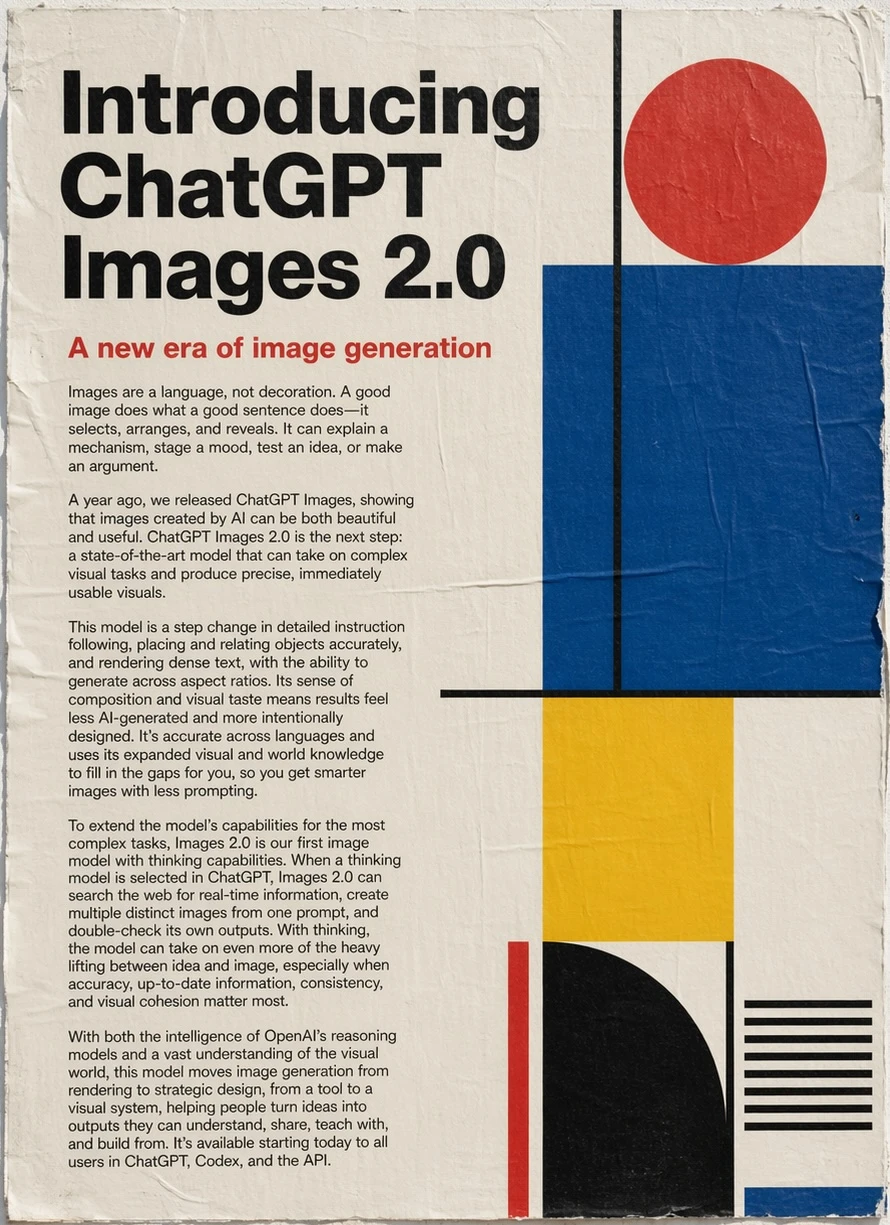
Official OpenAI product visual from the GPT Images 2.0 release.
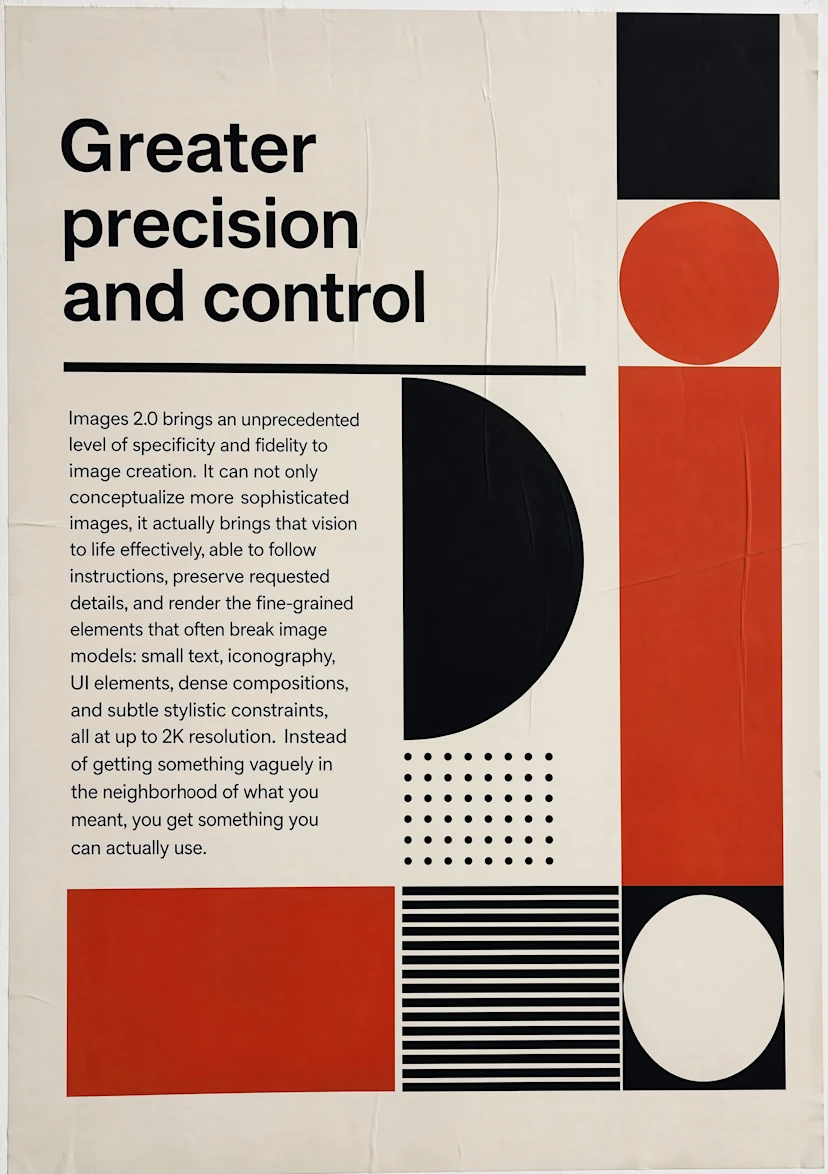
Official OpenAI precision-editing example.
Official OpenAI style example.
Word-generation environment note: the official images above are referenced directly from OpenAI's CDN rather than replaced with locally recreated versions.
GPT Image 2.5 Improves Reference-Image Fidelity
One of the most useful upgrades is easier to see than to describe. OpenAI's official Images 2.5 demonstration transforms an old portrait while retaining the child's identity and overall pose. The output changes the clothing and presentation substantially without turning the subject into a different-looking person.
Official Images 2.5 reference-fidelity input.

Official Images 2.5 edited output.
This is significant for e-commerce photography, avatar transformations, virtual styling, advertising variants, and branded social content. Better reference preservation reduces the need to regenerate an image because the requested edit also changed the face, product geometry, composition, or background details.
FAQ
Is GPT Image 2.5 better than Image 2?
Early evidence says yes. Both Flare and Sunburst score above Image 2 in the benchmark snapshots used in this article. Sunburst has the larger quality advantage, while Flare is optimized for a stronger speed-quality balance.
What is the difference between Flare and Sunburst?
Flare is designed for fast, high-quality everyday image generation and is the default for most applications. Sunburst is the higher-precision option for premium image generation and detailed editing, with longer generation times.
Is GPT Image 2.5 cheaper than Image 2?
The official token rates are the same, but that does not prove identical cost per image. Actual cost depends on the number of tokens consumed and how many generation or editing attempts are required to reach an acceptable result.
Is GPT Image 2.5 faster than Image 2?
Flare is. OpenAI says Flare provides higher-quality images than Image 2 at 50% lower latency. Sunburst is intentionally slower because it prioritizes tighter creative and editing control.
Which GPT Image model is best for image editing?
Sunburst is the strongest option in the current data, leading the single-image-edit snapshot used in this article.
Which model should developers use by default?
For most general-purpose applications, start with Flare. Use Sunburst when internal evaluations show that increased editing precision or visual quality justifies the extra latency.
Does GPT Image 2.5 support image inputs?
Yes. Both Flare and Sunburst accept image inputs for reference-led and editing workflows.
Can I continue using Image 2?
Yes. Existing Image 2 integrations do not need to be migrated immediately. Teams with strict reproducibility requirements can also pin a dated snapshot while evaluating newer models.
Is Sunburst always better than Flare?
No. Sunburst leads most quality dimensions in the current snapshot, but Flare is faster and can be preferable for high-throughput or latency-sensitive applications.
Are GPT Image 2.5 benchmark results final?
No. The Arena results used here are marked Preliminary and are based on fewer votes than Image 2. Rankings and confidence intervals may change as more evaluations accumulate.