الميزات الرئيسية
- عرض نصوص أصلي / عالي الجودة داخل الصور — يتفوّق في إنتاج نصوص واضحة ودلاليًا دقيقة داخل الصور المُولَّدة (الملصقات، والتغليف، ولقطات الشاشة) — وهو مجال عانت فيه العديد من نماذج الصور السابقة.
- مخرجات متعددة الوسائط عالية الدقة — يُنتج صورًا فوتوغرافية واقعية وصورًا مُنمَّقة بتفاصيل جيدة وتخطيط واعٍ باللغة.
- نقل الأنماط وتحسين التفاصيل — يمكنه تطبيق أنماط فنية متسقة أو تحسين التفاصيل المحلية مع الحفاظ على تماسك المشهد.
التفاصيل التقنية — كيف يعمل Qwen-Image
البنية والمكوّنات (الكلمات المفتاحية: MMDiT, Qwen2.5-VL). يستخدم النموذج مُحوِّل انتشار قائمًا على MMDiT لتوليد الصور، مدمجًا مع مُرمِّز لغة-رؤية (Qwen2.5-VL) لتفسير المطالبات والسياق البصري. يتيح هذا الفصل للنموذج التعامل مع التوجيه الدلالي والمظهر البكسلي بشكل مختلف، مما يحسّن دقة النص واتساق التعديل. وتشير المستودعات الرسمية والتقرير التقني إلى عمود فقري بعدد 20 مليار معلمة لنموذج T2I الرئيسي.
مسار التدريب (الكلمات المفتاحية: curriculum learning, data pipeline). لحل مشكلة عرض النصوص الصعبة، يستخدم Qwen-Image منهجًا تدريجيًا: يبدأ بصور أبسط غير نصية، ثم يتدرّب تدريجيًا على أمثلة أكثر تعقيدًا وغنىً بالنصوص وصولًا إلى مدخلات على مستوى الفقرات. أنشأ الفريق مسارًا شاملًا يتضمن جمعًا واسع النطاق، وترشيحًا دقيقًا، وتعزيزًا اصطناعيًا، وموازنةً لضمان أن يرى النموذج العديد من تراكيب النص/الصور الواقعية أثناء التدريب. ويُعد هذا المنهج الاستراتيجي سببًا رئيسيًا في تميّز النموذج في عرض النصوص متعددة اللغات.
آلية التحرير (الكلمات المفتاحية: dual-encoding, VAE + VL encoder). بالنسبة للتحرير، يقوم النظام بتمرير الصورة الأصلية مرتين: مرة إلى مُرمِّز Qwen2.5-VL من أجل التحكم الدلالي، ومرة إلى مُرمِّز VAE من أجل معلومات المظهر لإعادة البناء. يتيح تصميم الترميز المزدوج لوحدة التحرير الحفاظ على الهوية والدقة البصرية مع السماح بإجراء تعديلات دلالية — على سبيل المثال، استبدال عنصر أو تغيير المحتوى النصي دون الإضرار بالمناطق غير ذات الصلة.
أداء المقاييس
يحقق Qwen-Image أداءً رائدًا أو قريبًا من الرائد عبر عدة مقاييس عامة لكلٍّ من التوليد والتحرير، مع نتائج قوية بشكل خاص في مهام عرض النصوص ومقاييس التركيب الواقعي (على سبيل المثال، T2I-CoreBench ومجموعات تحرير الصور المنسّقة).
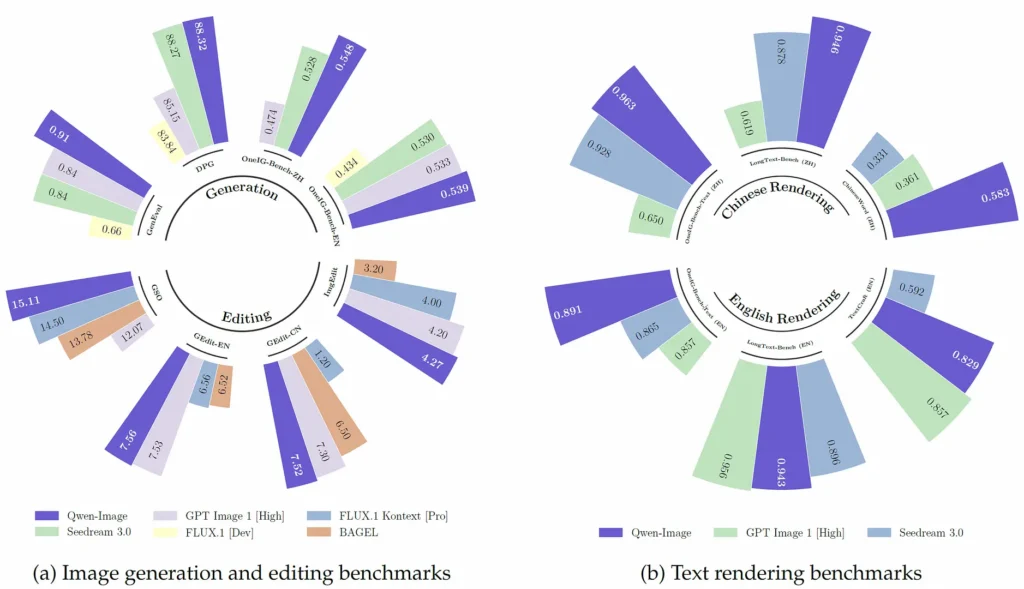
كيف يقارن Qwen-Image بالنماذج الرائدة الأخرى
نقاط القوة النسبية: تُعد دقة عرض النصوص ودقة النصوص ثنائية اللغة من أبرز مزايا النموذج مقارنةً بالعديد من المنافسين في التوليد (مثل DALL·E 3 وSDXL وMidjourney)، الذين يكونون غالبًا أقوى في التكوين الفني البحت أو التنوع الأسلوبي، لكنهم أضعف في تخطيط النصوص الكثيفة متعددة الأسطر أو النصوص الصينية. وتدعم المقارنات المجتمعية المتعددة وجداول المقاييس الخاصة بمؤلفي النموذج هذا التوصيف.
المقايضات النسبية: مقارنةً بالأنظمة التجارية المغلقة والمضبوطة بدرجة كبيرة، قد يتطلب Qwen-Image معالجة لاحقة أو ضبط المطالبات/المحوّلات للوصول إلى نفس مستوى الواقعية في بعض السياقات (مثل تشوّه الأسطح المنحنية، والتركيب الفوتوغرافي الواقعي)، وفقًا لاختبارات مستقلة. بالنسبة للمستخدمين الذين يعطون الأولوية إلى التصاميم القالبية، أو نماذج التغليف، أو تخطيطات النصوص ثنائية اللغة، يميل Qwen-Image إلى أن يكون الخيار المفضّل.
حالات الاستخدام النموذجية وعالية القيمة
- نماذج التغليف والمنتجات: نصوص دقيقة وتخطيطات متعددة الأسطر للملصقات وتجارب التغليف.
- مسودات الإعلان والتصميم: إنشاء نماذج أولية بسرعة عندما تكون دقة النص مهمة (الملصقات، واللافتات).
- توليد الصور ذات الطابع التوثيقي: توليد صور يجب أن تتضمن محتوى قابلًا للقراءة (القوائم، والإشارات، والواجهات).
- مسارات تحرير الصور: تعديلات موجّهة (استبدال النص، إضافة/إزالة العناصر) مع الحفاظ على النمط والمنظور.
- كيفية الوصول إلى Qwen image API
الخطوة 1: التسجيل للحصول على مفتاح API
سجّل الدخول إلى cometapi.com. إذا لم تكن مستخدمًا لدينا بعد، فيُرجى التسجيل أولًا. سجّل الدخول إلى لوحة CometAPI الخاصة بك. احصل على بيانات اعتماد الوصول، أي مفتاح API الخاص بالواجهة. انقر على “Add Token” في قسم API token في المركز الشخصي، واحصل على مفتاح الرمز: sk-xxxxx ثم أرسله.
الخطوة 2: إرسال الطلبات إلى Qwen image API
حدّد نقطة النهاية “qwen-image ” لإرسال طلب API واضبط نص الطلب. يتم الحصول على طريقة الطلب ونص الطلب من توثيق API على موقعنا. كما يوفّر موقعنا اختبار Apifox لراحتك. استبدل <YOUR_API_KEY> بمفتاح CometAPI الفعلي الخاص بك من حسابك. عنوان base url هو Images بالتنسيق (https://api.cometapi.com/v1/images/generations) عبر CometAPI.
أدرج سؤالك أو طلبك في حقل content—هذا هو ما سيستجيب له النموذج .
الخطوة 3: استرجاع النتائج والتحقق منها
عالج استجابة API للحصول على الإجابة المُولَّدة. بعد المعالجة، تُرجع API حالة المهمة وبيانات المخرجات.