Choose your path
Claude 4 Blog
Can Claude Code see images— and how does that work in 2025?
can Claude — and specifically Anthropic’s command-line tool “Claude Code” — actually see images and use them meaningfully in coding workflows? In this long-form piece I’ll synthesize the latest official releases, product docs and real-world reports (including Anthropic’s August 2025 Opus 4.1 rollout and the existing Claude 3/4 vision stack) to give you a clear, practical answer plus examples, caveats and suggested workflows.
Claude Opus 4.1 API
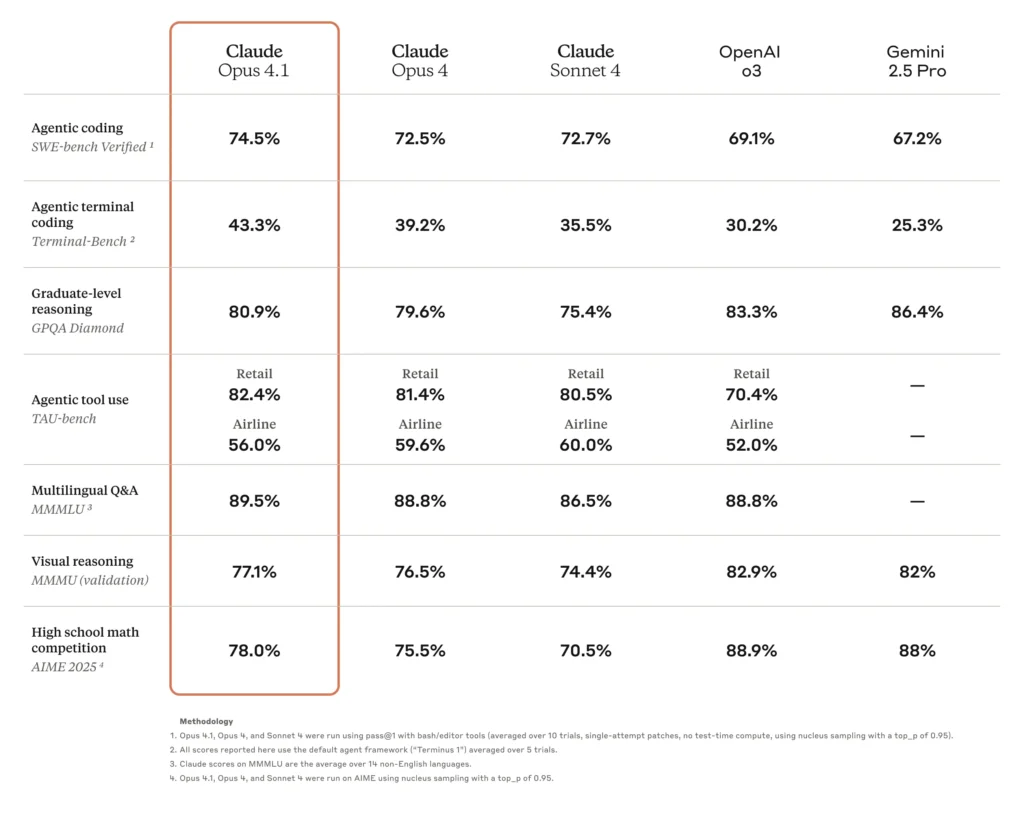
Anthropic’s Claude Opus 4.1 represents the latest iteration in its flagship Opus series, officially launched on August 5, 2025. This drop-in replacement for Opus 4 brings targeted enhancements in agentic tasks, real-world coding, and multi-step reasoning.
O3 Series vs Claude 4: Which is Better
OpenAI’s o3 series and Anthropic’s Claude 4 represent two of the most advanced reasoning-focused AI models available today. As organizations increasingly

Can Claude AI Fill Out Applications for you Directly on Website
Anthropic’s Claude AI has swiftly evolved from a conversational assistant into a powerful agent capable of interacting with digital interfaces as a human
How to Use Claude 4 extended thinking?
Claude 4, Anthropic’s latest family of large language models—including Claude Opus 4 and Claude Sonnet 4—introduces a powerful new “extended thinking”
Claude 4’s Fine‑grained tool Streaming: What is and How to Use
Claude 4’s latest capabilities mark a significant evolution in how large language models interact with external tools and APIs. Among these, fine‑grained tool
What Kind of Files does Claude Allow Me to Upload
Claude, Anthropic’s conversational AI, offers a rich set of file‑upload capabilities—both in its web interface and via its API—that let you work seamlessly
Gemini 2.5 Pro vs Claude Sonnet 4: A Comprehensive Comparison
In the rapidly evolving landscape of large language models (LLMs), Google’s Gemini 2.5 Pro and Anthropic’s Claude Sonnet 4 represent two of the latest