Choose your path
Claude Haiku 4.5 Blog
How to use thinking mode in claude 4.5
“Thinking mode” (also called extended thinking, thinking, or thinking blocks) in Claude 4.5 is an explicit, configurable operating mode that instructs the model to spend a separately budgeted number of tokens generating internal, step-by-step reasoning (a “chain-of-thought”) before emitting the final answer. It is designed to improve performance on multi-step reasoning, complex coding and agentic workflows, and research tasks by trading latency and token cost for deeper internal deliberation. Claude 4.5 exposes this capability at the Messages API level with explicit parameters (e.g., thinking / budget_tokens or an effort/“interleaved-thinking” header), preserves and optionally encrypts thinking blocks for later verification or tool use, and introduces cache and token-accounting behaviors you must manage when building production workloads.
Thinking mode in Claude 4.5: All You need to Know
Anthropic’s Claude 4.5 family (notably Sonnet 4.5 and Opus 4.5) brings extended “thinking” / scratchpad-style internal reasoning to their Claude 4 line. The Messages API exposes that capability through a thinking object (enable/disable + a budget_tokens allotment), streaming options, and special handling for “thinking” content blocks (including signatures and redaction). Sonnet 4.5 targets coding and agentic tasks and benefits heavily from extended thinking; Opus 4.5 adds preserved thinking blocks and other optimizations.

How to add Claude to an Alexa skill
Voice assistants are increasingly powered by large language models. If you want to bring Anthropic’s Claude API into an Alexa skill you maintain or build, this guide walks you through the practical architecture, concrete code patterns, and operational considerations you’ll need — from quick proof-of-concept to a production-grade skill.

Agentic Coding with Claude Haiku 4.5: A Guide For Developer in 2025
With the October 2025 arrival of Claude Haiku 4.5, Anthropic delivered a model explicitly optimized for agentic workloads: fast, cost-efficient, and tuned for sub-agent orchestration and “computer use” tasks (i.e., driving tools, editors, CLIs).
How to build proxy encoding using Claude Haiku 4.5
Claude Haiku 4.5 landed as a deliberate play in the “fast, cheap, still very smart” lane: Anthropic positioned it to give Sonnet-level coding and agentic

How to use Claude haiku 4.5 API? Access, Price & usage guide
Anthropic this week unveiled Claude Haiku 4.5, a latency-optimized “small” member of its Claude 4 family that the company says delivers near-frontier
Claude Haiku 4.5 API
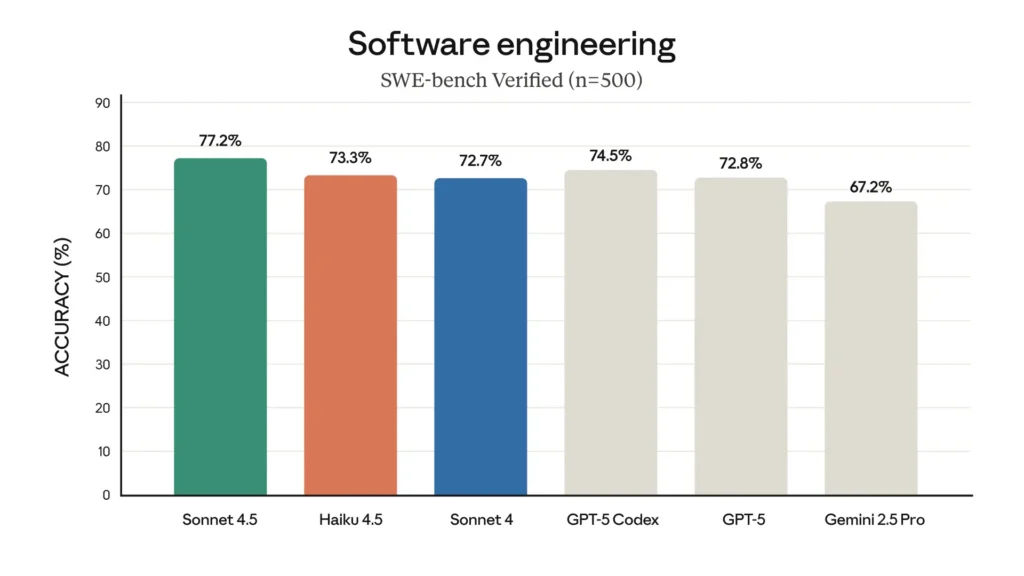
Claude Haiku 4.5 is a purpose-optimized, smaller-class language model from Anthropic, released in mid-October 2025. It’s positioned as a fast, low-cost option in the Claude lineup that preserves strong capability on tasks like coding, agent orchestration, and interactive “computer-use” workflows while enabling much higher throughput and lower unit cost for enterprise deployments.
Claude Haiku 4.5 — near-frontier coding power at a fraction of the cost
Anthropic this week unveiled Claude Haiku 4.5, a latency-optimized “small” member of its Claude 4 family that the company says delivers near-frontier