Choose your path
o3 Blog
Seedance 2.0 vs Veo 3.1: The Ultimate 2026 AI Video Generation Showdown
Seedance 2.0 vs Veo 3.1: In-depth comparison of ByteDance's Seedance 2.0 and Google's Veo 3.1 across quality. Available via CometAPI — single key.
How to Access o3 Pro: Pricing, Requirements & Step-by-Step Guide
How to Access o3 Pro: Learn exactly how to access OpenAI's powerful o3 Pro model. Available on CometAPI — OpenAI-compatible, single key. Get started today.
.webp)
Kling 3.0 vs Veo 3.1: The Ultimate 2026 AI Video Generator Showdown
Kling 3.0 currently leads with native 4K multi-shot storytelling, superior camera control. Veo 3.1 excels in photorealistic physics, native audio synchronization, and Google ecosystem integration, making it ideal for cinematic or enterprise projects. For most users, the winner depends on priorities: Kling 3.0 for speed, consistency, and cost; Veo 3.1 for premium realism and audio.
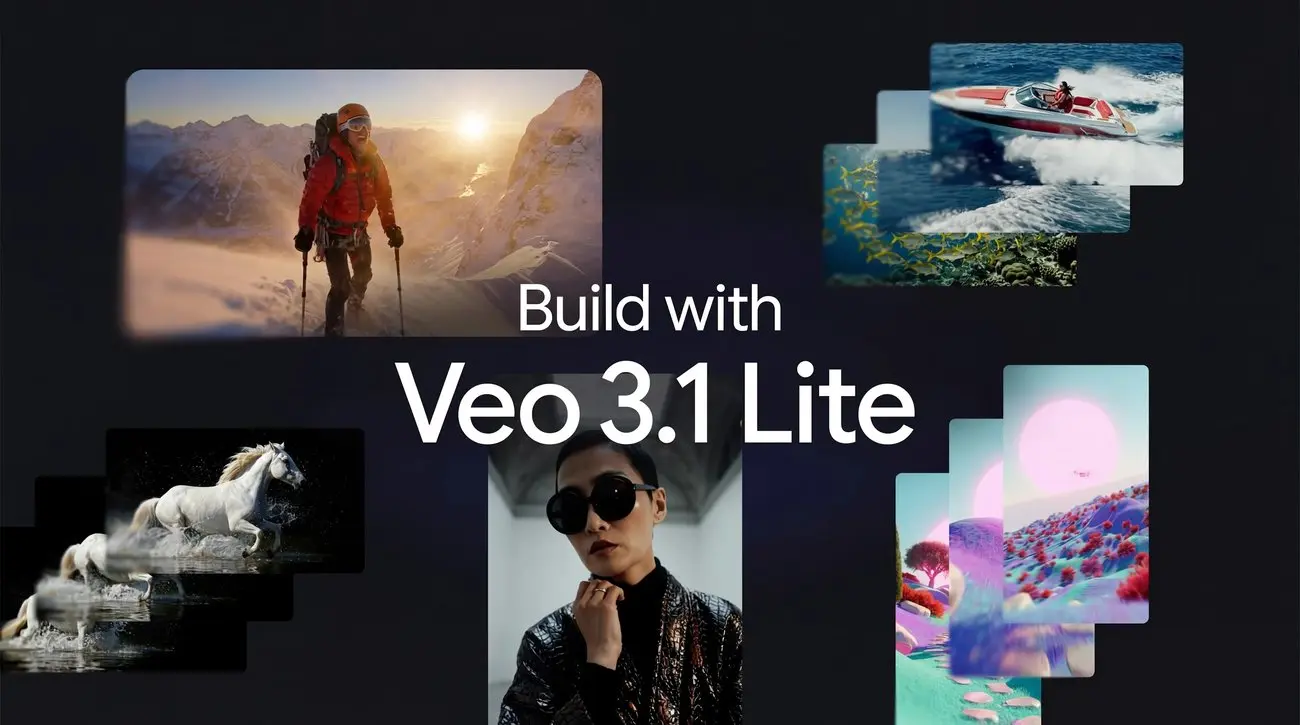
What is Google Veo 3.1 Lite
What is Veo 3.1 Lite? Veo 3.1 Lite is Google’s newest cost-efficient video generation model for developers, released on March 31, 2026. It supports text-to-video and image-to-video, outputs video with audio, and is designed for high-volume applications. Google says it costs less than half of Veo 3.1 Fast while keeping the same speed, with 16:9 and 9:16 output formats and 720p/1080p resolution support.

How to edit videos via veo 3.1
Google publicly introduced Veo 3.1 (and a Veo 3.1 Fast variant) in mid-October 2025 as an improved text-to-video model that produces higher-fidelity short
Best AI APIs for 2026: GPT-5.2, GPT Image 1.5, Sora 2, and Veo 3.1 Explained
In 2026, leading and Best AI APIs is GPT-5.2, GPT Image 1.5, Sora 2, and Veo 3.1. You will learn what each API does, where it works best, and practical examples of use. AI no longer focuses on a single task. The most effective tools combine text, image, and video generation, making content production faster and more consistent.
New Veo3.1: More consistency ,diverse output and richer
Google’s Veo 3.1 was updated in January, bringing focused improvements that push image-to-video workflows closer to production quality. The release emphasizes image-to-video fidelity, improved temporal and character consistency, native vertical output for mobile platforms, and higher-definition outputs via improved 1080p quality and a 4K upscaling path. For creators and developers who have been working around the “crop-then-edit” workflow for social vertical formats, Veo 3.1’s native 9:16 output and improved upscaling promise to reduce friction and deliver more polished, platform-ready clips.
Can Veo 3.1 do audio? and how should you use it professionally?
Veo 3.1 natively generates synchronized audio together with the video when you call the Gemini/Vertex (Veo) endpoints — you control audio via the text prompt (audio cues, dialogue lines, SFX, ambience) and the same generation job returns an MP4 you can download. If you prefer a single unified API that bundles many providers, CometAPI also offers access to Veo 3.1 (you call CometAPI with your Comet key and request veo3.1/veo3.1-pro). The release is positioned as a direct competitor to other media models (for example OpenAI’s Sora 2), with improvements focused on audio realism, narrative control and multi-shot continuity.