On October 21, 2026, Anthropic opened a research preview of Claude Duet — a proactive, always-on AI agent app powered by Claude Opus 5.5. Unlike traditional chat or the earlier Claude Cowork mode, Duet comes to you with morning briefs, monitors connected apps, works autonomously on its own cloud computer, and only asks for approval before sensitive actions (sending messages, payments, signing, deleting).
Available via waitlist to US Pro and Max subscribers at no extra cost (shares plan limits). This guide covers what Duet is, how it works, pricing, a detailed side-by-side with Claude Cowork (now largely merged into main Claude), and when to build your own agent on the Claude API or via platforms like CometAPI instead.
Key Takeaways
Claude Duet is a standalone proactive agent (push-based) designed for professionals and small businesses; it initiates contact and runs in the background even when your devices are offline.
Powered exclusively by Claude Opus 5.5; connects to 6,000+ marketplace connectors; requires explicit approval for high-impact actions.
Reviewed for clarity, source attribution and current API terminology.
Access is currently limited to a US waitlist for Claude Pro ($20/month) and Max (from $100/month) users; no Team/Enterprise support yet; no separate fee.
Claude Cowork was Anthropic’s earlier agentic knowledge-work surface (local files, multi-step deliverables). Since September 16, 2026, Cowork capabilities have been merging into the unified Claude experience (“Claude Cowork and chat are now one Claude”).
Duet = proactive monitoring + background work on cloud VM. Cowork/unified Claude = user-initiated (or scheduled) multi-step work that can touch local files.
For full control, custom tools, multi-model routing, or enterprise-scale agents, build on the Claude API (Messages API or Claude Managed Agents) — easily accessible and cost-optimized through CometAPI’s unified OpenAI-compatible endpoint.
What Is Claude Duet?
Claude Duet is Anthropic’s research-preview proactive AI agent, launched October 21, 2026. It is a separate standalone app (iOS, Android, and web at claude.ai) where Claude acts as a trusted partner that surfaces priorities, completes tasks, and continues working after you step away.
Anthropic built it specifically for professionals and small-business owners “with more on their plates than they can track.” The core differentiator is judgment: Duet decides what needs your attention now, what can wait, and when to check in first. It carries over memory, skills, and connected apps from your existing Claude account, so setup is minimal.
Unlike a pure chatbot, Duet is push-oriented: it messages you first. It is not Google’s older Duet AI, nor GitLab Duo.
What work can you hand off?
Administrative execution. It can prepare meeting invitations, draft follow-up emails, organize business information, and help manage outstanding invoices.
Document and project creation. Duet can prepare research briefs, financial models, presentations, dashboards, prototypes, and web applications.
Cross-application workflows. Through connected services, Duet can support CRM follow-ups, marketing campaigns, hiring tasks, document signature preparation, and approved purchases.
Start with one responsibility that has a clear result: a meeting brief with source links, a list of unpaid invoices with draft reminders, or a report with assumptions you can check. These tasks give you something concrete to review before expanding the scope.
How Claude Duet Works
Core Loop
Morning brief — Each day Duet scans connected apps and sends a short prioritized summary of what matters.
Ongoing monitoring — Checks accounts every few hours (not continuously, to protect usage limits) and messages only when something requires attention.
Task execution — You (or Duet) can hand off work of any size. It plans steps, uses the right tools, and runs on its own cloud virtual machine with a dedicated browser. Work continues even if your phone or laptop is off.
Approval gates — Before sending a message, making a payment, signing a document, or deleting anything, Duet shows exactly what it will do and waits for your yes. Certain actions (trading securities, moving money between accounts) remain permanently blocked.
Where human approval matters
Duet is designed to request approval before consequential actions, including sending messages, making payments, signing documents, and deleting information.
Anthropic also describes dedicated safeguards against prompt injection and unintended disclosure of sensitive information in its Duet safety and security documentation.
These safeguards reduce certain risks without eliminating them. An agent may still misunderstand an email, select the wrong source, or misjudge urgency.
Some operations remain prohibited even with approval, including securities trading and transfers between bank accounts. For actions that are allowed, check recipients, amounts, and destinations rather than treating an approval prompt as a routine notification.
Interaction Model
Message Duet by text or voice in one persistent thread (plus optional topic-specific channels that share memory). Results appear as drafts, files, or notifications. You can also start separate channels for different projects.
Connectors & Capabilities
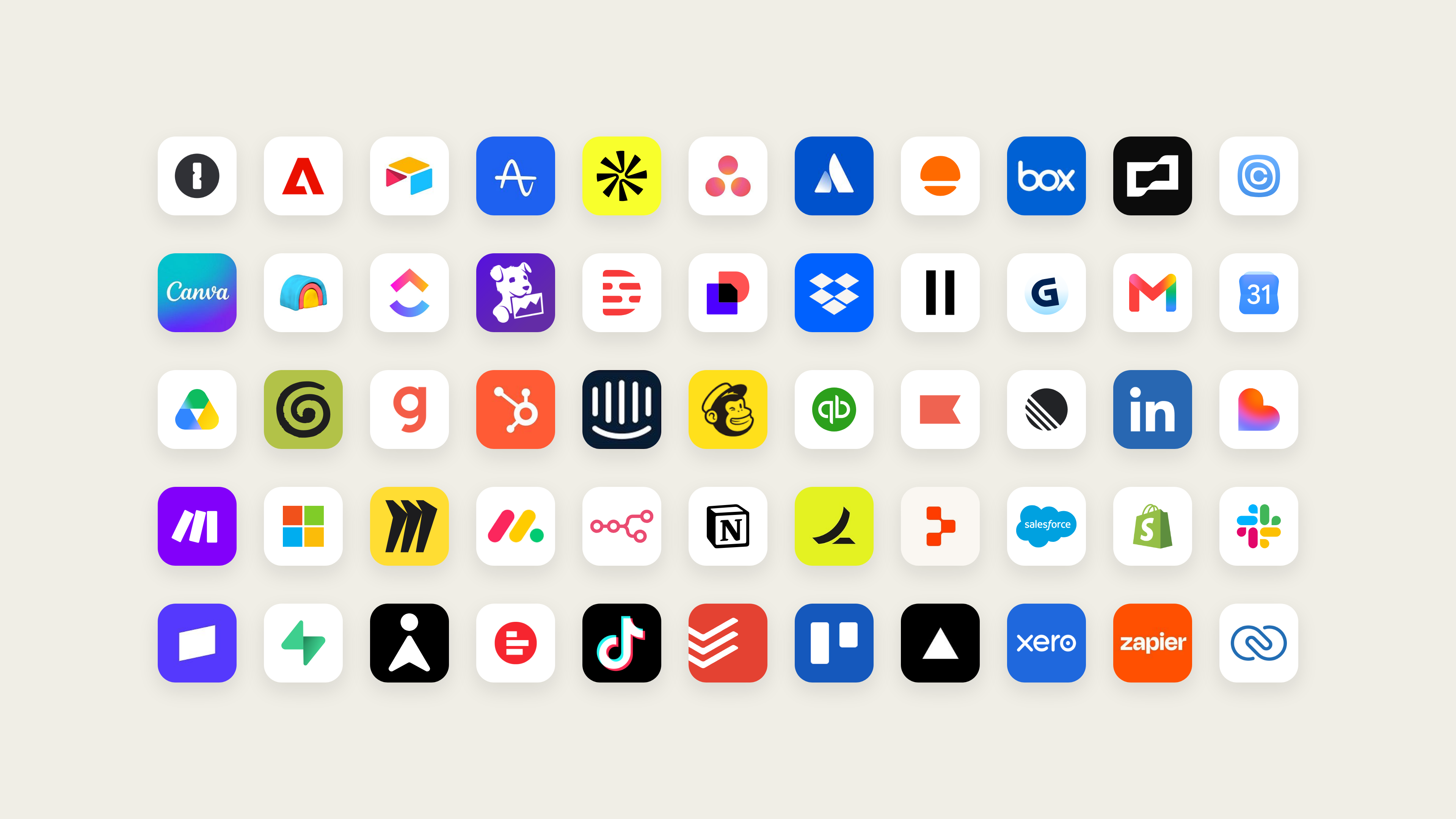
Duet uses the Claude Marketplace’s 6,000+ connectors and plugins. Documented examples include:
Gmail / Slack triage and reply drafting
QuickBooks / Stripe unpaid-invoice detection and reminder drafts
Gusto payroll preparation
LinkedIn job posting
Docusign agreement prep
HubSpot follow-ups
Canva campaigns and Shopify store management
Approved purchases via Stripe Link (virtual cards) or Shop Pay
For sites without native connectors it uses its cloud browser.
Safety Design
Credentials never enter the agent’s view. A new sensitive-information classifier blocks credit-card numbers and government IDs by default. Prompt-injection defenses and auto-mode classifiers are inherited from prior Anthropic agent work. External penetration testing and a public bug-bounty program apply.
How Much Does Claude Duet Cost in 2026?
Claude Duet has no separate subscription fee during the research preview. It is included in eligible Claude Pro and Max subscriptions.
Subscription prices and shared usage
Claude plan
US subscription price
Duet research preview
Free
$0
Not eligible
Pro
$20/month
Eligible by invitation
Pro annual
$200/year
Eligible by invitation
Max 5x
$100/month
Eligible by invitation
Max 20x
$200/month
Eligible by invitation
Team
Plan-dependent
Not available yet
Enterprise
Contract-dependent
Not available yet
US list prices exclude taxes. Confirm your billing option on the official pricing page. An eligible subscription does not guarantee an immediate waitlist invitation.
Morning briefs, periodic checks, and delegated jobs draw from the same five-hour and weekly allowance as regular Claude use. Heavy background work can therefore leave less capacity for your other tasks. Subscription price alone does not tell you how many successful workflows you will complete.
What would a comparable custom API workflow cost?
If you build your own assistant, estimate the model bill from the workload you expect to run. The following rates are listed on the CometAPI Claude Opus 5.5 model page as of October 28, 2026. They describe API access, not Duet access.
Token category
Anthropic direct API
CometAPI
Input, per 1M tokens
$4.00
$3.20
Output, per 1M tokens
$20.00
$16.00
Cache read, per 1M tokens
$0.20
$0.16
Five-minute cache write, per 1M tokens
$5.00
$4.00
One-hour cache write, per 1M tokens
$8.00
$6.40
For a simple uncached monthly estimate, assume:
Email and calendar checks: 900 calls, each using 8,000 input tokens and 1,000 output tokens.
Larger analysis jobs: 100 calls, each using 30,000 input tokens and 5,000 output tokens.
Monthly total: 1,000 calls, 10.2 million input tokens, and 1.4 million output tokens.
At the listed CometAPI rates, input costs 10.2 × $3.20 = $32.64 and output costs 1.4 × $16.00 = $22.40, for $55.04 in model charges. The same uncached volume at the listed direct Anthropic rates totals $68.80.
This is an illustrative workload, not a measurement of Duet's internal token consumption.
It excludes hosting, scheduling, database storage, retrieval, third-party tools, retries, monitoring infrastructure, and development costs. Prompt caching could reduce recurring input costs, while additional agent turns and external tools could increase the total.
This is not an all-in monthly price or a claim that API development is cheaper than Duet. Compare the total cost of a completed, accepted result, including engineering and review time. The current Claude pricing page also lists monthly API credits for Max plans, subject to its terms; check eligibility and provider restrictions before estimating your net direct-API spend. Do not assume those credits apply to CometAPI.
Claude Duet vs Cowork vs Building Your Own Agent on the API
However, Duet is not necessarily the best solution for every AI automation workflow. Claude Cowork provides greater visibility into task execution and stronger local-file workflows, while building your own agent through the API provides precise usage-based cost accounting, custom interfaces, and control over execution rules.
Decision
Claude Duet
Cowork capabilities
Custom API agent
Who starts the work?
Duet flags relevant work; you can also delegate tasks
You request or schedule a task
Your application defines triggers
How do you follow execution?
Task status and requests for decisions; no browser takeover
Visible steps and browser activity, with ways to redirect work
You build the review interface and logs
How are files handled?
Connected sources; no direct access to local folders
Files and folders supported by the client and deployment
You implement access and permissions
How are costs controlled?
Shared subscription usage limits
Plan-specific usage rules
Token records, budgets, and workflow accounting you implement
Can the interface and rules be customized?
Within the product's controls
Within the product's controls
Your own interface, tools, and approval logic
Who maintains execution?
Anthropic
Anthropic
Your engineering team and service providers
Choose by the work you need done: Duet for keeping track of responsibilities, Cowork capabilities within Claude for work you direct and review, and a custom API agent for software that needs its own interface, integrations, and measurable operating costs.
Claude Duet vs Claude Cowork (Side-by-Side)
Claude Cowork began as Anthropic’s dedicated agentic surface for knowledge work — local file access, multi-step tasks that produce real deliverables (Excel with formulas, PowerPoint decks, research briefs), scheduled runs, sub-agents, and connectors. On September 16, 2026, Anthropic announced that “Claude Cowork and chat are now one Claude”: the agentic capabilities are being folded into the main conversation experience so users no longer choose a separate mode.
The practical distinction that remains is initiative and environment:
Approval before irreversible deletes; optional plan review
Model choice
Fixed to Opus 5.5
Uses available Claude models
Availability (Oct 2026)
US Pro/Max waitlist only
Paid plans (Pro, Max, Team, Enterprise) more broadly
Best for
Continuous operational awareness & routine work
On-demand multi-step knowledge-work deliverables
Status
Research preview
Capabilities merging into main Claude experience
In short: use (or wait for) Duet when the hard part is noticing what needs attention. Use Cowork/unified Claude when you already know the task and want a polished deliverable produced from your files and tools.
Building Your Own Agent on the Claude API
Neither Duet nor Cowork is a public developer API. Teams that need custom tools, multi-model routing, data residency control, or production-scale orchestration should build on the Claude Platform:
Messages API — Full control over the agent loop, tools, and state.
Claude Managed Agents (public beta) — Anthropic-hosted harness + infrastructure. You define the agent (model, system prompt, tools, MCP servers, skills) and environment (Anthropic cloud sandbox or self-hosted). Anthropic runs the session; you receive events. Pricing = standard token rates + $0.08 per active session-hour. Ideal for long-running, asynchronous agents without operating your own infrastructure.
Claude Agent SDK — Self-hosted option when you must keep everything inside your perimeter.
When to build your own
You need tools or data sources not available in the Claude Marketplace.
You require multi-provider fallbacks, custom approval workflows, or strict compliance logging.
You want to combine Claude’s judgment with other models (e.g., specialized vision or coding models).
You are building an internal product or multi-tenant agent platform.
CometAPI Recommendation
CometAPI gives developers a single OpenAI-compatible endpoint and one API key for Claude models (including the latest Opus series) plus 500+ other models from OpenAI, Google, and more. Benefits include:
20–40% lower effective pricing on many models versus direct vendor rates.
Native Anthropic Messages support alongside Chat Completions.
Instant model switching, unified billing, caching, and enterprise controls.
Zero need to manage separate Anthropic, OpenAI, and other accounts.
Point your existing OpenAI SDK code at https://api.cometapi.com/v1, select the desired Claude model ID, and you can prototype Duet-style proactive agents or Cowork-style task runners today while retaining full control over tools, approvals, and cost. This is the fastest path for most teams that want Claude’s strengths without being limited to Anthropic’s consumer product surfaces.
Conclusion
Claude Duet marks Anthropic’s clearest move into always-on, judgment-driven agents that work for you rather than waiting for you. Its research-preview design prioritizes safety, discretion, and business-relevant workflows while running on a dedicated cloud computer. Claude Cowork (now largely unified into main Claude) remains the stronger choice for on-demand, file-centric knowledge work. For teams that need more control, customization, or scale, the Claude API — especially when accessed through a unified platform like CometAPI — offers the most flexible path.
As the preview evolves and availability expands, the line between consumer agents and developer-built systems will continue to blur. The best strategy is to match the surface to the job: Duet for continuous awareness, unified Claude for deliverable production, and the API (via CometAPI) when you need to own the agent.
FAQs
Why can an invited subscriber still be unable to open Duet?
Check that the invitation email, Claude account, and the Apple or Google account used for setup correspond to the address submitted to the waitlist. Access is tied to that address, and activation can take a few minutes after accepting the invitation. If the addresses match and access still fails, use the help route in the setup guide rather than buying another subscription.
Does disconnecting an app remove information Duet already remembers?
Disconnecting stops future access to that app, but it does not automatically erase memory from earlier conversations. Review the relevant memory and chat settings separately. If you want to prevent searches of earlier chats, the help guide points to “Search and reference chats” in Claude settings; removing a connection and changing chat search are different controls.
What happens if I cannot approve an action immediately?
Duet can continue the remaining work and bring the approval request back later. You can use Tasks to find items waiting for input. Before approving, check whether the proposal is still timely: a meeting slot may have changed or an invoice may already have been paid. A prepared action is not evidence that the action has been completed.
What if Duet's result looks finished but the task is still open?
Duet may suggest that work is finished, but the official help guide says only you can mark a task completed. Open the deliverable, check that it answers the original request, and resolve any remaining decisions before closing the task. Treat the task status and the quality of the output as separate checks.
Who should I contact if a purchase made through Duet goes wrong?
For delivery, order status, returns, or a product refund, contact the store. For a Link charge or account issue, use Link support; for a Shop Pay charge or account issue, use Shop support. If Duet selected the wrong item, store, or option, report that behavior to Anthropic. Keep the order confirmation so the relevant party can identify the transaction.