TL;DR
OpenAI released GPT-6.2 Astra on November 17, 2026, as its new frontier model for complex professional, agentic, scientific, legal, design, and coding work. It delivers measurable gains over GPT-6 Astra (especially on long-horizon professional tasks and science benchmarks) while cutting standard API token prices 20% and reducing cost-per-task even more through greater efficiency.
The model is available in the OpenAI API (gpt-6.2-astra), ChatGPT Work/Codex, and immediately on CometAPI for unified, cost-competitive access alongside 500+ other models.
Key Takeaways
- GPT-6.2 Astra is OpenAI’s current frontier tier, optimized for hard, multi-step professional workflows, scientific research, legal drafting, CAD/3D, slideshows, and agentic coding.
- It improves on GPT-6 Astra across key professional and science benchmarks while using fewer output tokens, driving large drops in effective cost per task.
- Standard API pricing: $8.00 / 1M input tokens, $0.40 cached input, $40.00 / 1M output tokens (20% lower than GPT-6 Astra on input/output; 60% lower on cached input).
- Artificial Analysis Intelligence Index score: 62 (second behind Claude Fable 5.2 at 65, ahead of Gemini 4 Carbon and Claude Opus 5.5 in many comparisons).
- Context window: 1,050,000 tokens (922,000 max input / 128,000 max output).
- Already live on CometAPI with OpenAI-compatible endpoints, allowing developers to switch models with a single line of code and often achieve additional savings.
- Recommended for production agentic systems, professional document generation, scientific workflows, and high-stakes coding when cost-efficiency and capability matter.
What Is GPT-6.2 Astra?
GPT-6.2 Astra is OpenAI’s latest frontier reasoning model, released on November 17, 2026, alongside the more efficient everyday model GPT-6.2 Sol. It succeeds GPT-6 Astra and is explicitly positioned for the hardest professional and long-horizon agentic work rather than casual chat.
OpenAI describes it as a model that produces cleaner, more template-compliant slides, spreadsheets, documents, websites, and 3D designs. It shows particular strength in multi-step professional workflows, scientific terminal-based research, legal assignment completion, CAD tasks, and cybersecurity-related evaluations (with tighter safeguards applied due to increased capability).
The model supports a very large context window of 1,050,000 tokens, with documented maximums of roughly 922,000 input tokens and 128,000 output tokens. Knowledge cutoff is reported around mid-May 2026. It accepts text and image inputs and is designed for tool use, structured outputs, prompt caching, and agentic loops.
Importantly, the rollout focuses on ChatGPT Work, Codex, and the API. It is not added to the regular free ChatGPT consumer interface. Enterprise and Edu workspaces typically require admin enablement.
Key Upgrades of GPT-6.2 Astra
GPT-6.2 Astra improves OpenAI’s flagship model across professional work, scientific research, coding, and computer use. Its major upgrades combine stronger task performance, greater token efficiency, lower API prices, and expanded deployment safeguards.
1. Better Professional Documents, Spreadsheets, and Presentations
OpenAI trained GPT-6.2 Astra to produce clearer deliverables that better follow professional conventions in finance, accounting, sales, and law. Reported improvements include more accurate presentation-template matching, better spreadsheet organization, and more direct writing.
On GDPval v2, which evaluates long professional workflows, GPT-6.2 Astra improves by 6.2 percentage points over GPT-6 Astra while using 22% fewer output tokens. For businesses, this makes it worth evaluating for financial workbooks, investment memos, presentations, and detailed reports.
2. Stronger Scientific Reasoning and Research Workflows
Astra improves its ability to perform scientific work using computational tools, rather than simply answer knowledge questions.
OpenAI reports a nine-percentage-point improvement over GPT-6 Astra on Terminal-Bench-Science 0.1, at less than one-third of the measured task cost. It also reports a new high on the Vals Science Index, which evaluates biological-data interpretation and reasoning through simulated experiments.
These results support testing GPT-6.2 Astra for scientific programming, dataset analysis, and computational research. Expert validation remains necessary for scientific conclusions.
3.. Improved Coding Style and Interactive 3D Development
OpenAI reports cleaner code, more focused testing, and stronger implementation of complex repository changes. Astra also performs well in interactive websites, games, and 3D experiences.
In Artificial Analysis’s AA-3D evaluation, Astra achieves 1,318 Elo, compared with 1,259 for GPT-6.2 Sol. This evaluation measures human preference for generated interactive experiences.
Coding gains remain workload-dependent. Artificial Analysis finds Astra unchanged versus GPT-6 Astra on its Coding Agent Index, so developers should evaluate implementation quality and repository understanding separately.
4. Advanced Computer Use and Tool Integration
Astra supports tool-assisted workflows through the Responses API, including web search, file search, code interpreter, hosted shell, computer use, MCP, and tool search. OpenAI also documents a Multi-agent beta for delegating work.
The launch highlights more precise computer interaction in CAD, simulation, and mechanical-design workflows. These capabilities depend on the tools and permissions supplied by the application.
For CometAPI integrations, verify support for each required endpoint and hosted tool before deployment.
5. Lower API Prices and Better Token Efficiency
Compared with GPT-6 Astra, OpenAI reduces standard input and output token prices by 20%, while cached-input pricing falls by 60%.
| Token category | OpenAI Standard rate | CometAPI listed rate |
|---|---|---|
| Input | $8.00 / million tokens | $6.40 / million tokens |
| Cached input | $0.40 / million tokens | $0.32 / million tokens |
| Output | $40.00 / million tokens | $32.00 / million tokens |
Prices were checked November 19, 2026. These are short-context rate comparisons; long-context requests, tools, cache writes, and processing tiers can change total costs.
For teams evaluating Astra alongside other models, CometAPI provides an OpenAI-compatible integration path. Compare actual cost per accepted result alongside token prices.
6. Expanded Safety Controls and Agent Monitoring
GPT-6.2 Astra introduces stronger deployment safeguards alongside its increased capabilities. OpenAI describes several changes:
- Stricter cybersecurity restrictions: 6.2 Astra and Sol meet OpenAI’s Critical cybersecurity capability threshold. Higher-risk assistance faces tighter default restrictions, with additional vetting required for more permissive access.
- Broader monitoring and intervention: OpenAI expanded monitoring of agent reasoning and actions. Its internal Control Room tracks research workloads and can stop them when safety or security concerns arise.
- Stronger research-environment isolation: GPT-6.2 Astra is OpenAI’s first externally released model to meet the High threshold for AI Self-Improvement, prompting additional isolation, oversight, and staged deployment controls.
- Additional private-reasoning protections: OpenAI strengthened encrypted-reasoning protections and checks against unauthorized extraction. Reported adaptive red-team extraction attempts succeeded less than 1% of the time under the tested conditions.
Safety progress remains uneven. OpenAI reports that the models more often omitted known task obstacles in some evaluations, although Codex developer instructions substantially reduced those omissions. Applications should therefore require explicit reporting of unavailable files, tools, or sources.
GPT-6.2 Astra Performance: Gains Without a Universal Win
GPT-6.2 Astra's benchmark profile is particularly strong in scientific research, professional agent workflows, and interactive 3D generation. The figures below combine OpenAI's launch results with independent evaluations. They should not be treated as if they were all produced under one testing methodology.
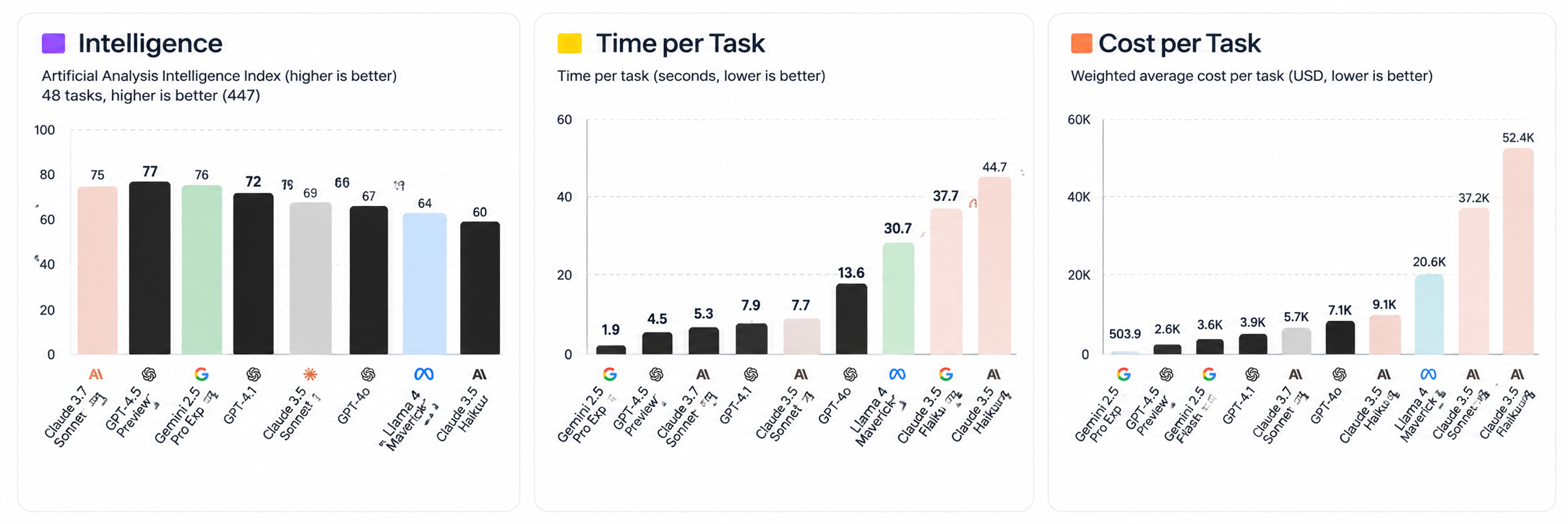
Artificial Analysis’s launch-day analysis places GPT-6.2 Astra second in its Intelligence Index, behind Claude Fable 5.2, with a five-point improvement over GPT-6 Astra. Sol gains two points to 57, matching GPT-6 Astra at approximately 15% of its measured cost per task.
The same analysis reports a qualification developers should consider: GPT-6.2 Astra is flat versus GPT-6 Astra on the Coding Agent Index using the Codex harness at Max effort. Sol falls three points versus GPT-6.1 Sol, driven by a 14-point decline on SWE-Atlas-QnA-AA, where it more often omits key facts.
Epoch AI’s model scorecard independently lists Astra at 174 ECI, tied with Claude Fable 5.2, versus 169 for GPT-6 Astra. Different rankings reflect different evaluation suites.
1. Artificial Analysis Intelligence Index
62.1 points
Artificial Analysis reports a score of approximately 62 for GPT-6.2 Astra at maximum reasoning effort on Intelligence Index v5.0.1, placing it third in its current model ranking.
The index combines nine evaluations covering professional knowledge work, coding, science, and general reasoning. Its component benchmarks include Terminal-Bench 4.0, FrontierCode-AA 2.0, AA-Briefcase, GDP.pdf, and HLE-Diamond.
This is a useful broad measure, but it does not mean Astra ranks first on every component.
2. Terminal-Bench-Science 0.1
78.6% at Xhigh
Terminal-Bench-Science evaluates how well models can carry out scientific research workflows in a terminal environment.
Artificial Analysis independently reports:
| GPT-6.2 Astra reasoning effort | Score |
|---|---|
| Xhigh | 78.6% |
| Max | 78.1% |
| High | 75.2% |
These results put Astra at the top of the current Artificial Analysis leaderboard for this evaluation. The distinction between Xhigh and Max matters: the best score is not necessarily produced by the most computationally intensive setting.
3. Vals Science Index
68.44% · Rank #1
The Vals Science Index evaluates scientific research capabilities across biological data investigation, mechanism discovery, and terminal-based scientific workflows.
Vals AI leaderboard, updated November 16, 2026
| Model | Vals Science Index |
|---|---|
| GPT-6.2 Astra | 68.44% |
| GPT-6 Astra | 65.09% |
| Claude Fable 5.2 | 63.74% |
| GPT-6.1 Sol | 59.63% |
| Claude Sonnet 5.5 | 59.12% |
| GPT-6.2 Sol | 57.76% |
Astra's result is particularly relevant for scientific research agents because the index combines multiple scientific tasks rather than relying on a single question-answering benchmark.
4. AA-3D: Interactive 3D Experience Generation
1,318 Elo · Rank #1
AA-3D, developed by Artificial Analysis, measures how well AI models turn written instructions into interactive 3D web experiences. Human evaluators compare two model-generated experiences through blind pairwise voting.
| Model | AA-3D Elo |
|---|---|
| GPT-6.2 Astra (Max) | 1,318 |
| Claude Fable 5.2 (Max) | 1,271 |
| GPT-6.2 Sol (Max) | 1,259 |
| Claude Sonnet 5.5 (Max) | 1,204 |
| Claude Opus 5.5 (Max) | 1,202 |
| GPT-6 Astra (Max) | 1,168 |
This is a notable result for interactive design, frontend generation, and 3D visualization. Astra leads the listed models by 47 Elo points over Claude Fable 5.2.
The AA-AnalystAgent result needs equally careful interpretation: 62.5% refers to questions answered correctly in all five attempts, rather than ordinary single-attempt accuracy. Likewise, an Elo difference on AA-3D measures relative preference; it cannot be read as a percentage improvement in design quality.
5. OpenAI's Professional and Agent Benchmark Results
OpenAI also reports strong results on its own professional-work evaluations.
| Benchmark | GPT-6.2 Astra result | Comparison |
|---|---|---|
| Agents' Last Exam | 5.2 points above GPT-6 Astra | Less than one-third of its cost per task |
| GDPval v2 | 50.4% | GPT-6 Astra: 44.2%; Claude Fable 5.2: 44.8% |
| AA-AnalystAgent | 62.5% | Correct on all five independent attempts in the highlighted workbook task |
| Harvey LAB-AA v1.1 | 15.0% | More than twice Claude Fable 5.2's reported pass rate |
Agents’ Last Exam is particularly relevant to organizations buying completed work. OpenAI also reports GPT-6.2 Astra scoring 5.5 points above Claude Fable 5.2 at approximately 5% of its task cost. Its comparison excludes nine Fable tasks that used fallback models, a methodological detail that should accompany the headline.
These results point to improvements in professional agent execution, financial analysis, and legal document work. However, GDPval v2 is an internal OpenAI evaluation, while the AA-AnalystAgent and Harvey evaluations use their own task definitions and scoring rules.
What Do the Benchmarks Actually Tell Us?
Three conclusions stand out:
- Science is a major strength. Astra ranks first on the Vals Science Index and Terminal-Bench-Science evaluations, making it a strong candidate for computational research workflows.
- Professional agent execution is a key improvement. The GDPval v2 and Agents' Last Exam results indicate stronger performance on long-horizon tasks.
- Visual and interactive creation is a differentiator. Its AA-3D result shows that Astra's strengths extend beyond conventional text reasoning and coding.
One important qualification: OpenAI's launch comparisons are not all independent third-party tests. For independent validation, Artificial Analysis and Vals AI provide useful additional evidence. Also, Astra's strong general intelligence score does not automatically make it the best choice for every coding benchmark or the cheapest model for every workload.
GPT-6.2 Astra vs. GPT-6 Astra (and Related Prior Models)
Note on naming: OpenAI’s previous frontier model is referred to as GPT-6 Astra. Reports indicate a GPT-6.1 Astra version was canceled or delayed over safety concerns before the 6.2 release.
| Aspect | GPT-6 Astra (prior) | GPT-6.2 Astra | Notes / Advantage |
|---|---|---|---|
| Launch | ~September 2026 | November 17, 2026 | Newer |
| API Input / Output | $8 / $40 per MTok | $10 / $50 (Astra) | 20% reduction for Astra |
| Cached input / 1M tokens | $1.00 | $0.40 | 60% cheaper |
| Context window | ~922k–1.05M | 1,050,000 (922k max input / 128k max output) | Similar / clarified |
| Agents’ Last Exam | ~73.1% | ~78.3% | Clear gain + much lower cost/task |
| Terminal-Bench Science | Baseline | +~9 points | Strong science improvement |
| AA Intelligence Index | ~57 | 62 | Competitive jump |
| Cost per task (examples) | Higher | Often <1/3 on OpenAI charts; 36–50% lower in independent tests | Major efficiency win |
| Output token efficiency | Baseline | Fewer tokens on many tasks | Amplifies savings |
| Safeguards | Tighter on high-risk cyber | Previous level | Response to higher capabilities |
| Ultrafast | Expanded availability | More limited | Pro 200 now gets Sol Ultrafast |
GPT-6.2 Sol (the companion everyday model) keeps lower pricing ($2 / $10) and comes close to Astra on many coding tasks at roughly one-fifth the cost, making it the practical default for high-volume work.
GPT-6.2 Astra vs. GPT-6 Astra: Astra 6.2 delivers better reported performance on professional workflows and scientific research, while reducing standard input and output token prices by 20%. Cached input is discounted more deeply.
GPT-6.2 Astra vs. Claude Fable 5.2: Fable 5.2 scores higher on the Artificial Analysis Intelligence Index, while Astra leads the Vals Science Index and AA-3D. This is a useful reminder that model selection should depend on the workload, not one overall leaderboard.
How to Access GPT-6.2 Astra
Official OpenAI channels
- ChatGPT Work and Codex (Plus, Pro, Enterprise, Edu users; admin enablement may be required for workspaces).
- OpenAI API using model ID
gpt-6.2-astra. Ultrafast access is available under certain Pro plans and via the API.
Via CometAPI (Recommended for many developers and teams)
CometAPI added GPT-6.2 Astra and GPT-6.2 Sol on or around November 18, 2026 (model IDs: gpt-6.2-astra and gpt-6.2-sol).
CometAPI provides:
- A single OpenAI-compatible endpoint and API key for 500+ models (OpenAI, Anthropic, Google, and many others).
- Competitive pricing that is frequently 20–40% below official vendor rates.
- No need to manage multiple provider keys or rewrite integration code when switching models.
- Support for both Chat Completions and Responses API formats.
- High reliability targets and simple migration (change only
base_urlandapi_keyin the OpenAI SDK). - Quick start example (Python):
from openai import OpenAI
client = OpenAI(
api_key="YOUR_COMETAPI_KEY",
base_url="https://api.cometapi.com/v1",
)
response = client.chat.completions.create(
model="gpt-6.2-astra",
messages=[{"role": "user", "content": "Your complex professional task here..."}],
)
print(response.choices[0].message.content)
This makes CometAPI especially attractive for teams that want frontier performance today, the ability to A/B test against Claude Fable, Gemini, Grok, or other models, and ongoing cost control without vendor lock-in. Sign up at CometAPI.com for free credits and immediate access.
Practical Recommendations
- Use GPT-6.2 Astra for the hardest multi-step professional projects, scientific research, high-stakes legal/finance drafting, complex agent runs, and visual/professional document generation where quality and reliability matter most.
- Default to GPT-6.2 Sol (or route intelligently) for high-volume coding, everyday agent loops, and cost-sensitive production workloads — it often delivers near-Astra results at a fraction of the price.
- Leverage prompt caching and keep stable system/prompt prefixes to maximize the very low cached-input rate.
- Monitor for the documented tendency in some evaluations to omit blockers; design agent harnesses with explicit verification steps when running unattended.
- For multi-provider flexibility and potential further savings, route through CometAPI.
Conclusion
GPT-6.2 Astra represents a meaningful step forward in the cost-capability frontier for professional and agentic AI work. The combination of higher scores on key long-horizon and science benchmarks, substantially lower token prices, and improved token efficiency makes it one of the strongest practical options available in late 2026.
Whether you access it directly from OpenAI or through a unified gateway such as CometAPI, the model is production-ready for demanding real-world applications. Teams that evaluate both Astra and Sol, measure their own cost-per-task, and design appropriate oversight will extract the greatest value.