GPT-6.2 Astra vs GPT-6.2 Sol: Which Model Should You Choose?
Updated November 19, 2026. Specifications, availability, and listed API prices checked on this date.
Start with GPT-6.2 Sol for cost-sensitive everyday work. Test GPT-6.2 Astra when difficult tasks, expensive rework, or demanding deliverables justify its higher price. That is a useful starting policy, but the final choice should come from accepted results on your own workload.
OpenAI released both models on November 17, 2026. Astra is positioned for the hardest projects, while Sol is its everyday work model for coding and agents at scale. Both are available through CometAPI. The decision is less about gaining a larger context window and more about whether Astra’s additional capability earns its premium. Sources: OpenAI announcement, Astra documentation, and Sol documentation.
TL;DR
GPT-6.2 Astra and Sol share a 1.05-million-token API context window, 128,000 maximum output tokens, text and image input, and text output. Astra’s standard token rates are four times Sol’s: $8/$40 versus $2/$10 per million input/output tokens through OpenAI. CometAPI currently lists $6.40/$32 for Astra and $1.60/$8 for Sol. Sol approaches Astra on one coding evaluation, while Astra leads in interactive 3D preference testing. Choose by completion quality, missing requirements, latency, and cost per accepted result. Sources: OpenAI, Artificial Analysis, CometAPI Astra, and CometAPI Sol.
Key Takeaways
- Sol is a sensible first candidate for volume: Its lower rates make everyday drafting, extraction, and repeatable agent tasks economical to evaluate.
- Astra targets demanding projects: Test it on difficult engineering, research, and complex professional deliverables.
- Capacity does not distinguish them: Both document the same API context, maximum input, and maximum output limits.
- Coding differences depend on the test: Sol comes within 0.5 points of Astra on FrontierCode 2.0 at approximately one-fifth of task cost, according to OpenAI.
- Astra leads AA-3D: Artificial Analysis reports 1,318 Elo for Astra versus 1,259 for Sol.
- Use measured outcomes: A lower token price and a lower cost per completed task are different claims.
What Are GPT-6.2 Astra and Sol?
GPT-6.2 Astra: For the Hardest Projects
OpenAI describes Astra as its most capable model for difficult projects from start to finish. Its documented applications include building and revising software, using a computer, and working with documents.
That positioning makes Astra worth testing when a task contains ambiguity, several dependencies, or a demanding final deliverable. Examples include tracing a bug across services, developing a financial workbook, or synthesizing evidence into a detailed technical report. These are recommended evaluation scenarios; model positioning does not guarantee success on every task. Source: Astra model documentation.
GPT-6.2 Sol: For Everyday Work at Scale
Sol is OpenAI’s go-to model for everyday work, from coding to powering agents at scale. It supports many of the same interfaces and tools as Astra, allowing developers to evaluate both without designing an entirely different workflow.
Sol’s appeal is substantial capability at lower rates. Applications that make thousands of requests should establish whether it meets their quality requirements before paying Astra prices for all traffic. Conversely, a low price provides little value if the output repeatedly needs repair. Source: Sol model documentation.
GPT-6.2 Astra vs Sol: Specifications Compared
| Specification | GPT-6.2 Astra | GPT-6.2 Sol |
|---|---|---|
| Model ID | gpt-6.2-astra | gpt-6.2-sol |
| Primary positioning | Hardest projects | Everyday work and agents at scale |
| Input / output | Text and images / text | Text and images / text |
| API context window | 1,050,000 tokens | 1,050,000 tokens |
| Maximum input | 922,000 tokens | 922,000 tokens |
| Maximum output | 128,000 tokens | 128,000 tokens |
| Knowledge cutoff | May 18, 2026 | June 1, 2026 |
| Streaming and structured outputs | Supported | Supported |
| Chat Completions and Responses | Supported | Supported |
| Tool calling | Responses API required | Responses API required |
| Native audio/video input | Unsupported | Unsupported |
| Fine-tuning | Unsupported | Unsupported |
Sources: Astra, Sol, and GPT-6.2 integration guidance. The total context window is different from maximum input capacity. Sol’s later knowledge cutoff also does not establish stronger overall capability or give either model live knowledge of current events.
Both document Responses API tools including web search, file search, code interpreter, hosted shell, computer use, MCP, and tool search. Image generation is a separate tool; native model output is text.
Benchmark Comparison: How Much Better Is Astra?
Professional Work and Scientific Research
OpenAI’s launch evaluations show substantial improvements over earlier models, particularly on tasks that require multiple steps and a finished deliverable.
| Benchmark | Reported GPT-6.2 result | What it measures |
|---|---|---|
| Agents’ Last Exam | Astra scores 5.2 points above GPT-6 Astra at less than one-third of the task cost | Long professional workflows |
| Terminal-Bench-Science 0.1 | Astra improves by 9 percentage points over GPT-6 Astra at less than one-third of the task cost | Scientific work performed through terminal tools |
| GDPval v2 | Astra gains 6.2 percentage points while using 22% fewer output tokens versus GPT-6 Astra | Complex professional projects |
| GDPval v2 | Sol improves by 5.3 points over GPT-6.1 Sol | Professional knowledge work |
| Harvey LAB-AA v1.1 | Astra achieves more than twice Claude Fable 5.2’s pass rate at approximately one-sixth of the task cost | Legal research and deliverables |
| AA-AnalystAgent | Astra answers 62.5% of questions correctly across all five independent attempts | Spreadsheet and report analysis |
Coding: Sol Can Be Close on a Specific Workload
OpenAI reports that GPT-6.2 Sol scores within 0.5 points of Astra on Cognition’s FrontierCode 2.0, at approximately one-fifth of the task cost, with both models at Max effort. FrontierCode evaluates whether changes to real repositories meet maintainers’ merge standards.
That is strong evidence for including Sol in coding trials. It does not mean Sol delivers equivalent results on every repository, programming language, or debugging task. The reported cost also reflects the evaluation’s actual usage, rather than a fixed token-rate discount. Source: OpenAI launch.
Interactive 3D: A Clear Astra Lead in Preference Testing
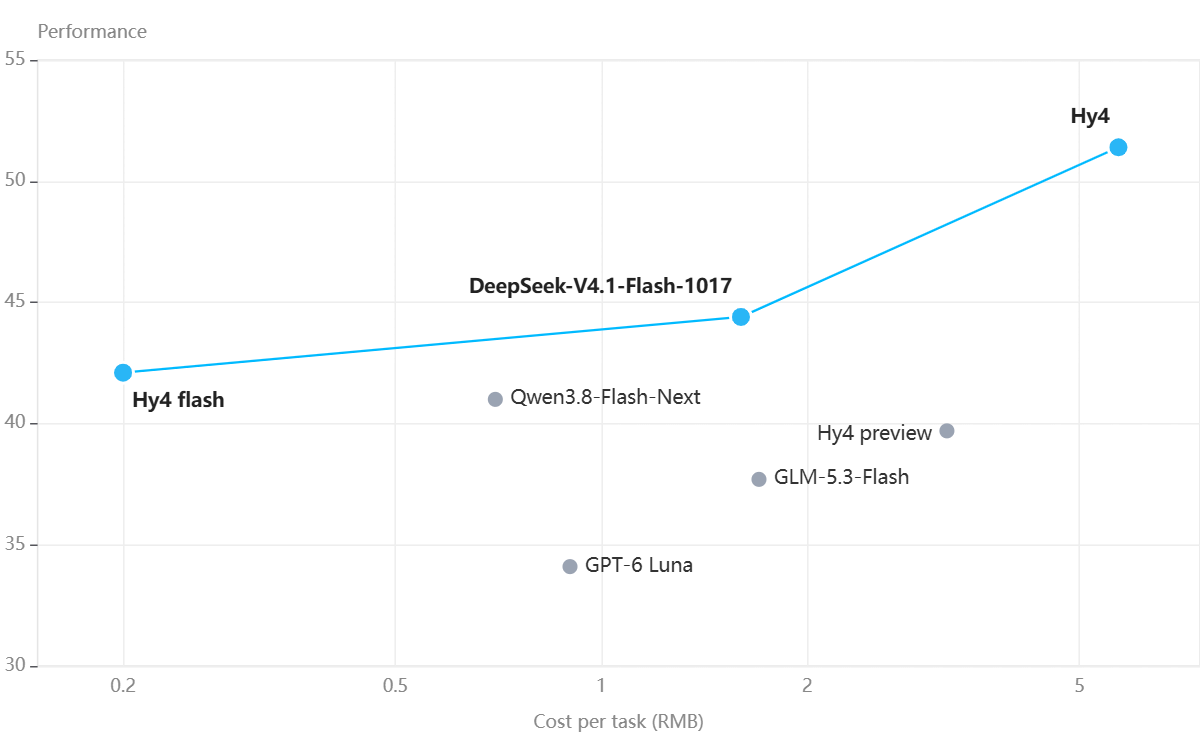
Artificial Analysis reports 1,318 Elo for Astra and 1,259 for Sol on AA-3D. Human graders compare interactive 3D experiences built from the same prompts without knowing the model identities.
Astra’s lead supports testing it for interactive websites, games, and 3D prototypes. Elo is a relative preference measure, however; the 59-point difference cannot be translated into a percentage improvement in visual quality or production readiness. Source: Artificial Analysis.
Robotics: Similar Results in an Early Evaluation
The same analysis reports 79 for Astra and 78 for Sol on AA-Robotics v0.1, a research preview of understanding, planning, and acting in physical environments. The evaluators note that models can already perform most basic tasks in the initial preview and that harder tasks are being added.
The small observed difference should not be used to claim practical equivalence in unrestricted robotics. It shows why evaluation difficulty and coverage matter alongside the score. Source: Artificial Analysis.
| Evaluation | Astra result | Sol result | Decision relevance |
|---|---|---|---|
| FrontierCode 2.0 | Comparison baseline | Within 0.5 points at about one-fifth of task cost | Test Sol before paying a premium for coding |
| AA-3D | 1,318 Elo | 1,259 Elo | Astra merits a trial for interactive 3D work |
| AA-Robotics v0.1 | 79 | 78 | Close results on an early research preview |
| AA Coding Agent Index | Flat vs GPT-6 Astra | Down 3 points vs GPT-6.1 Sol | Version progress is not uniform |
GPT-6.2 Astra vs Sol: How to choose
When to Choose GPT-6.2 Astra
Choose Astra when:
- The task is high-stakes professional work (client-facing slides, financial models, legal drafts, consulting deliverables).
- You need maximum scientific or research depth.
- Long, multi-stage agentic projects that benefit from deeper internal reasoning.
- Human preference or final output polish is more important than cost.
- You are doing specialized cyber-related analysis (with awareness of the tighter safeguards OpenAI applied).
OpenAI’s own messaging and the largest benchmark gains cluster around these use cases.
When to Choose GPT-6.2 Sol
Choose Sol when:
- You are doing everyday coding, bug fixing, PR reviews, or agent loops.
- Volume is high and cost matters.
- The task is writing, summarization, research questions, or routine multi-step work.
- You want near-frontier quality at a fraction of the price (often within 1 point of Astra on coding).
- You are building production systems that need predictable, scalable economics.
In practice, most developers and teams should start with Sol and only escalate specific hard jobs to Astra.
| Workload | First candidate | When to compare Astra |
|---|---|---|
| Field extraction and classification | Sol | Sol misses consequential fields or exceptions |
| Routine coding changes | Sol | Changes span services or require substantial repair |
| Repository-wide debugging | Test both | Ambiguity and dependencies drive failures |
| Recurring summaries | Sol | Important qualifications are consistently lost |
| Detailed research or financial deliverables | Astra trial | Compare acceptance quality against Sol’s lower cost |
| Interactive 3D and games | Astra trial | Validate whether preference gains matter to users |
Decision Framework and Routing Strategy
A practical production pattern that many teams are adopting:
- Default all traffic to GPT-6.2 Sol.
- Use simple heuristics or a lightweight classifier (task complexity, domain, expected output length, user-paid tier) to route a small percentage of requests to Astra.
- Monitor quality and cost continuously.
- For interactive tools (Cursor, Codex-style agents, internal chat), give users an explicit “Use stronger model” toggle that switches to Astra.
This hybrid approach captures most of Sol’s cost advantage while still giving access to Astra’s peak capability when it matters.
GPT-6.2 Astra vs Sol API Pricing
OpenAI and CometAPI Rates
All prices below are USD per million tokens. OpenAI figures are Standard short-context rates; CometAPI figures are the current model-page listings checked November 19, 2026.
| Model and route | Input | Cached input | Output |
|---|---|---|---|
| Astra through OpenAI | $8.00 | $0.40 | $40.00 |
| Sol through OpenAI | $2.00 | $0.10 | $10.00 |
| Astra through CometAPI | $6.40 | $0.32 | $32.00 |
| Sol through CometAPI | $1.60 | $0.08 | $8.00 |
Sources: OpenAI Astra, OpenAI Sol, CometAPI Astra, and CometAPI Sol. CometAPI’s listed rates are 20% below the corresponding OpenAI Standard rates.
At identical input and output usage, Astra’s listed rates produce four times the token cost of Sol’s.
Because both models produce fewer output tokens than their predecessors, the effective cost reduction is often larger than the sticker-price difference. Example scenarios (approximate, using standard rates):
- Medium request (50k input + 5k output): Astra ≈ $0.60 · Sol ≈ $0.15
- 1,000 such requests per day: Astra ≈ $600 · Sol ≈ $150 (Sol saves ~$450/day)
- Heavy long-context job (300k input + 10k output): Astra ≈ $5.40 · Sol ≈ $1.35
For high-volume production systems the savings from defaulting to Sol compound rapidly.
Long Context and Processing Tiers
OpenAI charges higher rates above 272,000 input tokens: input and cache rates double, and output rates increase by 1.5 times for the entire request. Standard long-context input/output rates become $16/$60 for Astra and $4/$15 for Sol.
OpenAI also lists Batch at half Standard and Fast at twice Standard. Cache writes are separate: 30-minute writes cost $10 per million tokens for Astra and $2.50 for Sol at short-context Standard rates. Confirm the appropriate tier, cache policy, and gateway billing before forecasting production spend. Sources: Astra and Sol.
Is Astra Worth Four Times the Token Price?
Compare Cost per Accepted Result
Calculate total spend divided by the number of accepted tasks. Include all attempts and tool charges. If human review is a major expense, track correction time separately or convert it using your actual labor assumptions.
For the example above, Astra adds $0.36 per request through CometAPI. At an assumed review cost of $30 per hour, one minute costs $0.50. If Astra genuinely saves a minute of review, that could justify the token premium. The labor rate and time saved here are hypothetical, so measure both before treating this as a business case.
Avoid Assuming Capability Eliminates Failures
Astra may still fail a task Sol fails. Missing files, insufficient tool access, and unclear requirements can limit both models. Sending the same blocked request to a more expensive model does not necessarily solve the underlying problem.
Classify failures before escalating: missing evidence, invalid formatting, incomplete implementation, or unavailable tools require different responses. Sometimes better retrieval or a clearer acceptance checklist provides more value than changing the model.
Integration and Reliability Checks
OpenAI recommends Medium reasoning effort for new GPT-6.2 integrations. Neither model accepts none; use low when migrating configurations that used none or minimal. For Chat Completions, omit temperature, top_p, logprobs, and top_logprobs. Source: migration guide.
Keep reusable instructions in a developer message at the start of Responses input. GPT-6.2 appends top-level instructions after input, affecting caching. Preserve conversation prefixes where possible to avoid losing eligible cached content and prior reasoning.
The system card also reports regressions in disclosing known obstacles, despite improvements in simulated workplace behavior. Require clear reporting when sources or tools are unavailable, and validate important results against evidence. OpenAI says Codex developer instructions substantially reduce those omissions; API developers should still test their own application behavior.
A Premium Model Still Needs Source Verification
Artificial Analysis reports AA-Omniscience hallucination rates of 59% for Astra and 55% for Sol at Max effort. The metric measures guessing in its factual evaluation; it does not mean those percentages of ordinary production answers are false. It also should not be used by itself to declare Sol more trustworthy across every application.
For changing information, supply current sources or retrieval tools. Ask for references that reviewers can inspect, and test what happens when evidence is missing. Choosing Astra can improve capability without eliminating the need for verification. Source: Artificial Analysis.
Preserve Conversation State
OpenAI warns that certain model changes, history edits, or end-user changes can discard earlier reasoning items. A router that changes an ongoing conversation can therefore affect both quality and cost.
Evaluate routing at clean task boundaries where practical, and test any mid-conversation switch explicitly. Preserve required source context while following the documented rules for reasoning and caching. Source: GPT-6.2 migration guide.
How to Access Both Models
Official OpenAI
Available in ChatGPT Work and Codex for Plus, Pro, Enterprise, and Edu users. API model IDs: gpt-6.2-astra and gpt-6.2-sol. Ultrafast mode is available (with expanded access for Pro 200 on Sol).
CometAPI – Best for Developers and Multi-Model Teams
CometAPI already supports both GPT-6.2 Astra and GPT-6.2 Sol. Benefits include:
- Single OpenAI-compatible base URL (
https://api.cometapi.com/v1) - One API key for 500+ models
- Easy A/B testing and dynamic routing between Astra, Sol, Claude, Gemini, Grok, Qwen, and others
- Competitive pricing and transparent usage analytics
- No need to manage separate OpenAI billing or rate-limit pools solely for evaluation
Example code:
from openai import OpenAI
client = OpenAI( api_key="YOUR_COMETAPI_KEY",
base_url="https://api.cometapi.com/v1" ) # Switch model name only
response = client.chat.completions.create(
model="gpt-6.2-sol", # or "gpt-6.2-astra"
messages=[{"role": "user", "content": "Your prompt"}] )
For teams already using or evaluating multiple frontier models, CometAPI removes friction and makes the Astra-vs-Sol decision data-driven rather than logistical.
Should You Choose GPT-6.2 Astra or Sol?
Choose Sol first for everyday drafting, document processing, and budget-sensitive agent workflows. Its lower rates make it an accessible baseline, and several evaluations show strong capability for its measured cost.
Test Astra on difficult engineering, detailed financial deliverables, interactive design, and workflows where errors create substantial rework. Compare it against your current model using accepted outcomes, rather than assuming a newer version improves every task.
For CometAPI users, a useful starting point is a fixed set of representative prompts run against both models through the same integration. Compare correctness, omissions, latency, and spend, then assign each workload to the model that meets its requirements. Explore GPT-6.2 Astra on CometAPI or GPT-6.2 Sol on CometAPI to review current rates and begin testing.