Qwen 4 is attracting attention for both its approaching launch and its potential value for developers. We predict a November 2026 announcement, with mid-November the first window to watch. This gives users a more specific release window to watch, although the timing still awaits official confirmation. Meanwhile, the Flash preview’s performance in the GameFeel game-development benchmark is drawing attention to the next generation’s potential balance of capability and cost.
Key Takeaways
Qwen’s recent official teaser and external early testing support expectations of an approaching announcement, although Alibaba has not confirmed a date.
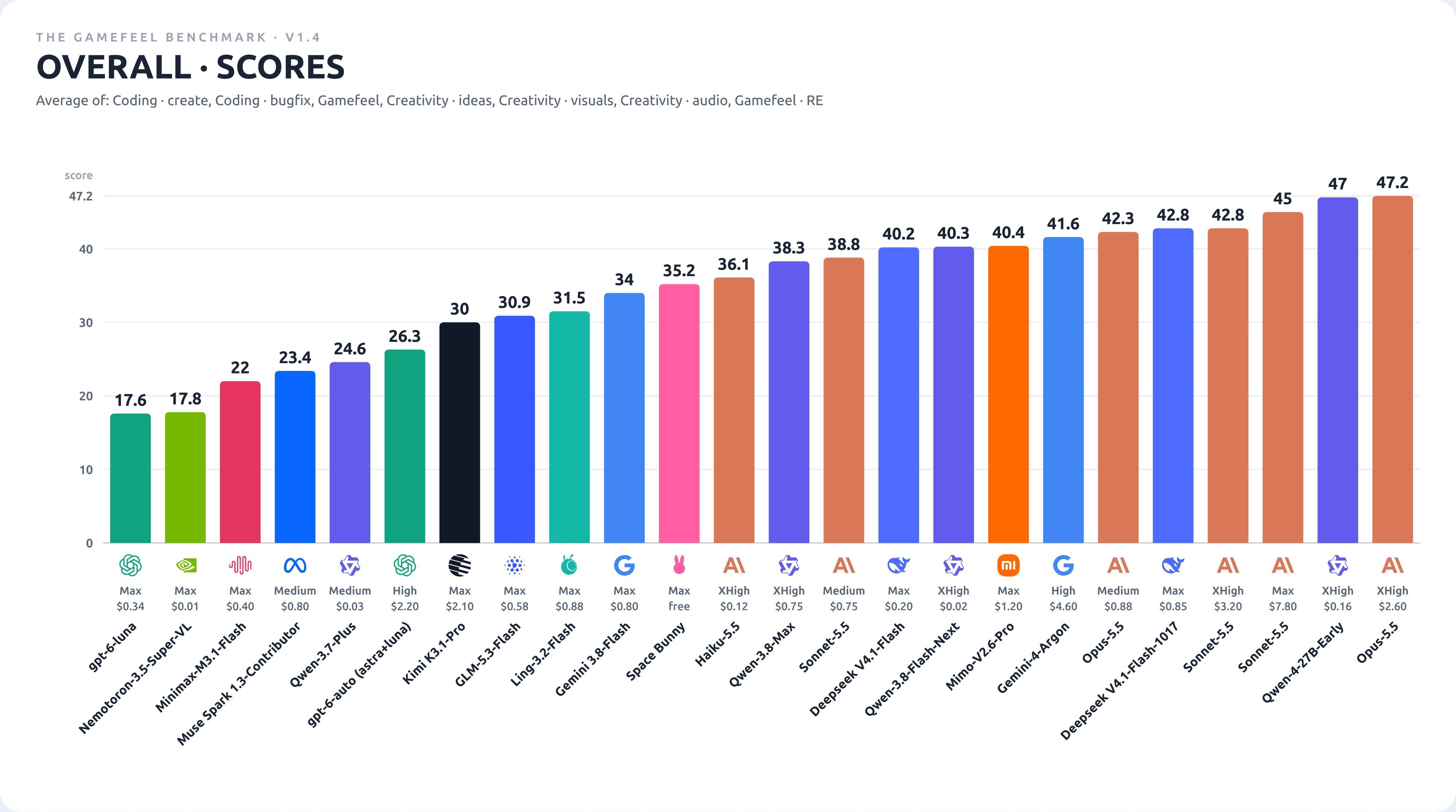
Qwen-4-Flash-Early Max scored 49.9 in GameFeel v1.4, ahead of Claude Opus 5.5 XHigh’s 47.2 in the game-development evaluation.
The benchmark reports a task cost of $0.40 for Qwen Flash and $2.60 for Opus, making Flash’s reported cost roughly one-sixth of Opus’s.
Reviewed for clarity, source attribution and current API terminology.
Qwen 4 27B’s practical value for local deployment will depend on its weight availability, license terms, and measured hardware requirements.
When Will Qwen 4 Be Released?
Anyone searching for “Qwen 4 release date” wants a useful estimate supported by evidence. Three developments shape our forecast: a new official teaser, external testing of early models, and an earlier public preview of the architecture.
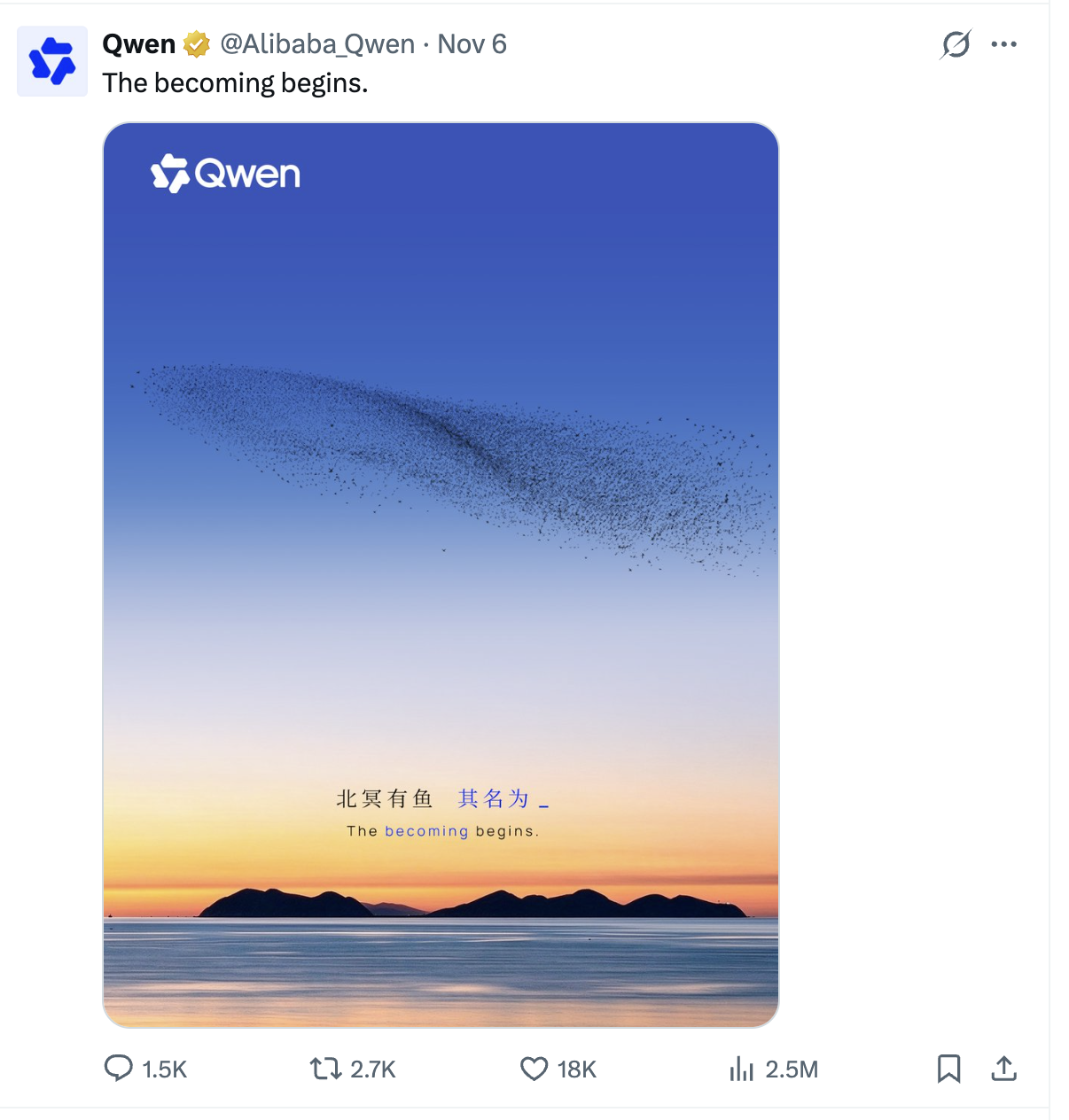
The accompanying image showed birds forming the shape of a fish, built around the phrase “北冥有鱼,其名为_,” in Chinese, which did not name a model or provide a date, but it gives the release prediction a recent official signal.
Early Models Have Reached External Testers
On November 8, evaluator follistatin announced that Qwen-4-Flash-Early, codenamed “hawk,” had been added to GameFeel Bench. The post also noted a correction to an earlier audio-score calculation for Qwen-4-27B.
External testing strengthens the case for an approaching announcement. It indicates that working early versions are being evaluated beyond the development team.
Qwen also established a technical lead-in through its August 26 announcement, which described Qwen3.8-Flash and Flash-Next as early previews of the architecture being explored for Qwen 4.
What Is the Most Likely Release Window?
Taken together, these developments make November 2026 our main forecast, with mid-November the first window to watch.
This forecast concerns the initial announcement. Public API access, individual model releases, and downloadable weights may arrive in stages. When the announcement comes, the practical question will be which versions users can access immediately.
How Did Qwen 4 Flash Early Perform?
The published early results give Qwen-4-Flash-Early a score of 49.9 at Max effort, compared with 47.2 for Claude Opus 5.5 at XHigh effort.
Model and effort setting
Overall score
Reported cost per task
Qwen-4-Flash-Early — Max
49.9
$0.40
Claude Opus 5.5 — XHigh
47.2
$2.60
Claude Sonnet 5.5 — Max
45.0
$7.80
Qwen-4-27B-Early — XHigh
44.6
$0.16
Qwen Flash Early leads by 2.7 points in this comparison. This is the specific result behind the claim that Qwen 4’s early benchmark score exceeds Opus 5.5’s.
Why Does the Cost Difference Matter?
The listed figures put Flash’s cost per task at approximately 15.4% of Opus’s, or roughly one-sixth. These are third-party benchmark results from early builds, and the costs represent reported task spending rather than official Qwen API prices.
For developers who repeatedly revise game prototypes, that difference could be useful. Character movement, collision handling, enemy behavior, and audiovisual feedback often require several rounds of changes. Lower spending per iteration allows the same budget to cover more attempts.
Whether the public release can maintain that combination of performance and cost will be an important question after launch.
Which Qwen 4 Models Are Expected?
Current expectations center on Qwen 4 Max, Plus, Flash, and 27B. The 27B version is expected first on November 9, while the timing and final specifications of the other versions remain unclear
Max and Plus: Quality and Cost on Complex Tasks
Developers handling complex reasoning, long documents, and multi-step workflows will want to compare Max and Plus on output quality, latency, and price.
Those differences will influence which model an application uses by default and when it should route a task to a more capable version.
Flash: Can the Public Version Sustain Its Early Results?
Flash already has a clear point of interest: its early game-development results suggest an attractive balance of performance and task cost.
If the public version can reliably complete similar work, it could suit applications that require frequent generation, editing, and retries.
27B: What Will Local Deployment Require?
With a release expected soon, the 27B version is especially relevant to users who want to run a model on their own hardware.
Parameter count is only one part of the deployment picture. Weight availability, quantization support, licensing, and inference efficiency will also determine whether the model is practical for a particular setup.
What Should Developers Watch at Launch?
API Availability: Check which versions are immediately accessible, whether access is public or limited, and which model IDs are supported. These details determine how quickly developers can begin testing.
Official Pricing: Compare input and output token prices alongside caching charges and reasoning-token usage. For production applications, the useful measure is the total cost of completing a task successfully, including retries.
Coding and Agent Performance: Code editing, tool calls, structured output, and recovery from errors deserve close attention. Applications that depend on several consecutive steps need consistent execution across the workflow.
Local Deployment Requirements: For Qwen 4 27B, the first things to check are downloadable weights and license terms. Quantization formats, supported inference frameworks, VRAM requirements, and generation speed will then determine whether the model fits existing hardware. Parameter count alone is insufficient for choosing a GPU, so hardware decisions should follow published deployment details and practical measurements.
Should You Wait for Qwen 4 or Use Existing Models?
Where Will Developers Be Able to Use Qwen 4?
If you are already building an AI application, continue with a model that meets your current requirements. Qwen 4’s approaching launch is a reason to prepare a comparison, rather than postpone useful work.
For developers evaluating several providers, a multi-model API platform such as CometAPI offers a practical starting point for comparing models available in its catalog. Use the same prompts, documents, or coding tasks across candidates, then record output quality, response time, and total spending.
Once Qwen 4 becomes available through your chosen access channel, add it to that same evaluation. This makes the decision easier: you will already have a baseline for judging whether it improves your application.
A compact evaluation set can include:
A coding task drawn from your actual project.
A document question with a verifiable answer.
A tool-use workflow with a clear completion condition.
A writing task scored against your editorial requirements.
For local deployment users, the most useful next step is to wait for the 27B release details before making hardware decisions.
Conclusion
Qwen 4 deserves a place on developers’ evaluation plans. Its adoption case will depend on whether the released models deliver useful results consistently at a competitive total cost.
Keep current projects moving and establish a baseline using your existing provider or supported models through CometAPI. When Qwen 4 becomes accessible, test it against that baseline. The strongest reason to switch will be a measurable improvement in your own workflow.
Why Does the Cost Difference Matter?
The listed figures put Flash’s cost per task at approximately 15.4% of Opus’s, or roughly one-sixth. These are third-party benchmark results from early builds, and the costs represent reported task spending rather than official Qwen API prices.
For developers who repeatedly revise game prototypes, that difference could be useful. Character movement, collision handling, enemy behavior, and audiovisual feedback often require several rounds of changes. Lower spending per iteration allows the same budget to cover more attempts.
Whether the public release can maintain that combination of performance and cost will be an important question after launch.
Which Qwen 4 Models Are Expected?
Current expectations center on Qwen 4 Max, Plus, Flash, and 27B. Their final specifications and availability will determine how each fits into the lineup.
Max and Plus: Quality and Cost on Complex Tasks
Developers handling complex reasoning, long documents, and multi-step workflows will want to compare Max and Plus on output quality, latency, and price.
Those differences will influence which model an application uses by default and when it should route a task to a more capable version.
Flash: Can the Public Version Sustain Its Early Results?
Flash already has a clear point of interest: its early game-development results suggest an attractive balance of performance and task cost.
If the public version can reliably complete similar work, it could suit applications that require frequent generation, editing, and retries.
27B: What Will Local Deployment Require?
The expected 27B version is especially relevant to users who want to run a model on their own hardware.
Parameter count is only one part of the deployment picture. Weight availability, quantization support, licensing, and inference efficiency will also determine whether the model is practical for a particular setup.
What Should Developers Watch at Launch?
API Availability: Check which versions are immediately accessible, whether access is public or limited, and which model IDs are supported. These details determine how quickly developers can begin testing.
Official Pricing: Compare input and output token prices alongside caching charges and reasoning-token usage. For production applications, the useful measure is the total cost of completing a task successfully, including retries.
Coding and Agent Performance: Code editing, tool calls, structured output, and recovery from errors deserve close attention. Applications that depend on several consecutive steps need consistent execution across the workflow.
Local Deployment Requirements: For Qwen 4 27B, the first things to check are downloadable weights and license terms. Quantization formats, supported inference frameworks, VRAM requirements, and generation speed will then determine whether the model fits existing hardware. Parameter count alone is insufficient for choosing a GPU, so hardware decisions should follow published deployment details and practical measurements.
Should You Wait for Qwen 4 or Use Existing Models?
Where Will Developers Be Able to Use Qwen 4?
If you are already building an AI application, continue with a model that meets your current requirements. Qwen 4’s approaching launch is a reason to prepare a comparison, rather than postpone useful work.
For developers evaluating several providers, a multi-model API platform such as CometAPI offers a practical starting point for comparing models available in its catalog. Use the same prompts, documents, or coding tasks across candidates, then record output quality, response time, and total spending.
Once Qwen 4 becomes available through your chosen access channel, add it to that same evaluation. This makes the decision easier: you will already have a baseline for judging whether it improves your application.
A compact evaluation set can include:
A coding task drawn from your actual project.
A document question with a verifiable answer.
A tool-use workflow with a clear completion condition.
A writing task scored against your editorial requirements.
For local deployment, wait for details about Qwen 4 27B’s weights, license, and VRAM requirements before choosing a setup.
Conclusion
Qwen 4 deserves a place on developers’ evaluation plans. Its adoption case will depend on whether the released models deliver useful results consistently at a competitive total cost.
Keep current projects moving and establish a baseline using your existing provider or supported models through CometAPI. When Qwen 4 becomes accessible, test it against that baseline. The strongest reason to switch will be a measurable improvement in your own workflow.
FAQ
When Is Qwen 4 Expected to Launch?
We predict a November 2026 announcement, with mid-November the first window to watch. Alibaba has not confirmed a specific date.
Has Qwen 4 Already Been Released?
The material reviewed for this article shows external testing of early models. Check Qwen’s official announcements for public product availability.
Did Qwen 4 Really Score Higher Than Claude Opus 5.5?
In the published GameFeel v1.4 results, Qwen-4-Flash-Early Max scored 49.9, while Claude Opus 5.5 XHigh scored 47.2.
Will Qwen 4 27B Have Open Weights?
The final arrangement requires an official announcement. Users should check which checkpoint is available for download and the license governing its use.
Where Will You Be Able to Use Qwen 4?
Watch for availability through Qwen products, official APIs, and model download channels. Users of third-party platforms should check their catalogs for the exact supported version and release timing.