Choose your path
Kling Ai Blog
How many seconds can you lip-sync with Kling?
Kling’s current tooling and public-facing models support lip-sync operations on audio tracks up to 60 seconds per job in many deployments, with source videos typically optimized in the 2–10 second range for the highest fidelity results. For larger jobs, practical production workflows split longer audio into multiple 60-second (or shorter) segments and reassemble results in post-production.
Are Kling Videos Private
In the rapidly evolving landscape of generative AI, Kling AI has emerged as a formidable competitor to industry giants like OpenAI’s Sora and Runway Gen-3. Developed by Kuaishou Technology, Kling AI offers "movie-level" video generation that has captivated content creators worldwide. However, with its roots in China and a cloud-based processing model, a critical question looms for enterprise users and privacy-conscious individuals: Are Kling videos private? How much is it and how to use it?
Kling Video API
The Kling Video API enables developers to generate high-quality videos from text prompts or images, supporting advanced features like lip-syncing and various aspect ratios, thus facilitating seamless integration of AI-driven video creation into diverse applications.

Best 4 Image Generation AI Models For 2025
In the rapidly advancing field of artificial intelligence, image generation models such as Kling 1.6 Pro, Recraft v3, Stable Diffusion 3.5 Large, and Stable
Kling 1.6 Pro API
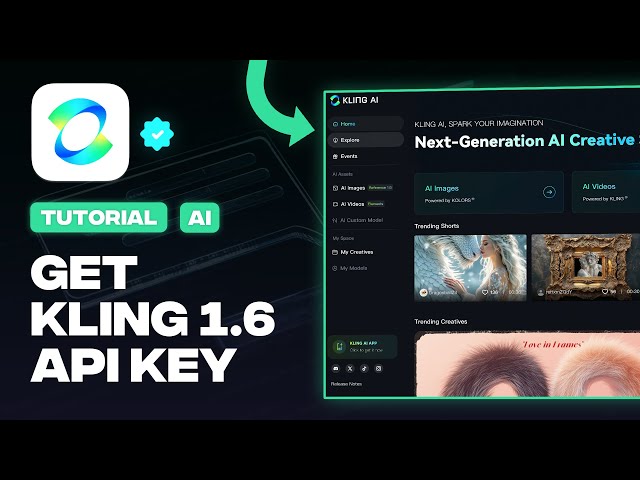
The Kling 1.6 Pro API is a robust, scalable platform that enables seamless integration of advanced data analytics, AI-driven insights, and automation tools for optimizing business workflows and decision-making processes.