Choose your path
GPT-4 Blog
How Long does ChatGPT Take to Create an Image
Artificial image generation is one of the fastest-moving features in generative AI today. Developers and creators routinely ask the same practical question: “how long will ChatGPT take to get my image?” The simple answer is: it depends — on the model you use, the API or UI path, image size/quality, concurrent load at the provider, moderation and safety checks, and network/implementation choices. Below I unpack those variables, summarize what the major OpenAI image models typically deliver in (real-world) latency ranges, explain what causes slowdowns, show practical code patterns to manage latency.
How to Make GPT-5 Act Like GPT-4o
OpenAI’s GPT-5 launched as a step forward in reasoning, coding, and multimodal understanding; GPT-4o (the “Omni” series) was an earlier multimodal, fast, and
ChatGPT Plus: Price, available models changed in 2025
In a fast-moving AI landscape, the dollar figure attached to a subscription can feel both simple and complicated. At face value, ChatGPT Plus remains a
How to switch back to GPT-4o if you hate ChatGPT-5
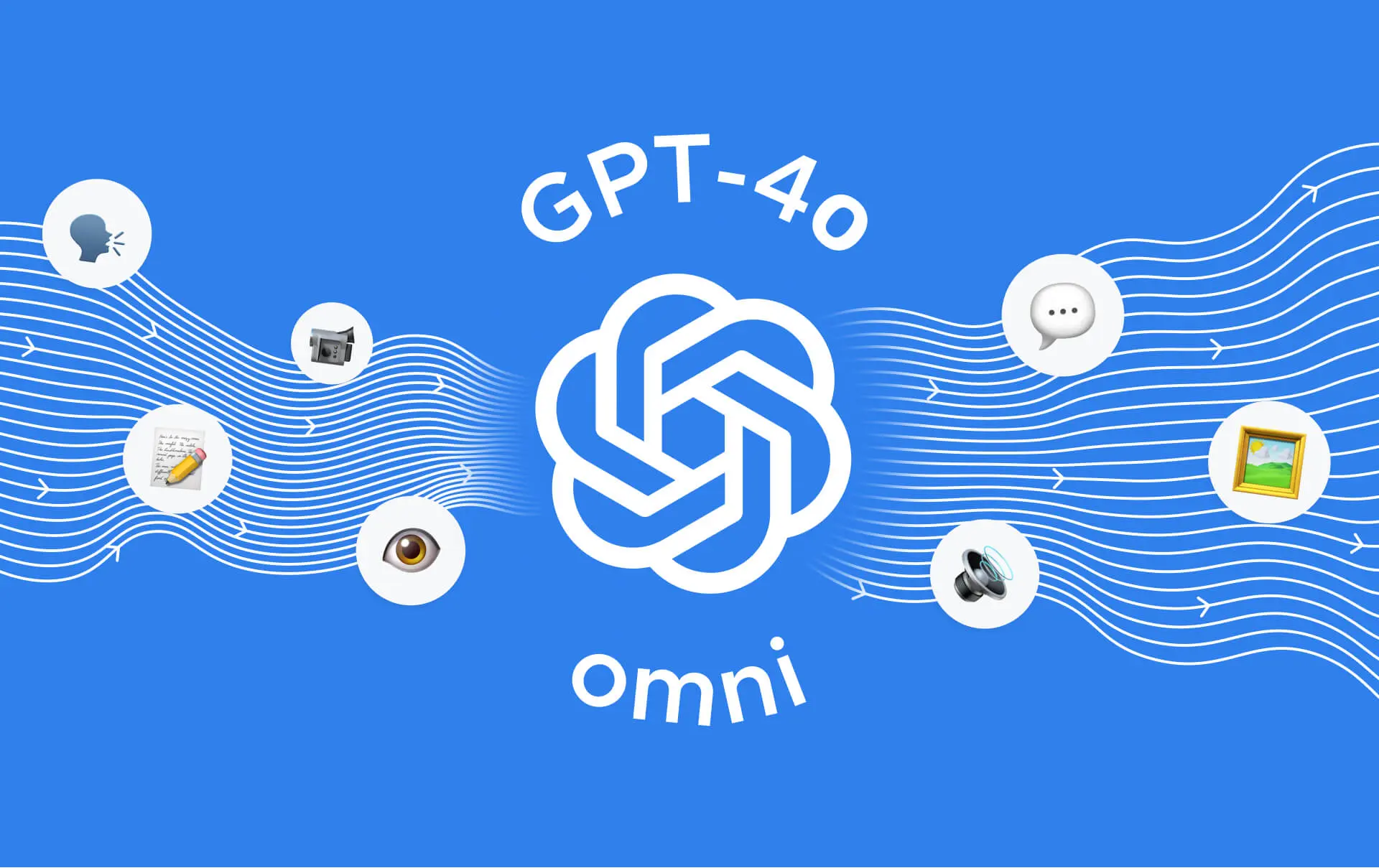
GPT-4o is OpenAI’s high-performance, multimodal successor in the GPT-4 line that is available via the OpenAI API, in ChatGPT for paid tiers, and through cloud
Gemini 2.5 Pro vs OpenAI’s GPT-4.1: A Complete Comparison
The competition between leading AI developers has intensified with Google’s launch of Gemini 2.5 Pro and OpenAI’s introduction of GPT-4.1. These cutting-edge
GPT-4.5 vs GPT-4.1: Why You Should Start to Choose GPT-4.1 Now
GPT-4.5 and GPT-4.1 represent two distinct pathways in OpenAI’s evolution of large language models: one focused on maximizing capability through sheer scale,
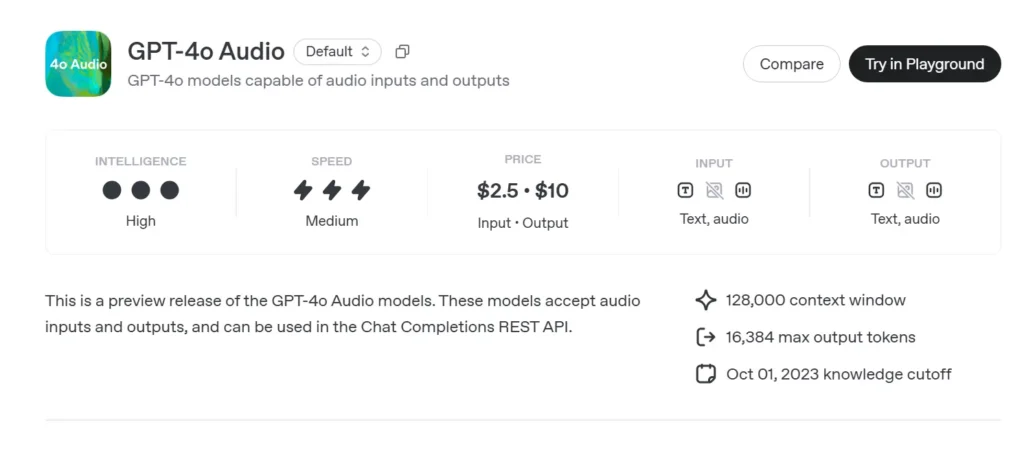
GPT-4o Audio API
GPT-4o Audio API: A unified /chat/completions endpoint extension that accepts Opus-encoded audio (and text) inputs and returns synthesized speech or transcripts with configurable parameters (model=gpt-4o-audio-preview-, speed, temperature) for batch and streaming voice interactions.
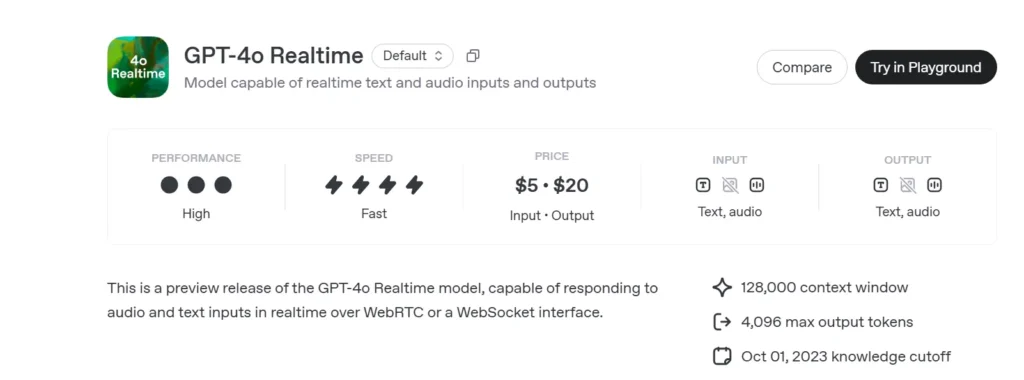
GPT-4o Realtime API
GPT-4o Realtime API: A low-latency, multimodal streaming endpoint that lets developers send and receive synchronized text, audio, and vision data over WebRTC or WebSocket (model=gpt-4o-realtime-preview-, stream=true) for interactive real-time applications.