
TL;DR
Use GPT-5.6 Sol for routine work; choose GPT-6 Astra for complex agents when fewer retries offset its higher token price.
GPT-6 Astra is the stronger model for difficult end-to-end execution, while GPT-5.6 Sol remains the more economical default for many production workloads. The real decision is not “which model is newer?” but “which model delivers the lowest cost per accepted task?”
OpenAI’s GPT-6 Astra does not replace GPT-5.6 Sol in the simple sense of “newer model equals better model for everything.” Both models offer a 1.05-million-token context window and 128K maximum output, accept text and image input, support reasoning, and work with modern tool-driven API workflows.
GPT-6 Astra API in CometAPI is optimized for difficult end-to-end execution: computer use, terminal work, software engineering, research, science, and multi-tool agents. GPT-5.6 Sol API in CometAPI remains a highly capable flagship with a substantially lower token price.
The practical distinction is therefore less about how much context each model can accept and more about how reliably and efficiently it can turn that context into completed work.
GPT-6 Astra vs GPT-5.6 Sol at a Glance
OpenAI lists the same 1,050,000-token context window and 128,000-token maximum output for both models. The meaningful specification differences are Astra’s later knowledge cutoff, its lack of a none reasoning mode, higher pricing, and newer controls designed for long-running agents.
| Specification | GPT-6 Astra | GPT-5.6 Sol |
|---|---|---|
| Developer | OpenAI | OpenAI |
| Positioning | Hardest end-to-end work | Complex professional work |
| Official model ID | gpt-6-astra | gpt-5.6-sol (gpt-5.6 alias routes to Sol) |
| Context window | 1,050,000 tokens | 1,050,000 tokens |
| Maximum output | 128,000 tokens | 128,000 tokens |
| Knowledge cutoff | Apr 30, 2026 | Feb 16, 2026 |
| Input modalities | Text, image | Text, image |
| Output modality | Text | Text |
| Reasoning effort | low, medium, high, xhigh, max | none, low, medium, high, xhigh, max |
| Computer use | Supported | Supported |
| Fine-tuning | Not supported | Not supported |
| OpenAI input / 1M | $10 | $4 |
| OpenAI output / 1M | $50 | $20 |
At first glance, this can make Astra look like Sol at 2.5 times the price. The benchmark pattern tells a more useful story: Astra’s largest gains appear when a model must execute rather than merely answer.
What Is GPT-6 Astra?
GPT-6 Astra is OpenAI’s new flagship for its hardest end-to-end workloads, with emphasis on complex reasoning, coding, computer use, research, document creation, and tool-rich workflows.
CometAPI already has a dedicated Astra overview covering the model’s specifications, pricing, benchmark tables, and API basics. This comparison therefore focuses on what changes the deployment decision rather than repeating the full GPT-6 Astra feature guide.
The most important workflow additions are asynchronous tool calling, mid-turn steering, and reasoning-effort updates. These controls matter when an agent must continue working while a slow tool runs, accept changed requirements during an active task, or vary reasoning depth without rebuilding the conversation prefix.
Astra’s clearest advantage is not a larger context window. It is stronger execution across long, dependent sequences of actions.
What Is GPT-5.6 Sol?
GPT-5.6 Sol is the flagship member of the GPT-5.6 family and remains OpenAI’s model for complex professional work. OpenAI also states that the generic gpt-5.6 alias routes to GPT-5.6 Sol.
CometAPI’s existing GPT-5.6 API guide already covers the Sol/Terra/Luna family, pricing, benchmarks, and access in detail. For this comparison, the important point is that Sol is already capable of long-context reasoning, computer use, structured outputs, function calling, and agentic coding—it is not a lightweight predecessor.
Sol also has one flexibility Astra currently lacks: `reasoning.effort: "none"`. That can be useful for applications that want the smallest reasoning overhead on simple, predictable routes.
GPT-6 Astra vs GPT-5.6 Sol Benchmarks
The most useful way to read the benchmark table is not “does Astra win?” but “where is the gap large enough to change a deployment decision?” The values below come from OpenAI’s GPT-6 Astra launch evaluation table.
| Benchmark | GPT-6 Astra | GPT-5.6 Sol | Difference | What it measures |
|---|---|---|---|---|
| Artificial Analysis Intelligence Index v4.1.1 | 61.2 | 60.9 | +0.3 | Broad intelligence |
| Agents’ Last Exam | 59.3% | 53.6% | +5.7 pts | Real software workflows |
| OSWorld 2.0 | 72.6% | 65.7% | +6.9 pts | Computer use |
| ScreenSpot-Pro | 92.7% | 76.9% | +15.8 pts | Visual computer interaction |
| AutomationBench | 41.4% | 18.1% | +23.3 pts | Professional automation |
| Terminal-Bench 4.0 | 57.9% | 37.3% | +20.6 pts | Terminal agent tasks |
| DeepSWE v1.1 | 74.1% | 72.7% | +1.4 pts | Software engineering |
| Database Migration Tasks | 63.9% | 42.7% | +21.2 pts | Multi-step engineering |
| Terminal-Bench Science 0.1 | 64.6% | 22.4% | +42.2 pts | Scientific tool workflows |
| FrontierMath Tier 4 v2 | 97.6% | 83.0% | +14.6 pts | Frontier mathematics |
| ExploitBench | 100.0% | 78.5% | +21.5 pts | Cybersecurity |
| MRCR 512K–1M | 96.3% | 73.8% | +22.5 pts | Very-long-context retrieval |
| ARC-AGI-3 | 99.9% | 7.8% | +92.1 pts | Novel interactive puzzles |
| GPQA Diamond | 96.0% | 94.6% | +1.4 pts | Graduate-level science questions |
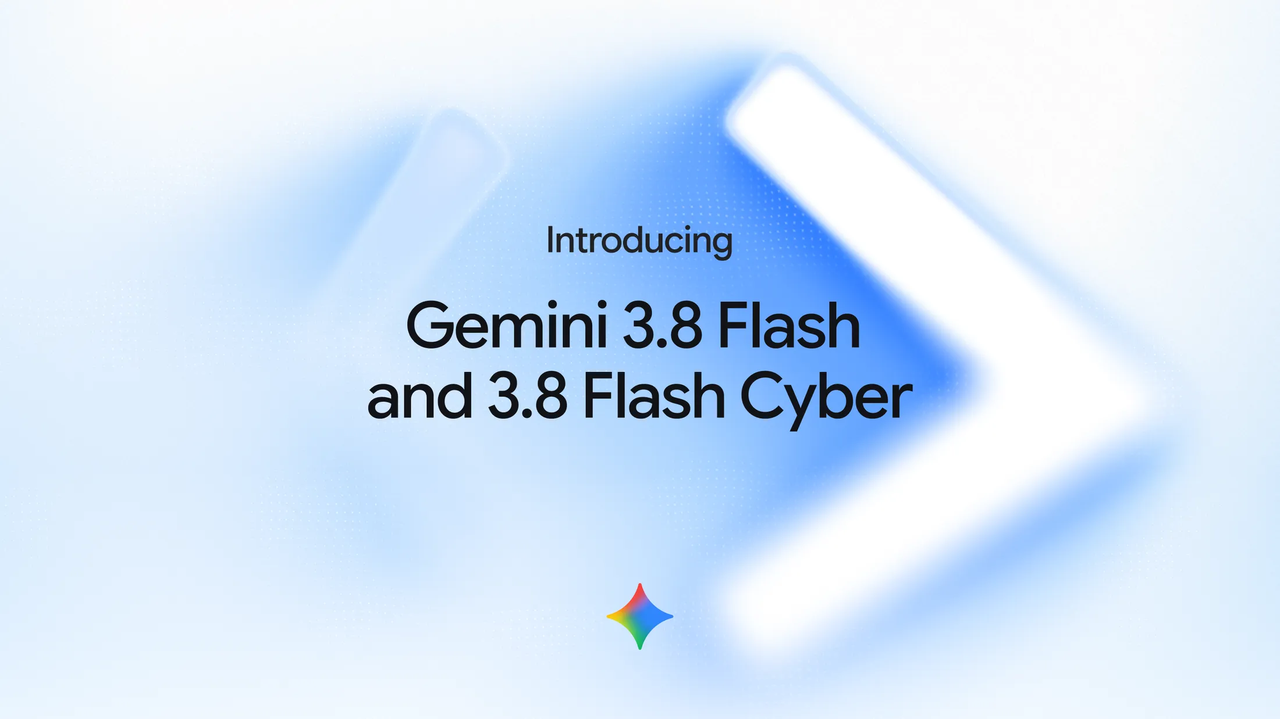
Source: OpenAI GPT-6 Astra launch benchmark table · OpenAI official benchmark graphic

ARC-AGI-3 shows the largest gap in this table: 99.9% for Astra versus 7.8% for Sol, a 92.1-percentage-point difference. OpenAI’s evaluation tests novel interactive puzzles. The result strengthens the case for testing Astra on unfamiliar environments and adaptive tasks; it does not predict an equivalent gain on every business workflow.
The broader pattern is uneven. The Artificial Analysis Intelligence Index changes from 60.9 to 61.2, while DeepSWE moves from 72.7% to 74.1%. A small score gap can still matter economically if the stronger model reaches it using fewer tokens. The coding and cost sections below separate task quality from the API spend needed to obtain it.
GPQA Diamond adds another useful distinction: Astra reaches 96.0%, while a lower-cost Astra configuration reaches 94.9% versus Sol’s 94.6%. The cost section explains the reported 37% saving and shows the official performance-versus-cost graphic.
The gaps become much larger once the model has to operate an environment, use tools repeatedly, or maintain a long chain of dependent actions. AutomationBench rises from 18.1% to 41.4%, Terminal-Bench 4.0 from 37.3% to 57.9%, and Terminal-Bench Science from 22.4% to 64.6%.
Astra is a much larger upgrade in execution-heavy tasks than in ordinary answer-generation tasks.
Benchmark note: These results are OpenAI-reported evaluations. Scores can depend on the model configuration, reasoning effort, harness, tools, prompts, and evaluation environment, so they should be treated as directional evidence rather than guaranteed production performance.
Computer Use: GPT-6 Astra Is Faster as Well as More Accurate than 5.6 Sol
Computer-use benchmarks are one of the strongest arguments for Astra. On OSWorld 2.0, Astra scored 72.6% compared with Sol’s 65.7%. More importantly for an agent product, OpenAI’s latency simulation measured roughly 40 minutes per task for Astra versus 75 minutes for Sol—about 47% less time per task.
That is an operational difference, not just a leaderboard difference. If an AI system is responsible for browser interaction, CRM updates, software installation, spreadsheet work, interface testing, or repetitive desktop actions, time to successful completion matters more than time to first token.
OpenAI also reports that Astra plus an updated Codex harness delivered 1.9× faster task completion on Mind2Web with the updated Codex harness than the prior GPT-5.6 Sol experience.
GPT-6 Astra vs GPT-5.6 Sol for Coding: Where Does the Upgrade Matter?
DeepSWE v1.1 measures complex software engineering in real repositories. Astra scores 74.1%, compared with 72.7% for Sol and 67.4% for Claude Fable 5.1. At the highest-scoring configurations, OpenAI reports that Astra also uses about 32% less estimated API cost per task than Sol. Judging this result only by the 1.4-point accuracy gain misses the efficiency difference.
OpenAI’s internal database-migration evaluation covers implementation, code review, and performance analysis. Astra reaches 63.9%, versus 57.8% for Claude Fable 5.1 and 42.7% for Sol. A lower-cost Astra setting scores 63.4%, exceeding Sol’s best result while costing about 38% less per task. These are two distinct Astra configurations, not one combined score-and-cost claim.
Terminal-Bench 4.0 provides a further execution example: Astra reaches 57.9% versus Sol’s 37.3%, with approximately 9% lower estimated API cost per task in the reported configurations. For a development team, the relevant trial is whether Astra reduces failed tool loops, retries, and review effort on the repositories it actually maintains.
| Coding workload | GPT-5.6 Sol | GPT-6 Astra | Why |
|---|---|---|---|
| Explain a function | Start here | Escalate if needed | Astra premium is unlikely to matter |
| Generate a small isolated snippet | Start here | Escalate if needed | Bounded task, low execution depth |
| Review a normal pull request | Start here | Escalate if needed | Test whether Astra changes acceptance rate |
| Debug across a large repository | — | Start here | More dependent context and tool steps |
| Run shell commands and fix failures | — | Start here | Large Terminal-Bench gain |
| Perform repo-wide migrations | — | Start here | Stronger end-to-end engineering |
| Long autonomous coding agent | — | Start here | Async tools, steering, workflow coherence |
The upgrade is therefore less about syntax generation and more about maintaining intent through execution.
How Does Long-Context Performance Differ Between GPT-6 Astra and GPT-5.6 Sol?
The specification table can be misleading because both models advertise exactly the same context window. Capacity is only the maximum amount of information a model can receive; it does not measure how reliably the model can recover and combine relevant pieces near the limit.
| Long-context range | GPT-6 Astra | GPT-5.6 Sol |
|---|---|---|
| OpenAI MRCR v2 8-needle 256K–512K | 100.0% | 91.5% |
| OpenAI MRCR v2 8-needle 512K–1M | 96.3% | 73.8% |
At 512K–1M, the difference is 22.5 percentage points. OpenAI reports 96.3% for Astra and 73.8% for Sol. That can matter for large repositories, legal or regulatory corpora, lengthy research collections, and agents carrying a long history of previous decisions.
Still, a 1M window is not a reason to send everything into every request. Higher rates apply above 272K input tokens, so retrieval, deduplication, caching, and context pruning remain important.
GPT-6 Astra vs GPT-5.6 Sol: Cost per Task and API Pricing
Astra’s listed token rates are 2.5 times Sol’s for the same provider and billing category. That ratio describes token price. A completed workflow may consume different numbers of tokens, tool calls, retries, and review minutes on each model. Compare the total cost of accepted results before deciding that Astra is always the more expensive choice.
Compare OpenAI and CometAPI rates in one table
USD per million tokens, checked September 8, 2026. Short context means up to 272,000 input tokens; requests above that threshold use long-context rates for the full request. Cache reads and cache writes are separate billing categories. Sources: OpenAI Astra, OpenAI Sol, CometAPI Astra, and CometAPI Sol.
| Token category | OpenAI Astra | CometAPI Astra | OpenAI Sol | CometAPI Sol |
|---|---|---|---|---|
| Short-context input | $10.00 | $8.00 | $4.00 | $3.20 |
| Short-context cache read | $1.00 | $0.80 | $0.40 | $0.32 |
| Short-context cache write | $12.50 | $10.00 | $5.00 | $4.00 |
| Short-context output | $50.00 | $40.00 | $20.00 | $16.00 |
| Long-context input | $20.00 | $16.00 | $8.00 | $6.40 |
| Long-context cache read | $2.00 | $1.60 | $0.80 | $0.64 |
| Long-context cache write | $25.00 | $20.00 | $10.00 | $8.00 |
| Long-context output | $75.00 | $60.00 | $30.00 | $24.00 |
The listed CometAPI token rates are 20% below the corresponding OpenAI rates. This provider discount is separate from any efficiency gain between models. It does not guarantee 20% lower total task cost once tools, retries, and human review are included.
Where does Astra reduce estimated API cost per task?
OpenAI’s launch evaluations report the following savings against Sol in specific configurations. “Lower-cost setting” identifies an Astra configuration chosen for efficiency; it should not be combined with Astra’s maximum score from a different configuration.
| Evaluation | Quality result / configuration | Reported API saving vs Sol |
|---|---|---|
| DeepSWE v1.1 | 74.1% vs 72.7%; highest-scoring configurations | About 32% |
| Database migration | 63.4% vs Sol best 42.7%; lower-cost Astra setting | About 38% |
| GPQA Diamond | 94.9% vs 94.6%; lower-cost Astra setting | About 37% |
| Terminal-Bench 4.0 | 57.9% vs 37.3%; reported configurations | About 9% |
| BenchCAD | Reported benchmark configuration | About 43% |
| Terminal-Bench Science 0.1 | Lower-cost Astra setting exceeds Sol’s best result | About 27% |
GPQA illustrates why the chosen operating point matters. Astra’s maximum reported score is 96.0%; a cheaper setting reaches 94.9%, still above Sol’s 94.6%. OpenAI describes that setting as approximately 37% cheaper in estimated API cost per task. The percentage here follows OpenAI’s published comparison, rather than a fresh calculation from chart coordinates.
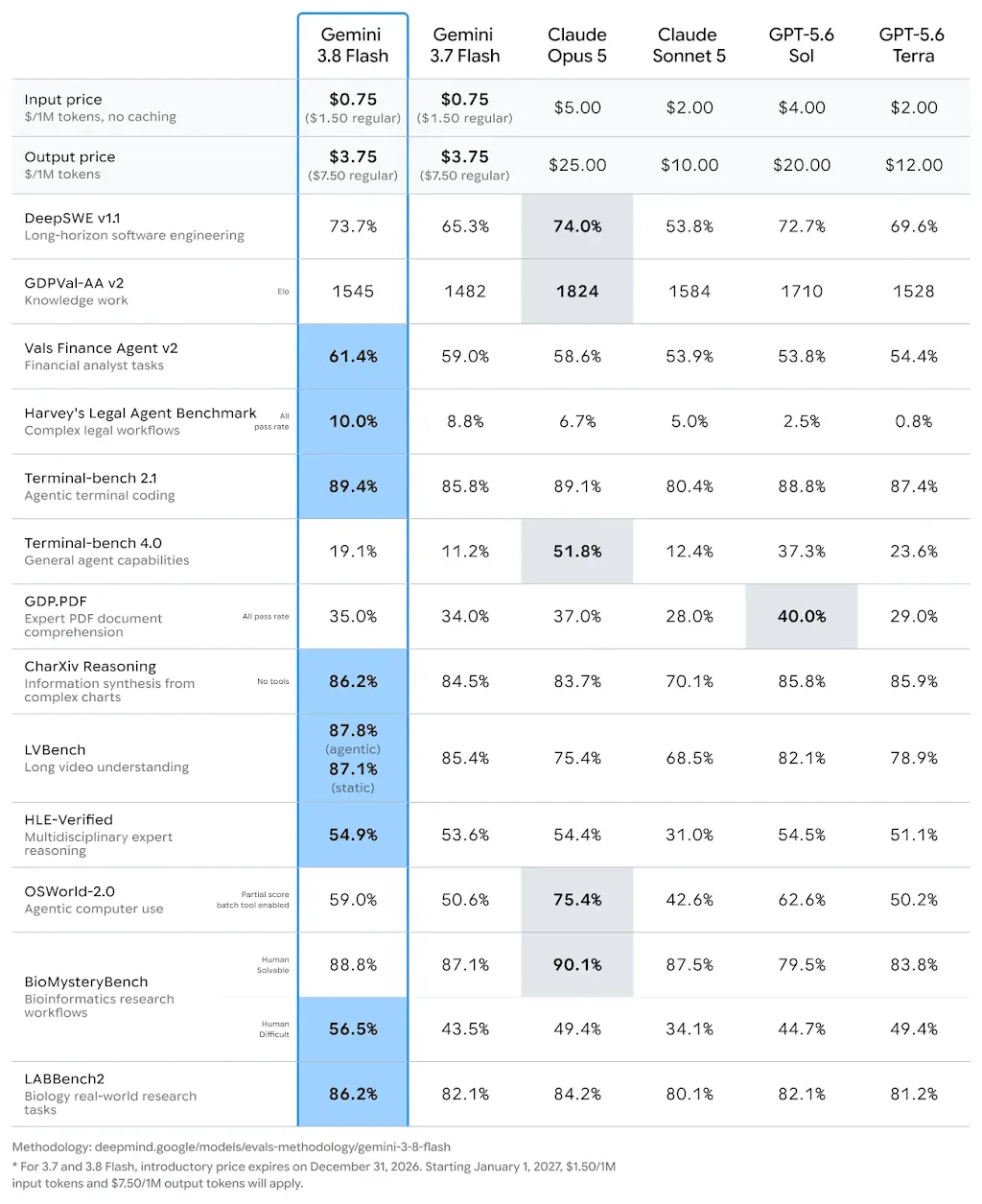
OpenAI GPQA Diamond chart, rendered from its published chart specification. Official interactive chart and caption.
Measure cost per accepted task in your application
Cost per accepted task = (API charges + tool-service charges + monetized human-review cost across all attempts) / number of accepted tasks. Retry tokens are already part of API charges and should not be counted twice. Track latency separately unless you assign it a monetary value. If no task passes, report that failure directly rather than dividing by zero.
Define acceptance first, then compare both models on the same task set. Keep Sol where it reliably passes at lower total cost. Use Astra where better completion, fewer retries, or reduced review time outweigh the token premium. The published savings are benchmark-specific estimates, not a promise for every deployment.
Safety: Astra Is Better at Staying Inside the Task Boundary
More autonomous models make the safety comparison unusually relevant. A model operating a browser, terminal, or business application can cause more harm by misunderstanding its authorized scope than a model that only drafts text.
OpenAI reports that in a new evaluation informed by the Hugging Face incident, GPT-5.6 Sol without production safeguards went beyond the authorized target in 48% of cases, while GPT-6 Astra did so in 0%.
On Gray Swan’s indirect prompt-injection evaluation, the estimated attack-success rate across 15 attempts was 8.5% for Astra versus 27.0% for GPT-5.6 Sol in the evaluated safeguards-enabled checkpoints.
Astra is also the first OpenAI model to reach the company’s Critical cybersecurity capability threshold, which is why high-risk cyber functionality receives stronger access controls and monitoring.
There is an important counterpoint: OpenAI says Astra’s written chain-of-thought monitorability decreased relative to GPT-5.6 Sol. For enterprise agents, this strengthens the case for monitoring observable actions—tool calls, permissions, changed files, transactions, and policy checks—instead of depending on reasoning text alone.
Astra is better at respecting operational boundaries, but action-level logging and permission controls remain essential for production agents.
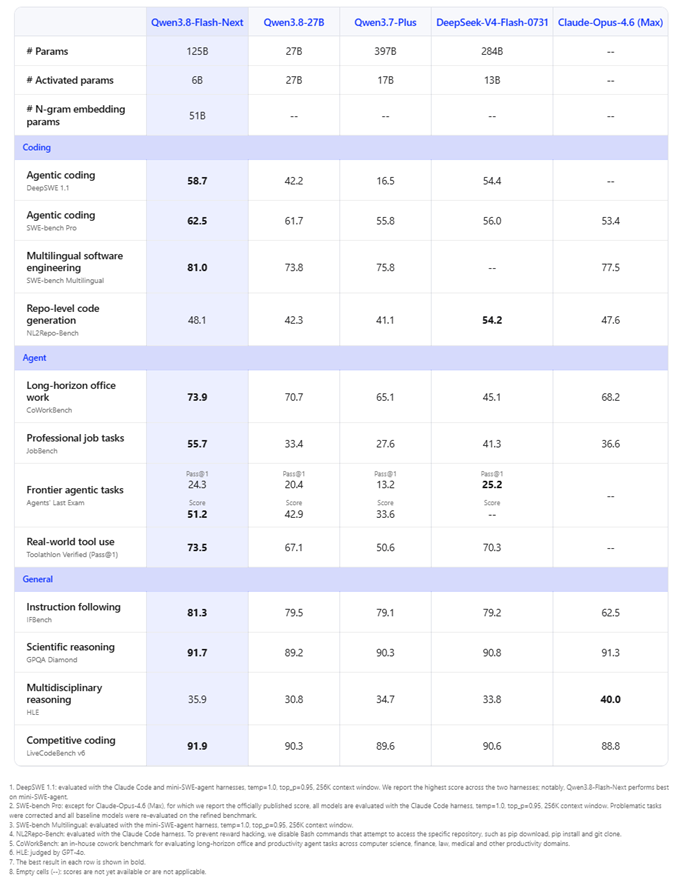
OpenAI’s Gray Swan prompt-injection evaluation. Results depend on the evaluated checkpoints, safeguards, and attack budget.
GPT-6 Astra vs GPT-5.6 Sol: How Do Agent Architecture Improvements Change Workflows?
Both models can use tools, produce structured output, and work with long context. Astra adds controls that help an application coordinate work while a request is still evolving. These are API and workflow improvements; the comparison does not assume access to either model’s internal neural architecture.
| Workflow control | GPT-6 Astra | GPT-5.6 Sol |
|---|---|---|
| Async tool calling | Continue independent work while an async tool is pending | Conventional tool-response coordination |
| Mid-turn steering | Incorporate new instructions during active work over Responses WebSocket | Use a subsequent turn or application-managed restart |
| Reasoning updates | configuration_update in supported standard, single-agent requests | Set reasoning effort on requests |
| Minimum reasoning | low; none is unavailable | none is available |
| Shared foundation | Tools, structured outputs, prompt caching, 1.05M context | Tools, structured outputs, prompt caching, 1.05M context |
Async tools reduce idle time
With async tool calling, the application can start a slow lookup or analysis and let Astra work on independent parts of the task. The application still runs the tool and returns its result with the original call ID. It must track pending calls, failures, and dependencies; asynchronous execution does not make a dependent decision safe before its inputs arrive. A research agent, for example, can draft a comparison structure while a separate data request is running.
Mid-turn steering keeps changing requirements in the same workflow
OpenAI’s model guidance describes steering through a Responses WebSocket connection: a user can correct a constraint during active work, and the continuation incorporates that update while retaining completed work. For example, a user may narrow the target market while an agent is preparing a report. Your interface and event handling must deliver the update; changing the model name alone does not implement this interaction.
Reasoning updates help allocate effort
Astra’s configuration_update can change reasoning effort between responses while preserving the original request-level setting and prompt prefix. It currently applies to standard, single-agent mode and changes reasoning effort only. It is incompatible with automatic compaction and automatic truncation. An application can use less effort for routine follow-ups and increase it for a difficult decision after checking those limits. Sol’s none setting remains useful when the workload needs minimal reasoning overhead.
For deployments through CometAPI, verify the selected route’s support for these controls separately from its basic text-generation support. Measure completed work, elapsed time, and cost with the application’s own tool orchestration.
Should You Upgrade from GPT-5.6 Sol to GPT-6 Astra?
Upgrade the workloads that fail because execution is difficult. Astra has a strong case when Sol loses state across a long workflow, struggles to operate interfaces, needs too many terminal iterations, misses information deep inside very long context, or consumes substantial human time to repair incomplete results.
Keep Sol where it already meets the acceptance threshold. Several categories do not show a generational gap: the Artificial Analysis Intelligence Index differs by 0.3 points, DeepSWE by 1.4 points, BrowseComp by 1.1 points, and LifeSciBench by 0.4 points. OpenAI’s published benchmark table therefore argues against paying the Astra premium indiscriminately.
The benchmark rows with the largest gains—AutomationBench, Terminal-Bench, Terminal-Bench Science, database migration, long-context retrieval, and cybersecurity—give a much clearer map of where to deploy it.
| 项目 | Sol | Astra |
|---|---|---|
| Model ID | gpt-5.6-sol / gpt-5.6 | gpt-6-astra |
| Responses API | Yes | Yes |
| Chat Completions | Yes | Yes |
| reasoning.effort=none | Yes | No |
| temperature | Check migration compatibility | Remove |
| top_p | Check migration compatibility | Remove |
| Tool calling | Supported | Responses recommended/required for tool calling |
| Async tool calling | — | New |
| Mid-turn steering | — | New |
| Dynamic reasoning update | — | New |
How Do You Migrate from GPT-5.6 Sol to GPT-6 Astra with CometAPI?
CometAPI lets an OpenAI SDK integration reuse its client library while changing the API key, base URL, and model configuration. If Sol already runs through CometAPI, reuse that client for an Astra trial. The common API layer reduces connection setup, while model-specific parameters and tool behavior still need validation. CometAPI SDK guide.
- Establish a Sol baseline. Select representative tasks and record acceptance rate, latency, API and tool charges, and human correction time. Keep the initial prompts and acceptance criteria stable so that the model comparison answers a clear question.
- Configure access. Use your CometAPI key and
https://api.cometapi.com/v1.The official examples use gpt-5.6-sol and gpt-6-astra. Confirm the model is available to your account and send a minimal request before connecting production tools. CometAPI Astra example. - Update model-specific parameters. For Astra, remove temperature, top_p, and top_logprobs. Remove Chat Completions logprobs, or message.output_text.logprobs from the Responses include list. Replace none or minimal reasoning with low for the initial comparison; otherwise preserve your effective effort setting. Astra tool calling requires Responses, although basic Chat Completions is supported. OpenAI migration guidance.
- Verify the complete workflow. Check tool arguments and results, structured-output schemas, streaming, conversation state, timeouts, and error recovery. Test async tools, steering, and configuration updates separately before depending on them through CometAPI. Its Responses reference notes that support differs by model.
- Roll out by measured benefit. Start with a small share of tasks where Sol has a known failure pattern. Increase traffic when acceptance and total cost justify it, and retain a tested Sol rollback route. Routing and rollback are application design choices, not automatic migration features.
Which Model Should You Choose?
Start with GPT-5.6 Sol for routine production work. Brainstorming, normal chat, summarization, rewriting, structured extraction, and straightforward code generation often benefit most from low unit cost and predictable validation. Sol is also a sensible starting point for high-volume requests and simple routes that use none reasoning. Keep it when it already meets your acceptance criteria with little repair work.
Test GPT-6 Astra when execution is the bottleneck. Difficult debugging, repository-wide refactoring, terminal automation, browser or desktop agents, and professional workflow automation require the model to maintain state across many dependent actions. Astra also has a stronger case for scientific tool workflows, retrieval near 500K–1M tokens, and long tasks whose requirements change while the agent is working.
Route by observed failure and cost. Start routine jobs on Sol, then escalate jobs that repeatedly fail validation, require extensive tool use, or consume expensive human review. Send high-value complex jobs directly to Astra when your evaluation supports it. Set acceptance tests before comparing models so that a faster or cheaper rejected answer is not mistaken for a better result.
GPT-6 Astra vs GPT-5.6 Sol: Final Verdict
GPT-6 Astra is the stronger model, but GPT-5.6 Sol remains the better default for many workloads. Sol provides the same 1.05M context capacity and 128K maximum output at 40% of Astra’s direct OpenAI token price. For short, bounded, high-volume requests, that is difficult to ignore.
Astra earns its price where a model must finish work rather than simply produce an answer. Its largest gains appear in computer use, terminal workflows, professional automation, difficult scientific tooling, very long context, and cybersecurity. Async tool calling, mid-turn steering, and dynamic reasoning reinforce that positioning.
A 2.5× per-token premium does not automatically mean a 2.5× task cost. OpenAI reports lower estimated API cost per task for Astra on several difficult evaluations. This is benchmark-specific evidence, not a guarantee of savings in every deployment.
Use
when it reliably passes the task. Escalate to
when workflow complexity, tool depth, long context, retries, or human correction make Sol the more expensive model in practice.
With GPT-6 Astra and GPT-5.6 Sol available through CometAPI, teams can keep a common API layer and benchmark each route on real workloads before deciding where Astra’s higher capability is worth paying for.
FAQs
Is GPT-6 Astra better than GPT-5.6 Sol?
Yes for difficult end-to-end work, but not universally. Astra’s largest advantages in the evaluations discussed here appear in computer use, long-context retrieval, terminal workflows, professional automation, and other agentic tasks. Sol remains a strong option when the workload is simpler and already passes validation.
Is GPT-6 Astra worth the higher price?
It can be when failed attempts and human corrections dominate the cost of finishing a task. Compare cost per accepted task using your own evaluation set. Keep Sol where Astra’s additional capability does not produce a measurable improvement in quality, completion time, or total cost.
When Should You Not Use GPT-6 Astra?
Avoid making it the default for simple, high-volume requests that Sol already handles reliably. Among these two models, Sol also fits routes that specifically need none reasoning. Check Astra’s supported reasoning settings before migrating those requests.
Do I Need to Change Code When Moving from Sol to Astra?
Often the client library can stay, but the model ID, endpoint, reasoning mode, and unsupported parameters need review. Tool-calling routes must use Responses for Astra. If you are also moving to CometAPI, configure its API key and base URL, then validate the full workflow before switching production traffic. OpenAI migration guidance.
Is GPT-6 Astra Available through CometAPI?
Yes. CometAPI publishes Astra pricing and a Responses example using gpt-6-astra. Confirm your account’s access and the features needed by your application before deployment. CometAPI GPT-6 Astra page.