
Claude Opus 4.7 (internally referenced as anthropic-claude-opus-4-7) was spotted in Google Vertex AI’s quota management backend on April 16, 2026. The leak, points to an imminent public release as early as this week (April 14–18, 2026). Expect incremental gains in multi-step reasoning, agentic coding, and long-horizon task execution over Opus 4.6, plus a new AI-powered design tool for generating full websites, presentations, and prototypes from natural-language prompts.
For developers, businesses, and AI enthusiasts, this is more than just another incremental upgrade. Opus 4.7 promises meaningful gains in multi-step reasoning, long-horizon agentic workflows, coding precision, and native integration with new productivity tools that could disrupt web design and full-stack development. At CometAPI, we’re already preparing seamless access so you can test and deploy the new model the moment it goes live—without switching providers or paying premium Anthropic pricing.
The Vertex AI Leak: What Happened on April 16, 2026
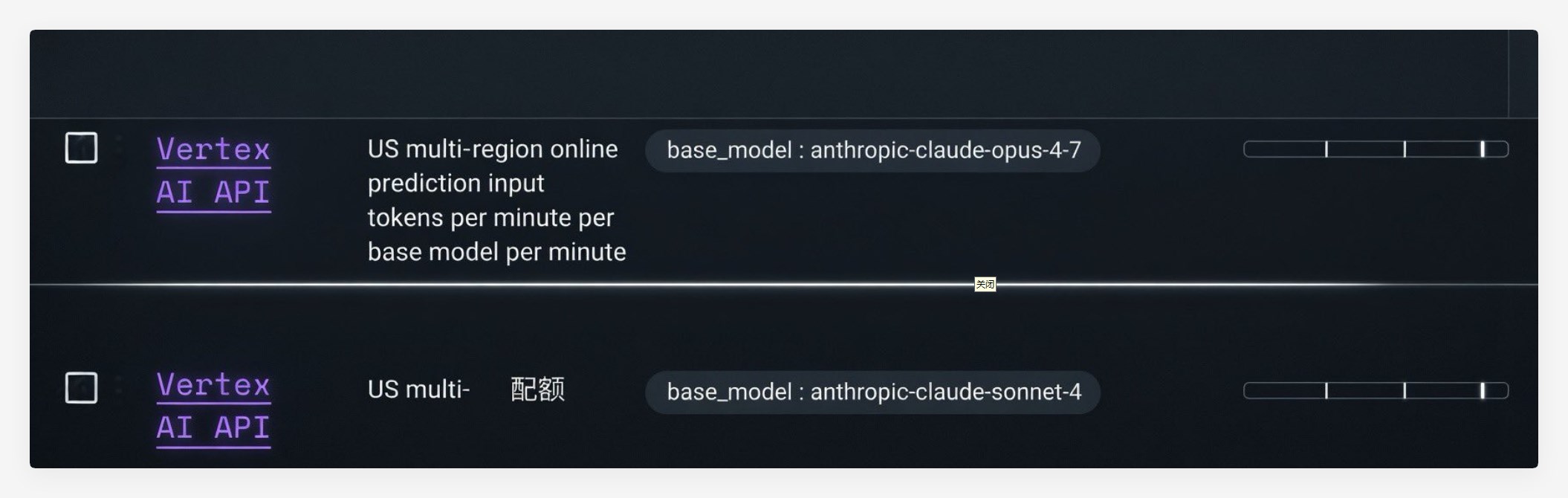
The leak surfaced publicly when multiple users inspecting Google Cloud’s Vertex AI console noticed a new base model entry: anthropic-claude-opus-4-7 under quota settings for input tokens per minute in the EU multi-region. This is not speculative—Vertex AI pre-provisions production infrastructure, billing, and rate limits before official announcements, as it did for Opus 4.6 and Sonnet 4.6.
Key leak indicators include:
- Model ID explicitly listed alongside existing Claude 4.x entries.
- Quota configuration already active for enterprise-scale deployment.
- Timing: Exactly 70 days after Opus 4.6’s February 5, 2026 launch—matching the historical 73-day gap between Opus 4.5 (Nov 24, 2025) and 4.6.
Supporting leaks from March 2026 reinforce this. A misconfigured npm package for Claude Code exposed over 500,000 lines of source code, including “Undercover Mode” forbidden-version-strings that explicitly reference opus-4-7 and sonnet-4-8. A concurrent CMS misconfiguration leaked draft benchmark documents and architecture notes mentioning the internal codename “Capybara” (sometimes spelled Capiara) alongside Mythos, the next-tier model family.
Polymarket traders reacted instantly: the “Claude 4.7 released by June 30” contract hit 98% probability, while the ultra-short-term “by April 16” contract sat at 79% the day before the leak.
Release Timeline and Historical Cadence
Anthropic’s Opus release pattern is now predictable and accelerating:
| Model | Release Date | Days Since Previous Opus | Major Milestone |
|---|---|---|---|
| Opus 4 | May 22, 2025 | — | First Claude 4 flagship |
| Opus 4.5 | Nov 24, 2025 | ~186 | Major intelligence jump |
| Opus 4.6 | Feb 5, 2026 | 73 | 1M token context + agentic coding |
| Opus 4.7 | Expected Apr 17–22, 2026 | ~70 | Multi-step reasoning + design tool |
Sonnet 4.8 is expected 1–4 weeks later, following the established pattern where the lighter model follows the flagship within days or weeks.
The Information sources confirm the dual launch (model + design tool) is intentional to maximize impact against competitors like OpenAI’s GPT-5.5 rumors and Google’s Gemini updates.
5 Features and Capabilities of Claude Opus 4.7
While full benchmarks are embargoed until launch, leaks and historical progression paint a clear picture:
Enhanced Multi-Step Reasoning & Long-Horizon Agents
Opus 4.6 already led Terminal-Bench 2.0 and GDPval-AA (economically valuable knowledge work). Opus 4.7 is expected to deliver 15–25% gains in agentic reliability, especially on complex, multi-day tasks with tool use and self-correction.
Coding Breakthroughs
Opus 4.6 scored ~80.8% on SWE-bench Verified. Analysts project Opus 4.7 at 85–90%, closing the gap toward Mythos’s internal 93.9%. Improved code review, debugging in large codebases, and parallel agent coordination are highlighted in the Claude Code leak.
1M Token Context Window (Maintained + Optimized)
Retrieval accuracy and long-context reasoning are refined rather than expanded, focusing on precision over raw size.
Native Integration with New AI Design Tool (“Elite” / Claude Studio)
The biggest surprise: a prompt-only full-stack app builder that generates websites, presentations, landing pages, prototypes, and even React/HTML exports from natural language. Edit via conversation (“make the hero section more minimal and darker”). This directly competes with Figma, Adobe Express, Wix, and GoDaddy—explaining the 2–4% stock drops on April 14.
Claude Code 2.0 Enhancements
- Parallel agent sessions
- Scheduled “Routines” (triggered by time, API, GitHub events)
- Desktop app with built-in editor, terminal, and SSH
- Background agents (KAIROS system) for always-on workflows
These features position Opus 4.7 as the first truly production-ready “AI coworker” for developers and non-technical creators alike.
How Opus 4.7 Compares to Competitors (GPT-5.5, Gemini 3, Mythos)
Early analysis suggests Opus 4.7 will reclaim the agentic coding crown from OpenAI’s GPT-5.4-Cyber and Google’s latest Gemini releases. Its strength lies in reliability and tool-use consistency rather than raw scale.
Mythos (Capybara tier) is the true next-gen model—currently in private preview on Vertex AI via Project Glasswing for ~40 select partners (AWS, Google, Microsoft, JPMorgan, etc.). It is deliberately withheld from public release due to advanced cybersecurity capabilities. Opus 4.7 serves as the safe, commercially available bridge.
Claude Mythos & the Capybara Tier: The Real Frontier Model
Opus 4.7 is not Anthropic’s most powerful model. That title belongs to Claude Mythos (codename Capybara / Capiara), a new tier above Opus.
- Leaked benchmarks (draft documents): Mythos/Capybara achieved 93.9% on SWE-bench Verified and 78.4% on Terminal Bench 2.0 (vs. Opus 4.6’s 80.8% and 65.4%).
- Currently in private preview on Vertex AI (Project Glasswing) for ~40 select partners (AWS, Google, Microsoft, JPMorgan, etc.) focused on cybersecurity red-teaming.
- Not for public release yet due to extreme capabilities (e.g., autonomous 32-step corporate network attacks).
Anthropic’s dual-track strategy is clear: ship reliable commercial updates (Opus 4.7) while gating frontier models (Mythos) for controlled access.
Market Impact and Strategic Implications
The AI design tool alone is disruptive. Marketing teams, founders, and agencies can now go from prompt to deployable website or pitch deck in minutes. Enterprise users gain compliant, auditable full-stack generation on Vertex AI or Bedrock.
For developers on CometAPI, the value is immediate: unified OpenAI-compatible endpoints mean zero code changes when switching from Opus 4.6 to 4.7. Our pricing remains 20% lower than direct Anthropic rates, with generous rate limits and 1M free tokens for new users.
How to Access Claude Opus 4.7 on CometAPI: Your Zero-Hassle Upgrade Path
CometAPI already powers Claude Opus 4.6, Sonnet 4.6, and the full Anthropic lineup through a single OpenAI-compatible API. When Opus 4.7 launches:
- Instant Availability — We add new Anthropic models within hours of release.
- Competitive Pricing — Expect Opus 4.7 at ~$4–5/M input and $20–25/M output (20% below official), with transparent usage dashboards.
- Playground Testing — Test the new model side-by-side with GPT-5.x, Gemini 3, and 500+ others before committing.
- Seamless Migration — Change one model name in your code (
claude-opus-4-7or our alias) and you’re live. - Enterprise Features — SOC 2 compliance, dedicated endpoints, volume discounts, and priority support for high-volume users.
Sign up at CometAPI today for your free API key and 1M tokens. Existing users: watch your dashboard for the “Opus 4.7” rollout notification—we’ll email the exact model ID and migration guide the moment it’s live.
Conclusion: The Opus 4.7 Era Begins Now
The Google Vertex AI leak confirms what the community has suspected for weeks: Claude Opus 4.7 is production-ready and launching within days. With superior agentic capabilities, a revolutionary AI design tool, and tight integration with Claude Code 2.0, it represents Anthropic’s strongest push yet into autonomous software creation and enterprise productivity.
For teams already building on Claude, the upgrade path is trivial. For everyone else, the time to prepare is now.
Head to CometAPI.com, grab your free API key, and be among the first to experiment with Opus 4.7 the moment it drops. The future of AI-assisted development isn’t coming—it’s here.