
Claude Fable 5 represents a major leap in accessible frontier AI. Released by Anthropic on June 9, 2026, this Mythos-class model delivers exceptional performance in autonomous coding, long-horizon reasoning, and complex knowledge work — all while remaining generally available to developers.
Whether you're a solo developer refactoring a large codebase, a CTO evaluating agentic workflows, or an AI product manager building scalable applications, accessing the Claude Fable 5 API is now straightforward. This guide covers everything: direct API setup, integration with Cursor, usage in Claude apps, pricing realities, and practical strategies to maximize value without runaway costs.
What Is Claude Fable 5? Capabilities, Benchmarks, and Why It Matters
Claude Fable 5 is a Mythos-class model designed for the hardest knowledge work and coding problems. It features a 1M token context window (expandable in practice for long sessions) and up to 128k output tokens. Key strengths include:
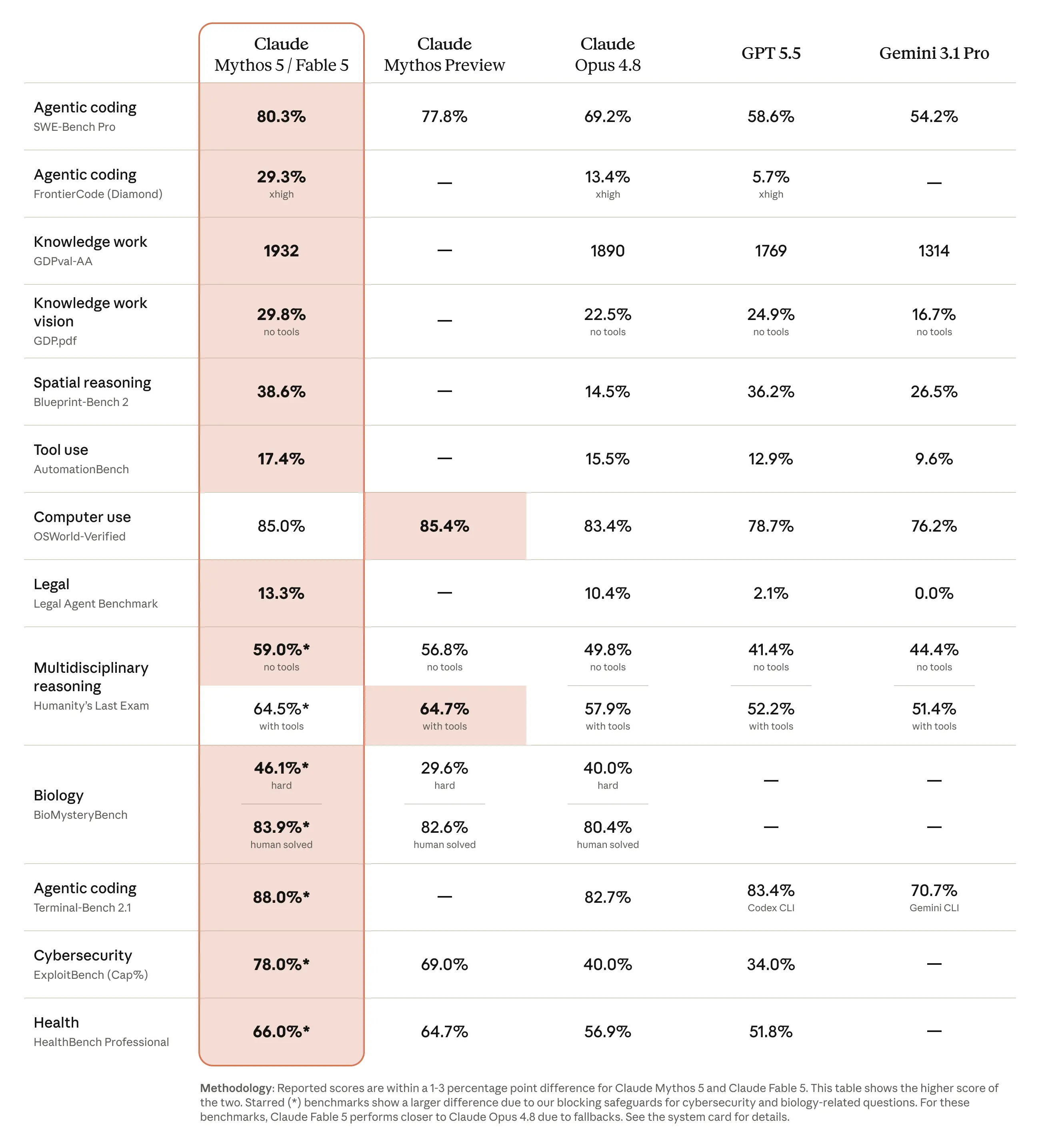
- Coding & Agentic Work: Tops leaderboards like Arena.ai Code Arena (score ~1,664) and achieves ~80.3% on SWE-Bench Pro for agentic coding—significantly outperforming predecessors like Claude Opus 4.8 and competitors.
- Vision & Analysis: Superior at extracting insights from complex figures, diagrams, and scientific data.
- Long-Horizon Tasks: Built for multi-day projects, asynchronous reasoning, and autonomous agents.
- Safety Features: Includes classifiers that can refuse high-risk queries (e.g., cyber, bio), routing some to safer models like Opus. Mythos 5 offers fewer restrictions for approved users.
Early benchmarks show 10-point jumps on complex analytics tasks (breaking 90%) and strong performance in frontend coding, React, simulations, and real-world agent arenas.
For businesses, this translates to faster codebase modernizations, better automation, and higher productivity—but access and cost management are key, which is where unified providers like CometAPI shine. Overview of Claude Fable 5 is here.
How to Access Claude Fable 5 via API (Including CometAPI Steps)
The Claude API provides the most flexible, production-ready access with model ID claude-fable-5.
Official Anthropic API Setup Steps
- Create an Account: Sign up at platform.claude.com.
- Generate API Key: Go to Account Settings > API Keys. Use workspaces for spend control.
- Make Your First Call: Use the Messages API endpoint (
https://api.anthropic.com/v1/messages). Example with official SDK (Python):
   import anthropic
   client = anthropic.Anthropic(api_key="your_key")
   message = client.messages.create(
       model="claude-fable-5",
       max_tokens=128000,
       messages=[{"role": "user", "content": "Your prompt here"}]
   )
- Handle Features: Enable prompt caching (90% input discount), effort control, tools (memory, code execution), vision, and adaptive thinking (always on for Fable 5).
- Production Tips: Implement refusal handling (
stop_reason: "refusal"), server/client-side fallbacks, and monitor rate limits. Data retention is 30 days.
Pricing (Official): $10 per million input tokens, $50 per million output tokens. Prompt caching offers ~90% input discount. Batch pricing is lower ($5/$25). This is roughly 2x Opus 4.8.
Cost-Saving Recommendation: Access via CometAPI
For many users and teams, managing direct Anthropic keys, billing, and rate limits is overhead. CometAPI offers a unified OpenAI-compatible endpoint for 500+ models, including Claude Fable 5 at competitive rates (often 20-40% savings).
Steps to Access Claude Fable 5 via CometAPI:
- Sign Up: Visit cometapi — no credit card needed, instant test credits.
- Get API Key: One key for all models.
- Integrate
OpenAI SDK Compatible:
   from openai import OpenAI
   client = OpenAI(
       api_key="your_cometapi_key",
       base_url="https://api.cometapi.com/v1"
   )
   response = client.chat.completions.create(
       model="claude-fable-5",  # or other Claude variants
       messages=[{"role": "user", "content": "Hello from CometAPI!"}]
   )
Anthropic (message SDK Compatible):
import os

import anthropic

client = anthropic.Anthropic(
    base_url="https://api.cometapi.com",
    api_key=os.environ["COMETAPI_KEY"],
)

message = client.messages.create(
    model="claude-fable-5",
    max_tokens=4096,
    thinking={"type": "adaptive", "display": "summarized"},
    output_config={"effort": "medium"},
    messages=[
        {
            "role": "user",
            "content": "Analyze the trade-offs between microservices and monolithic architectures",
        }
    ],
)

for block in message.content:
    if block.type == "thinking" and block.thinking:
        print(f"[Thinking]
{block.thinking}
")
    elif block.type == "text":
        print(block.text)
- Benefits: Pay-as-you-go credits (no monthly fees), real-time analytics, budget alerts, easy model switching (e.g., fallback to Opus or competitors), high uptime (>99.9%), and low latency. Supports integrations like n8n, Zapier, Cursor, and more.
- Pricing on CometAPI: Claude Fable 5 at ~$8/M input (check current for latest savings) vs. official $10/M—plus broader model access without vendor lock-in.
Why CometAPI? 20-40% savings, unified endpoint, high uptime (<400ms latency), privacy (no training on your data). Ideal for production at scale—test Fable 5 alongside GPT, Gemini, etc., without migration pain. Many users consolidate Anthropic + others here for Claude Code proxies and agents.
Start with CometAPI for prototyping and scale production workloads. It eliminates key sprawl and often delivers better economics for mixed-model apps.
Access Claude Fable 5 via Claude Web/App (Claude.ai and Claude Code)
The easiest entry point for individuals and light users.
Step-by-Step: Claude.ai Web Access
- Visit claude.ai and sign up/log in.
- Upgrade to Pro ($20/mo, or $17/mo annual) or higher (Max 5x $100/mo, Max 20x $200/mo).
- In the model selector (bottom of chat), choose Claude Fable 5 (1M context). It's included in paid plans through June 22, 2026; afterward, usage credits apply.
- Start prompting. Use projects, artifacts, and extended thinking for best results.
Claude Code (CLI/GUI for Developers): Anthropic's official coding assistant. Install via CLI, authenticate, and select Fable 5 for agentic coding sessions.
Using Claude Fable 5 in Claude Apps and Web Interface
- Claude.ai / Apps: Available in model dropdown for paid plans (limited window).
- Claude Code / CLI: Update client, set model to
claude-fable-5via/modelcommand or env var. - Artifacts & Projects: Leverage for interactive coding sessions with persistent context.
Pricing for Subscriptions (2026 Data):
- Free: Limited access, no Fable 5.
- Pro: $20/mo (~$17 annual) – solid for daily use.
- Max Plans: 5x–20x usage multipliers for heavy agentic work.
Pros: No API setup, polished UI, integrated tools. Cons: Rate limits reset on rolling windows (e.g., ~5 hours); heavy use exhausts quotas fast with Fable 5. Higher plans deliver significant token-equivalent value (e.g., Max 20x ~$8,000+ API equivalent per SemiAnalysis tests), making them economical for power users vs. pure API.
How to Use Claude Fable 5 in Cursor: Steps, Prerequisites, Pricing
Cursor (cursor.com) is a popular AI-powered IDE (VS Code fork) that supports Claude models natively or via API key.
Prerequisites
- Cursor installed (free Hobby tier or paid).
- Anthropic API key (or CometAPI key for savings).
- For full Fable 5: Higher usage limits or pay-as-you-go.
Step-by-Step Integration
- Open Cursor Settings: Ctrl/Cmd + Shift + P → “Cursor Settings” or gear icon.
- Add API Key: Go to AI/Models section. Add Anthropic (or custom base URL for CometAPI).
- Select Model: Choose
claude-fable-5(or via CometAPI routing). - Configure: Enable Agent mode, tab completions, Bugbot. Set project rules/.cursorignore for context.
- Usage: Use Composer/Agent for multi-file edits, chat sidebar for queries. Claude Code extension can complement for autonomous tasks. For large projects: Use
@mentions for files/folders and explicit instructions for multi-step plans.
Cursor Pricing: Hobby (Free, limited), Individual/Pro ~$20/mo (extended limits, frontier models), Teams ~$40/user/mo. Additional usage via your API key (billed separately).
Tips: For heavy Fable 5 use in Cursor, pair with CometAPI to control costs. Test with smaller models first. Combine with Claude Code for best results on large projects.
Access Method Comparison Table
| Access Method | Model Access | Input/Output Price (per M tokens) | Monthly Subscription | Best For | Notes/Savings |
|---|---|---|---|---|---|
| Official Anthropic API | Fable 5 | $10 / $50 | Pay-as-you-go | Production apps | Caching discounts |
| CometAPI | Fable 5 + 500+ models | ~$8 / lower | Pay-as-you-go | Cost-conscious teams | 20-40% savings, unified |
| Claude Pro | Limited Fable 5 | N/A (subscription) | $20 | Individuals | Usage caps |
| Claude Max | Higher Fable 5 | N/A | $100–$200 | Power users | High value/token |
| Cursor Pro + API | Fable 5 via key | Depends on key | $20 + API | Developers | IDE integration |
| Team Premium | Enhanced | Varies | ~$100+/seat | Organizations | Collaboration tools |
The web experience is great for exploration; API/Cursor for production velocity.
Advanced Integration: Agents, Tools, and Best Practices
Fable 5 supports advanced tool use and parallel execution. Design prompts with clear observation loops: "After each tool call, audit results against the original plan."
For SaaS builders: Use it to power internal dev agents, automated testing, or customer-facing features like intelligent code assistants.
Tips:
- Prompting Fable 5: Use structured prompts, adaptive thinking, effort parameter for depth control. For long-context: Chunking + memory tools.
- Cost Optimization: Prompt caching, batching, model fallbacks, and CometAPI routing. Monitor via dashboards.
- Security & Compliance: Fable 5 has strong safeguards; use enterprise plans for zero-retention where needed.
- Comparisons: Vs. Opus 4.8 (cheaper but less capable on hard tasks); vs. GPT-5.5 (Fable leads in many coding benchmarks).
- Future-Proofing: Start with CometAPI for easy switching as new models (e.g., Mythos 5) emerge.
Conclusion
Claude Fable 5 sets a new standard for what AI can achieve in software engineering and autonomous work. Whether you're experimenting in Cursor, building agents, or scaling SaaS features, mastering its API access is now table stakes.
Ready to integrate reliably? Head to CometAPI and API doc for seamless Claude Fable 5 access alongside other frontier models, unified billing, and enterprise-grade reliability. Sign up today and get started with generous credits for new users—your next breakthrough project awaits.
FAQs
What is Claude Fable 5?
Claude Fable 5 is a next-generation large language model in the Claude ecosystem, designed for enterprise reasoning, coding, document analysis, and AI agent workflows.
What makes Claude Fable 5 different from previous Claude models?
It introduces improvements in long-context understanding, multi-step reasoning, coding assistance, AI agent compatibility, and enterprise safety mechanisms.
Is Claude Fable 5 good for coding?
Yes. Claude Fable 5 is designed to support software engineering tasks including code generation, debugging, documentation, refactoring, and repository analysis.
How does Claude Fable 5 handle AI safety?
The model builds on Anthropic's Constitutional AI approach, combining alignment training, self-evaluation mechanisms, runtime safeguards, and continuous adversarial testing.
How can developers access the Claude Fable 5 API?
Developers can typically access Claude-family models either through official API offerings or through unified AI API platforms that aggregate multiple providers into a single interface.
Why use CometAPI for Claude Fable 5 integration?
CometAPI simplifies AI infrastructure by providing a unified API for accessing multiple leading models, reducing integration complexity, enabling flexible model routing, and helping teams avoid vendor lock-in.
Is Claude Fable 5 suitable for enterprise applications?
Yes. Its emphasis on long-context processing, alignment, coding capabilities, and agentic workflows makes it particularly suitable for enterprise knowledge management, customer support, software development, and research applications.