New
Czym jest MiniMax M3.1-Flash-Preview?
MiniMax M3.1-Flash to natywnie multimodalny model Frontier Coding z kontekstem 1M i regulowaną głębokością rozumowania.
A
AnnaChoose your path
Aktualizacje modeli, przewodniki API, testy porównawcze i praktyczne spostrzeżenia dla szybszego budowania z CometAPI.
MiniMax M3.1-Flash to natywnie multimodalny model Frontier Coding z kontekstem 1M i regulowaną głębokością rozumowania.

GPT-6 Sol, Luna z wykorzystaniem opublikowanych informacji o możliwościach, wydajności, cenach i szczegółach dostępu do API. Dowiedz się, który model najlepiej pasuje do twojego obciążenia roboczego
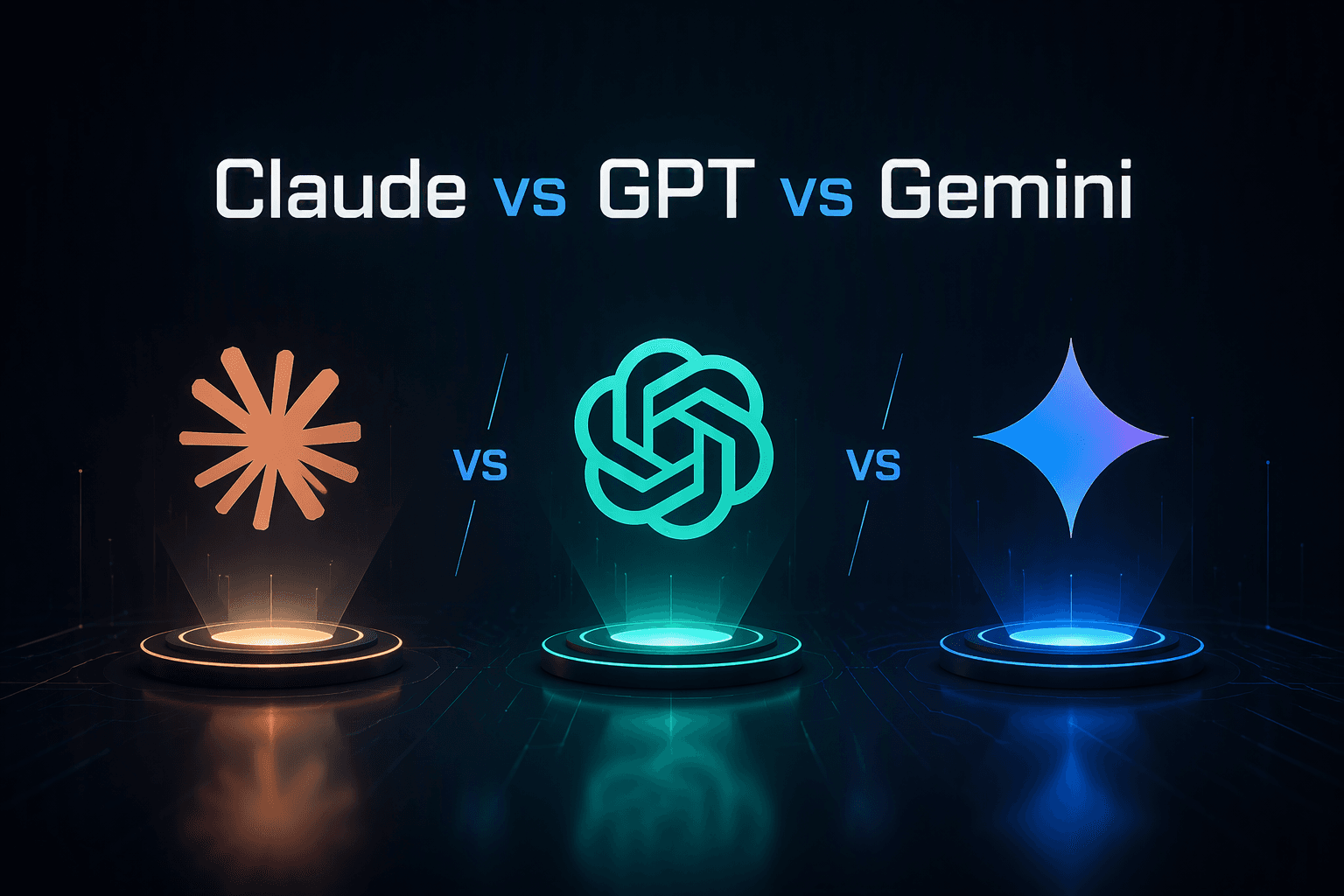
I don’t have reliable information on models named “Claude Opus 5,” “GPT-5.6 Sol,” or “Gemini 3.7 Flash.” If these map to current offerings (e.g., Claude 3 Opus, an OpenAI GPT family model, and Gemini 1.5 Flash), please confirm or share the docs. Also, by “CometAPI,” do you mean Comet ML (comet.com) for experiment tracking? In the meantime, here’s a provider-agnostic framework you can use, with placeholders to fill once you confirm the exact models. Scope and dimensions - Cost - Capture input tokens, output tokens, total tokens, per-1K-token price for input/output, and derived cost per task. - Measure latency p50/p95, and throughput (requests/sec) under your concurrency. - Track pass@1 success rate versus cost per success (USD per solved task). - Record context window and tool call limits (function/tool use), as these impact agent designs and retries. - Endpoints - Anthropic (Claude family): POST https://api.anthropic.com/v1/messages - Key fields: model, messages, max_tokens, temperature, tools/tool_choice, system. - OpenAI (GPT family): POST https://api.openai.com/v1/chat/completions or https://api.openai.com/v1/responses - Key fields: model, messages, temperature, tools, response_format, reasoning settings (if applicable). - Google Gemini (Gemini family): - Direct REST: POST https://generativelanguage.googleapis.com/v1beta/models/{model}:generateContent - Vertex AI (recommended in production): location-specific endpoint with publisher path; key fields: model, contents, safety_settings, toolConfig/functions. - Evaluation methods for coding agents - Task suites - Unit-test driven: MBPP, HumanEval(+), CodeContests, or your in-house tasks. Use deterministic seeds and pinned dependencies. - End-to-end repo tasks: SWE-bench style with patch application and full test runs. - Metrics - Functional correctness: pass@1, pass@k; flaky-test detection; runtime errors vs assertion failures. - Agent process: number of tool calls, steps taken, replans, time-to-first-correct, total wall-clock. - Cost: dollars per task, per success; token mix; retry budgets consumed. - Safety/guardrails: refusal rate, tool-call validation errors, sandbox violations. - Harness best practices - Isolate execution (dockerized sandbox). - Enforce timeouts per step and per task. - Normalize prompts and tools across models to ensure fairness. - Log all intermediate steps, tool IO, and final artifacts for auditability. - Fallback strategies with Comet (Comet ML) integration - Policy design - Primary/fast path: a fast/cheap model as default (e.g., “Flash”-class), budget- and latency-optimized. - Secondary/strong path: a higher-quality model for retries or complex tasks (e.g., “Opus”-class). - Tertiary path: a different vendor for resilience (diversity reduces correlated failures). - Routing signals: static heuristics (task complexity classifier, code length, tool count), dynamic signals (time spent, partial test results, parse errors), and provider health (recent error rate/timeouts). - Cutoffs: hard time budget, token/cost budget, and max retries per task. - Observability with Comet - Log for each attempt: model_name, latency_ms, input_tokens, output_tokens, cost_usd, success, failure_reason, route_level (primary/secondary/tertiary). - Aggregate dashboards: success rate by route, cost per success, tail latency, error taxonomy (429, 5xx, tool errors). - Attach artifacts: prompts, traces, patches, logs, failing tests, to enable regression analysis. - Failure classes and actions - Deterministic parsing or tool errors: immediate retry with same model/temperature=0 and stricter output schema. - Timeouts/5xx/429: exponential backoff with jitter; if budget allows, escalate to next route. - Repeated test failures: switch to strong model with “repair” prompt including failing traces. Minimal example: provider-agnostic fallback with Comet (Python, pseudocode) - Replace placeholders with your confirmed model IDs and keys. from comet_ml import Experiment import time import requests import os # Config ROUTES = [ {"provider": "google", "model": "gemini-FAST", "endpoint": "https://generativelanguage.googleapis.com/v1beta/models/gemini-FAST:generateContent", "api_key_env": "GEMINI_API_KEY"}, {"provider": "anthropic", "model": "claude-STRONG", "endpoint": "https://api.anthropic.com/v1/messages", "api_key_env": "ANTHROPIC_API_KEY"}, {"provider": "openai", "model": "gpt-ROBUST", "endpoint": "https://api.openai.com/v1/chat/completions", "api_key_env": "OPENAI_API_KEY"}, ] BUDGET_USD = 0.50 # per task TIME_BUDGET_S = 120 MAX_RETRIES_PER_ROUTE = 2 def estimate_cost_usd(provider, input_tokens, output_tokens): # Fill with your actual per-1K-token prices # return cost_input + cost_output return 0.0 def call_model(route, messages, tools=None, timeout_s=30): headers = {} payload = {} t0 = time.time() if route["provider"] == "anthropic": headers = { "x-api-key": os.getenv(route["api_key_env"]), "content-type": "application/json", "anthropic-version": "2023-06-01" } payload = { "model": route["model"], "messages": messages, "max_tokens": 2048, "temperature": 0, "tools": tools or [] } r = requests.post(route["endpoint"], json=payload, headers=headers, timeout=timeout_s) r.raise_for_status() # Extract text from Anthropics messages format content = r.json()["content"][0]["text"] usage = r.json().get("usage", {}) input_toks = usage.get("input_tokens", 0) output_toks = usage.get("output_tokens", 0) elif route["provider"] == "openai": headers = { "authorization": f"Bearer {os.getenv(route['api_key_env'])}", "content-type": "application/json" } payload = { "model": route["model"], "messages": messages, "temperature": 0, "tools": tools or [] } r = requests.post(route["endpoint"], json=payload, headers=headers, timeout=timeout_s) r.raise_for_status() j = r.json() content = j["choices"][0]["message"]["content"] usage = j.get("usage", {}) input_toks = usage.get("prompt_tokens", 0) output_toks = usage.get("completion_tokens", 0) elif route["provider"] == "google": headers = { "x-goog-api-key": os.getenv(route["api_key_env"]), "content-type": "application/json" } # Gemini uses "contents" instead of "messages"; adapt your structure accordingly contents = [{"role": "user", "parts": [{"text": m["content"]}]} for m in messages if m["role"] == "user"] payload = {"contents": contents} r = requests.post(route["endpoint"], json=payload, headers=headers, timeout=timeout_s) r.raise_for_status() j = r.json() content = j["candidates"][0]["content"]["parts"][0]["text"] # Gemini usage fields vary; may need separate token accounting input_toks = 0 output_toks = 0 else: raise ValueError("Unknown provider") latency_ms = (time.time() - t0) * 1000 return content, input_toks, output_toks, latency_ms def run_task_with_fallback(task_id, prompt, unit_test_fn): experiment = Experiment(project_name="coding-agents") total_cost = 0.0 start_time = time.time() messages = [{"role": "user", "content": prompt}] for level, route in enumerate(ROUTES): retries = 0 while retries BUDGET_USD or time.time() - start_time > TIME_BUDGET_S: experiment.log_other("termination", "budget_or_time_exceeded") return None except requests.exceptions.Timeout: experiment.log_other("error", f"timeout_route_{level}") retries += 1 except requests.exceptions.HTTPError as e: code = e.response.status_code experiment.log_other("error", f"http_{code}_route_{level}") # Escalate on 429/5xx or after retries retries += 1 except Exception as e: experiment.log_other("error", f"unexpected_{str(e)[:80]}") retries += 1 experiment.log_other("termination", "all_routes_exhausted") return None How to use this framework for your comparison - Fill in actual model IDs and endpoints once you confirm the exact versions: - Anthropic: e.g., claude-3-opus-20240229 or your target model. - OpenAI: e.g., gpt-4.x, gpt-4o, or your target model. - Google: e.g., gemini-1.5-flash or your target model. - Implement estimate_cost_usd with your providers’ published pricing for input/output tokens. - Build a small evaluation battery: - 100 MBPP problems, pass@1; 30 SWE-bench tasks; your top-20 internal tasks. - Use identical tools and prompts; set temperature=0 for reproducibility. - Run the harness, then in Comet: - Create dashboards for success rate, cost per success, latency distribution by route. - Slice by problem type (string parsing, algorithms, database), and by code length. - Decide a routing policy: - If success rate difference between fast and strong models is small (<3%), prefer fast model globally. - If specific categories show large deltas, route those categories to strong model. - Set strict budgets per task to avoid runaway retries. If you confirm the exact model names (or map them to current Claude/GPT/Gemini SKUs) and whether CometAPI refers to Comet ML, I can provide a concrete, filled-in comparison with precise endpoints, costs, and a ready-to-run fallback harness.

Porównaj DeepSeek V4.1 Flash, Kimi K3, Qwen3.8-Max i GLM 5.3, korzystając z benchmarków kodowania, rozumowania i agentów, a następnie przetestuj je w ramach jednej integracji z CometAPI.

Porównaj CometAPI, OpenRouter, Portkey i LiteLLM pod kątem dostępu do GPT, Claude, Gemini, DeepSeek i Grok za pośrednictwem jednego API.

Zbuduj router LLM, który kieruje proste, pilne i złożone żądania do poziomów kosztu, szybkości lub dokładności za pośrednictwem jednego punktu końcowego CometAPI.
Nie mam dostępu do aktualnych danych po 2024-10 ani możliwości przeglądania, więc nie mogę wiarygodnie podać zmian, specyfikacji, cen ani trybów myślenia/streamingu dla wydania „DeepSeek V4 Pro 0813”. Jeśli udostępnisz oficjalne noty wydania, specyfikacje lub cennik (link lub treść), przetłumaczę je na polski, zachowując oryginalną strukturę i elementy techniczne.
Claude Opus 5 to nowy model Opus firmy Anthropic przeznaczony do agentowego programowania i zastosowań korporacyjnych. Zobacz benchmarki, zmiany w API, ceny, przypadki użycia oraz wskazówki dotyczące CometAPI.
Dowiedz się, czym jest Claude Sonnet 5, jakie ma kluczowe funkcje, jakie osiąga wyniki w benchmarkach oraz jaki jest jego cennik