Choose your path
Gemini 3 Pro Blog
Shopping on Google: How do you use Google’s AI shopping as Merchants
Google has reworked its shopping experience around generative AI and the Gemini family of models. For consumers, the shift promises conversational product discovery, AI-generated comparison briefs, and — where available — automated “agentic” checkout that can buy on your behalf when preconditions are met. For merchants and developers, the new surface combines two sets of APIs (shopping / merchant APIs and Google’s GenAI / Gemini APIs) and requires updated feed practices, privacy controls, and technical integration.

Gemini 3 Flash vs Gemini 3 Pro: Price, Speed & Reasoning
Gemini 3 Flash — optimized for raw throughput, low latency, and cost efficiency — and Gemini 3 Pro — optimized for the deepest multimodal reasoning, largest context windows and highest benchmark ceilings. In practical terms, Flash is designed to shift the “productive-flow” frontier for high-frequency developer and interactive applications; Pro is designed to maximize single-query intelligence and handle very large or complex multimodal inputs. The tradeoffs are straightforward and measurable: Flash delivers substantially lower latency and materially lower per-token costs while keeping much of Gemini 3’s reasoning ability; Pro delivers the highest benchmark scores, the most advanced modes (e.g., Deep Think), and larger safety-guarded capabilities at higher cost and latency.

Is Gemini 3 Pro Good for Coding? A 2026 Reality-Check and Practical Guide
Google’s Gemini 3 Pro arrived as a headline-grabbing multimodal model that Google positions as a major step forward in reasoning, agentic workflows, and coding assistance. In this long-form piece I note to answer one clear question: Is Gemini 3 Pro good for coding? Short answer: Yes — with important caveats.
GPT-5.2 vs Gemini 3 Pro: which is better in 2026?
As of December 15, 2025 the public facts show Google’s Gemini 3 Pro (preview) and OpenAI’s GPT-5.2 both set new frontiers in reasoning, multimodality and long-context work — but they take different engineering routes (Gemini → sparse MoE + huge context; GPT-5.2 → dense/“routing” designs, compaction and x-high reasoning modes) and therefore trade off peak benchmark wins vs. engineering predictability, tooling, and ecosystem. Which is “better” depends on your primary need: extreme-context, multimodal agentic applications lean toward Gemini 3 Pro; stable enterprise developer tooling, predictable costs and immediate API availability favor GPT-5.2.
Gemini 3 Pro vs Claude 4.5 Opus: A guide to choosing the best AI model
Gemini 3 Pro (Google/DeepMind) and Claude Opus 4.5 (Anthropic) are both 2025 frontier models focused on deep reasoning, agentic workflows, and stronger
7 Nano Banana Pro Prompts that You Should to Try!
Google’s Nano Banana Pro (the marketing name for the Gemini 3 Pro Image family) landed as a major step forward in image generation and editing tools. It’s
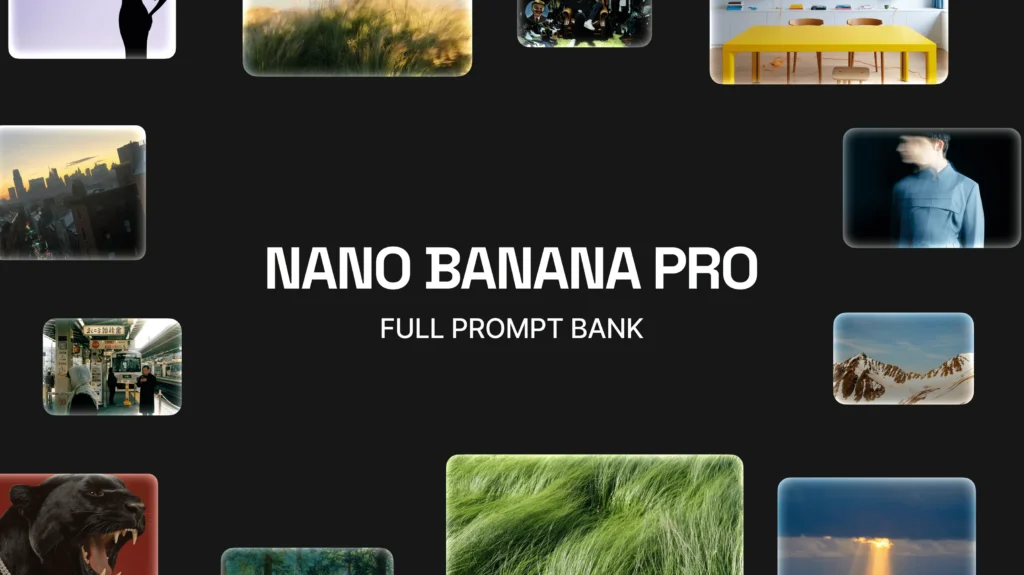
How to Prompt Nano banana Pro For Best
Google launched Nano Banana Pro (the Gemini 3 Pro Image model) on November 20, 2025. It’s a high-fidelity image-generation and editing model that improves on
Claude Opus 4.5: what is it like — and how much will it cost?
social posts and investigative write-ups have pointed to an upcoming Claude Opus 4.5 (often shortened to “Opus 4.5”) — internally referenced by some sources as Neptune V6 — and to the model being shared with external red-teamers for jailbreak testing. Public details are still fragmentary, so this article collects the available reporting, explains what the leak implies about capability and safety, and gives a grounded estimate of likely pricing and how Opus 4.5 might stack up against Google’s Gemini 3 and OpenAI’s GPT-5.1.