AI Comparisons
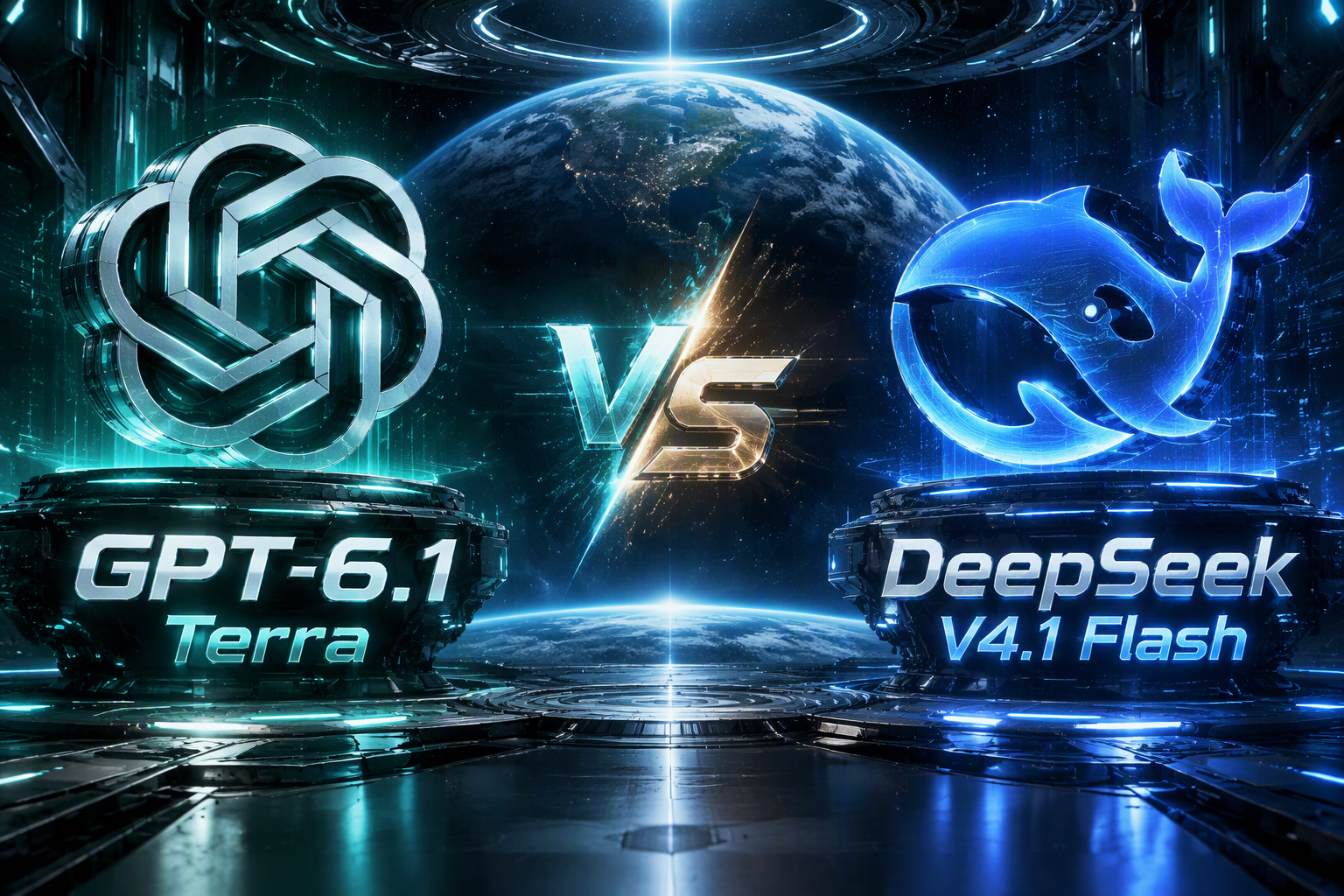
GPT-6.1 Terra vs DeepSeek V4.1 Flash : benchmarks, fonctionnalités, tarification
I don’t have any reliable, public information about models named “GPT-6.1 Terra” or “DeepSeek V4.1 Flash” (or a “CometAPI”) as of my October 2024 knowledge cutoff, so I can’t make a factual head‑to‑head judgment. If you can share model cards or API docs, I’ll produce a precise side‑by‑side and a recommendation. In the meantime, here’s a concise checklist to evaluate them yourself:
- Benchmarks: Compare standardized scores (MMLU, GPQA, BIG-bench/BBH, GSM8K/Math, DROP). Note eval setup (0-shot vs few-shot, CoT allowed, temperature, context length).
- Coding: Check HumanEval/MBPP pass@1, multi-file tasks, tool-use (repo-level coding), test-time compute, deterministic mode, and function-calling reliability.
- Vision: Verify support (image → text, image+text → text), document QA (DocVQA), charts/tables (ChartQA/InfographicVQA), OCR robustness, multi-image reasoning, and output grounding.
- Context: Max window (tokens), effective retrieval accuracy over long contexts (needle-in-a-haystack), sliding-window vs full attention, and degradation beyond 50% of max length.
- Latency and throughput: Median/p95 latency at fixed prompt/output sizes; concurrency limits; streaming first-token latency; batch support.
- Safety and guardrails: Refusal consistency, jailbreak resistance, content filters, tool sandboxing for code-exec.
- API features: Function/tool calling, JSON mode, system prompts, logprobs, reasoning traces, batch/async jobs, streaming, rate limits, and fine-tuning or adapters.
- Pricing: $/1K input and output tokens, free tier, rate caps, regional availability, and billing granularity; hidden costs (vector/image processing).
- Reliability: Versioning guarantees, deprecation policy, uptime SLA, model pinning.
- CometAPI access: Whether both models are available via that aggregator, auth method, quota, feature parity (does it expose vision, function-calling, and long context), and latency overhead via proxy.
Decision tip: If one is a “Flash” variant, it’s typically optimized for speed/cost with slightly lower peak reasoning; if the other is a flagship tier, expect better benchmarks, longer context, and broader modality at higher cost/latency. Run a short bake-off on your tasks (coding fixes, doc QA with images, long-context retrieval) and compare p50/p95 latency, accuracy, and cost per successful task.